Reviewed · GUIDED
8-Days Guided Iceland Circle Tour from Reykjavík
Iceland rewards a well-planned route. This eight-day circle tour gives you a broad look at the island, from Reykjavík and the Golden Circle to the East Fjords, glacier country, and the volcanic north. I especially like the mix of famous sights and smaller cultural stops, including Glaumbær Museum, Skógar Museum, an Icelandic horse stable, and a geothermal greenhouse.
I also like that the tour includes seven nights of accommodation and breakfast, along with airport transfers, WiFi, and the Mývatn Nature Baths. Your guide handles the long drives and changing road conditions, which matters in Iceland. The tradeoff is the pace: you cover much of the country in six touring days, so some stops are short and several nights may be spent in different hotels.
The listed price is $3,386.15 per person. That is a serious sum, but it covers transport, seven nights, breakfast, guided touring, airport transfers, and several admissions. Meals beyond breakfast are extra, and the booking is non-refundable, so you will want to check the schedule and dates carefully before paying.
In This Review
- Key points to know before booking
- What the eight-day format really gives you
- Day one in Reykjavík: an easy start
- Day two: volcanic craters and turf houses
- Day three: Akureyri, Goðafoss, and Lake Mývatn
- Day four: dark lava, steaming earth, and Dettifoss
- Day five: the East Fjords and Vatnajökull
- Day six: icebergs, black sand, and South Coast waterfalls
- Day seven: horses, greenhouses, and the Golden Circle
- What the price covers, and what it does not
- Who will get the most from this Iceland tour?
- Should you book the 8-Day Guided Iceland Circle Tour?
- FAQ
- How long is the Iceland Circle tour?
- Where does the tour start?
- Is airport transportation included?
- Is accommodation included?
- Is breakfast included?
- What language is the tour conducted in?
- What is the maximum group size?
- Is admission to the Mývatn Nature Baths included?
- Is the Dettifoss stop available on every departure?
Key points to know before booking
- A true Ring Road route: You visit North Iceland, the East Fjords, Vatnajökull country, the South Coast, and the Golden Circle.
- Small group format: The vehicle holds a maximum of 25 people, with an English-speaking guide or driver-guide.
- Strong guide-led experience: Guides such as Thor, Simone, Martina, Freyja, and Tryggvi have been praised for their Icelandic history, geology, folklore, humor, and practical help.
- Good mix of nature and culture: Waterfalls and hot springs share the schedule with turf houses, folk museums, horses, and local traditions.
- Season matters: The Dettifoss detour is included from June through August, while winter departures provide ice grippers and a flashlight.
- Breakfast is covered, but not lunch or dinner: You need to budget for additional meals, drinks, and personal services.
What the eight-day format really gives you
The tour uses Reykjavík as your arrival and departure base, then spends six days on the road around most of Iceland. Day one and day eight are lighter, giving you time to settle in, walk around the capital, or manage your flight schedule.
That arrangement is useful if you do not want to rent a car. Iceland’s roads can be demanding, and the weather can alter driving plans. Here, your guide takes care of the route while explaining what you are seeing. Past guides have included Thor, Þór, Simone, Martina, Freyja, Tryggvi, and Eyrún, with especially strong praise for their stories, humor, patience, and willingness to help.
The group size is capped at 25. That is not an intimate private tour, but it is far smaller than a large coach trip. You should expect a shared schedule and set departure times. In return, you get a practical way to cover distances that would be tiring to manage alone.
A few more trips people compare before booking
- Reykjavik: Golden Circle Full-Day Tour with Kerid Crater
★ 4.8 · 24,485 reviews - Reykjavik Food Walk – Local Foodie Adventure in Iceland
★ 5.0 · 18,952 reviews - Iceland: Northern Lights Bus Tour from Reykjavik
★ 4.1 · 11,161 reviews
Day one in Reykjavík: an easy start
Your first day is deliberately open. You stay at a centrally located hotel and can explore Reykjavík on foot if your arrival time allows. There is no scheduled sightseeing admission, so this day works best as a gentle landing rather than a packed introduction to Iceland.
That flexibility has real value. You can recover from your flight, walk through the capital, or simply prepare for the early starts ahead. Your airport transfer is provided through the FLYBUS Plus shuttle, but it does not include a guide.
On the final day, the same arrangement applies. You can relax at the hotel or spend more time in Reykjavík, depending on your departure. Check your flight timing closely, since the tour does not describe a guided capital-city program on either free day.
Day two: volcanic craters and turf houses
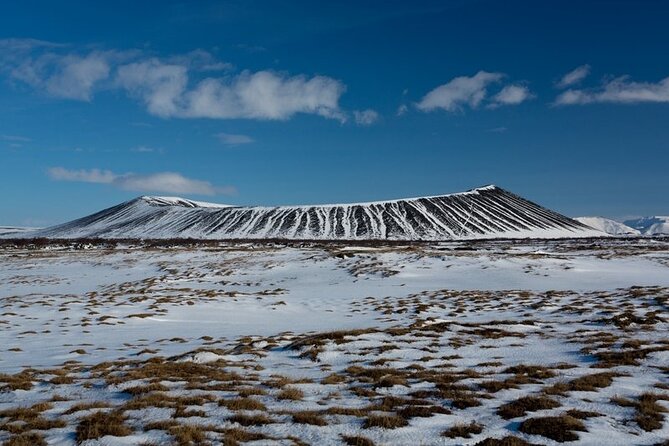
The touring begins at 9:00 in the hotel lobby. The first stop is Grábrók Crater, a roughly 3,000-year-old volcanic crater surrounded by moss-covered lava. A walk to the rim takes about 20 minutes and gives you a wide view across the lava field and nearby country.
This is a fine early stop because it gets you moving without demanding a full hike. The path can be exposed and uneven, so sensible shoes are important. You are not climbing a major mountain, but the crater walk is more active than a simple roadside photo stop.
Later, Glaumbær offers a change of pace. This turf-house farm and folk museum shows how people once built and lived in Iceland. The visit lasts about 30 minutes, so it is a compact introduction rather than a long museum study. I like this inclusion because it connects the dramatic scenery with everyday life.
The day involves substantial driving, and the shorter museum visit helps keep the route moving north. You should expect a road-focused day with scenic windows between stops.
Day three: Akureyri, Goðafoss, and Lake Mývatn
Akureyri receives about two hours in the morning. With a population of roughly 18,000, it is often called the capital of North Iceland and is the largest town outside the southwest corner. The time allows you to walk around, look at the town, and get a feel for a regional center rather than another natural attraction.
The Akureyri Botanical Garden follows with about 40 minutes. It opened in 1912 and contains around 7,000 plant species. The garden adds variety to the route, though its appeal will depend on the season and your interest in plants. In cooler or darker months, the stop may feel less central than the waterfalls and geothermal sites.
Goðafoss is one of the day’s headline sights. Its name means Waterfall of the Gods and connects to the moment Christianity became Iceland’s official religion. You have about 40 minutes to see the falls and take photographs.
The afternoon belongs to Lake Mývatn, known for unusual volcanic formations and active bird life in summer. You visit the lava structures at Kálfaströnd and walk among the area’s many pseudocraters. The two-hour stop gives you more time to move around than a standard quick viewpoint.
The day ends at the Mývatn Nature Baths. Admission and towel rental are included, and you have about two hours to soak in warm geothermal water with views across the region. This is one of the tour’s best value inclusions because it provides a slower, restorative finish after a full day outside.
Another way to fill a day from Reykjavík:
- Reykjavík: South Coast Waterfalls, Black Sand & Glacier Tour
★ 4.8 · 11,030 reviews - Reykjavík: Whale Watching and Marine Life Cruise
★ 4.6 · 9,838 reviews - Reykjavik: Sky Lagoon Entrance Pass With 7-Step Spa Ritual
★ 4.8 · 6,166 reviews - From Reykjavik: Golden Circle, Kerid, & Secret Lagoon Tour
★ 4.8 · 6,009 reviews
Day four: dark lava, steaming earth, and Dettifoss
Dimmuborgir, or the dark castles, is a lava labyrinth filled with unusual rock shapes. The planned walk lasts about 40 minutes, with local troll legends adding a playful edge to the geology. You should expect rough ground and wear shoes that can handle uneven volcanic paths.
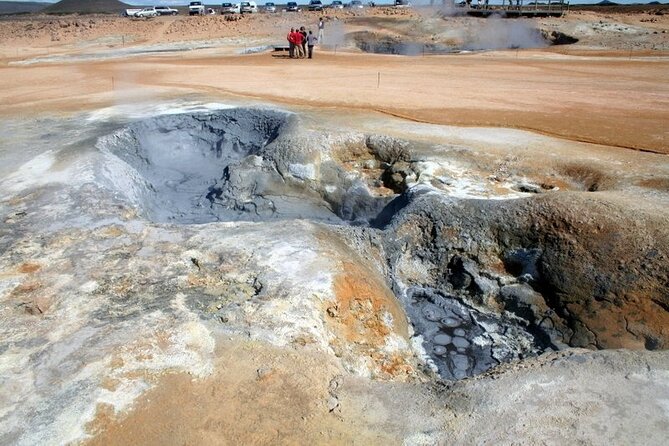
At Námaskarð, the scenery changes sharply. Bubbling mud pools and steaming solfataras show Iceland’s geothermal power at close range. The area can smell strongly of sulfur, and you should stay on marked paths. You will want to keep your distance from the hot ground.
From June through August, the route includes a detour to Dettifoss. This is described as Europe’s most powerful waterfall and lies in the northern part of Vatnajökull National Park. The visit lasts about 40 minutes, but road and weather conditions can affect access. The summer-only note matters: do not assume this stop is part of every departure.
This day is short on formal museums and long on raw geology. If you like volcanic terrain, it may be one of your favorites. If you prefer towns and cultural sites, the day can feel more spare.
Day five: the East Fjords and Vatnajökull
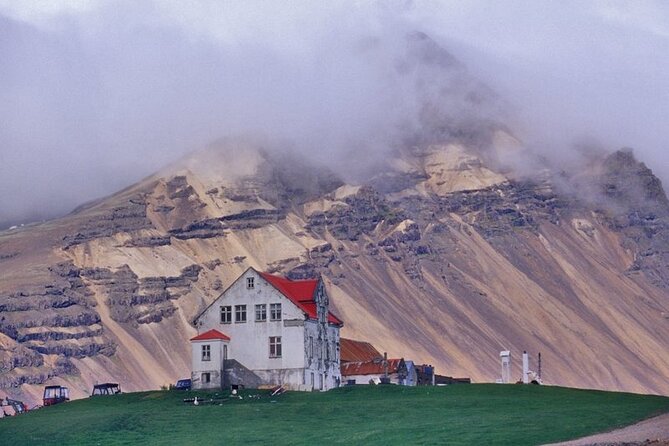
Day five is a long seven-hour touring day through the East Fjords. The route follows twisty roads toward small fishing villages, with dramatic fjord views along the way. You also visit a stone and mineral collection, another small but worthwhile cultural pause.
The East Fjords are less about checking off one famous monument and more about watching Iceland change from one valley and inlet to the next. The roads take time, but that is part of the point. You get a sense of the island’s remote coastal settlements and the scale of the surrounding mountains.
In the afternoon, Vatnajökull comes into view. It is Europe’s biggest glacier and can be seen across much of southeast Iceland. The tour does not list a glacier hike or ice-cave excursion, so think of this as a scenic and geographic encounter rather than an active glacier adventure.
This is probably the least stop-heavy day. Bring patience, a camera, and something to occupy you during the longer drive. The reward is the gradual shift from fjord country to the broad glacier region.
Day six: icebergs, black sand, and South Coast waterfalls
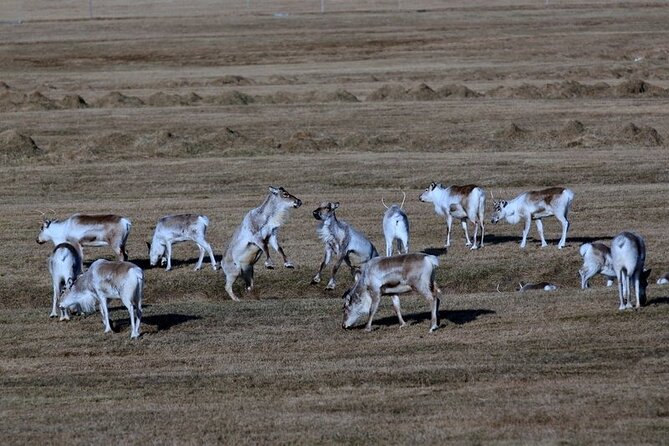
Jökulsárlón is one of Iceland’s great sights: a glacial lagoon filled with floating icebergs. You have around 40 minutes to explore the shore, and seals may be visible in the cold water. No boat trip is listed, so the experience centers on viewing the lagoon from land.
Across the road, Fellsfjara is the black-sand beach often called Diamond Beach. Ice from the lagoon can wash up on the shore, creating a striking contrast between dark sand and clear or blue-white chunks of ice. You get about 20 minutes here, enough for photographs but not a long beach walk.
The route continues through Vatnajökull National Park, home to Iceland’s highest mountains, an alpine environment, and Europe’s largest glacier. The description does not specify a separate timed stop inside the park, so much of your experience comes through the drive and surrounding viewpoints.
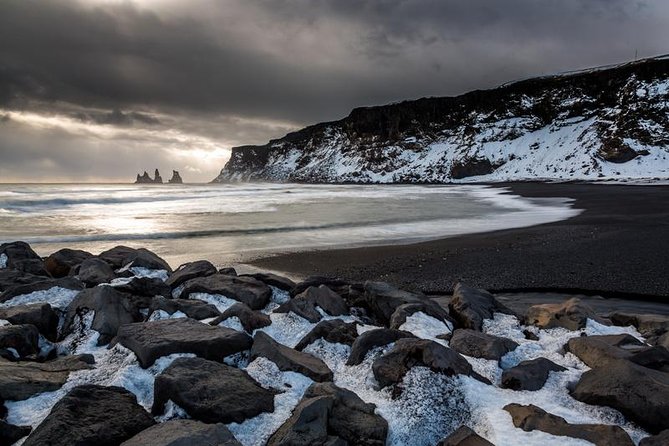
At Vík, you make a photo stop before visiting Reynisfjara. The black lava beach has bird cliffs, sea caves, columnar basalt, and powerful waves. Stay well back from the water. The coast is beautiful, but the surf can be dangerous, and the schedule gives you only about 40 minutes.
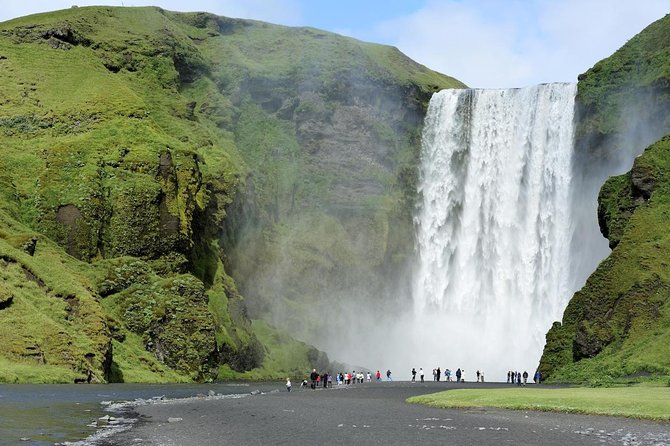
Skógafoss rises 60 meters beside the village of Skógar. It is one of the country’s most impressive waterfalls, with a broad curtain of falling water and heavy spray. Seljalandsfoss is different, a narrow ribbon dropping from an overhanging lava cliff. You can walk behind it, but waterproof clothing is a sensible idea because staying dry is unlikely.
The day finishes with Skógar Museum, where turf houses and local objects show Iceland’s past. Admission is included, and the one-hour visit helps balance the natural sights with human stories. This is a very full day, so you should expect plenty of time on the bus.
Day seven: horses, greenhouses, and the Golden Circle
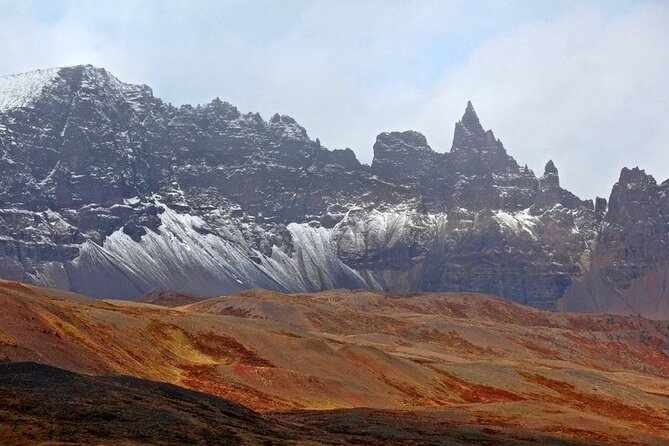
Fridheimar begins the final touring day with Icelandic horses and a geothermal greenhouse. You learn about the breed’s special qualities and history, then see how geothermal heat supports greenhouse growing. This is a smart stop because it shows practical uses of Iceland’s natural resources rather than only dramatic scenery.
At Geysir, the original geyser is dormant, but Strokkur erupts every five to ten minutes. You have about an hour and a half to walk among hot springs and bubbling pools. The frequent eruptions make this one of the easier natural attractions to time, though you still need to stay behind barriers.
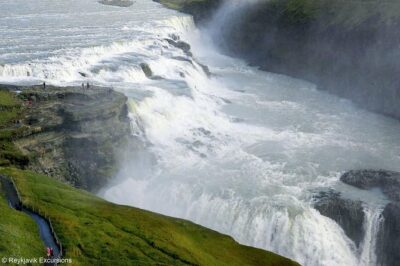
Gullfoss, the Golden Falls, drops 32 meters in a double cascade along the Hvítá River. On a sunny day, spray can create a rainbow over the falls. The stop lasts about 40 minutes, enough to reach the viewpoints and take in the scale of the water.
Thingvellir National Park brings together geology and Icelandic political history. It was the site of the Alþingi, one of the world’s oldest existing national parliaments, and has been a UNESCO World Heritage site since 2004. Fissures cut through the plain beside Lake Thingvallavatn, making this both a scenic and cultural high point.
The final stop is Reykjavík, with about an hour to enjoy the capital’s highlights. Since your first and last days are also open, you may have additional time to explore the city outside the guided schedule.
What the price covers, and what it does not
At $3,386.15 per person, this tour is not a budget choice. Its value comes from bundling several expensive and complicated pieces: seven nights of lodging, breakfast, a vehicle for six touring days, an English-speaking guide, airport transfers, WiFi, parking, the Mývatn Nature Baths, museum visits, and the greenhouse and horse-stable visit.
You also avoid the cost and stress of renting a car, arranging a full Ring Road route, and driving long distances in uncertain conditions. The guide’s role is a major part of the value. Strong guides have added explanations of geology, folklore, sociology, biology, current events, and Icelandic traditions, while also helping with practical matters such as fitting winter ice grippers.
Still, breakfast is the only meal clearly included. You must pay for lunches, dinners, drinks, and other personal services. One useful food warning is that vegetarian choices may be limited at some stops, so you should plan ahead and carry suitable food if needed.
The accommodation is selected for the route, with single-night stops in several places. That makes the circuit efficient, but unpacking repeatedly can be tiring. You are paying for reach and convenience, not a leisurely stay in one resort.
Who will get the most from this Iceland tour?
I would choose this tour if you want to see most of Iceland without driving. It suits first-time visitors, solo travelers who prefer a group, couples, and anyone who wants a guide to explain the country rather than simply point at waterfalls.
It also works well for people who value cultural stops. Glaumbær and Skógar museums, the horse farm, the greenhouse, and the East Fjords mineral collection keep the trip from becoming a string of viewpoints.
You should think twice if you want long hikes, unstructured time, or specialist activities such as glacier trekking. The route offers soft adventure, crater walks, lava paths, and beaches, but it is primarily a sightseeing circuit.
Winter departures can bring a special bonus: northern lights viewing is possible, although no tour can guarantee them. Winter equipment includes snow and ice gripper spikes and a flashlight. Summer adds longer daylight and the Dettifoss detour from June through August.
Should you book the 8-Day Guided Iceland Circle Tour?
I would book it if your priority is a broad, well-supported introduction to Iceland. The route covers the major natural sights, adds worthwhile local museums, and gives you a guide who can turn a long drive into part of the experience.
I would not book it casually. The price is high, the days can be long, meals beyond breakfast cost extra, and the non-refundable terms leave little room for a change of plans. Before booking, confirm the departure season, ask about the hotel locations, and plan for vegetarian food if that applies to you.
For a first visit, the tour’s main strength is simple: you see a great deal of Iceland without having to manage the roads yourself. That convenience, paired with the guides’ strong record for warmth, humor, and practical help, makes the cost easier to justify.
FAQ
How long is the Iceland Circle tour?
The tour lasts approximately eight days, including arrival and departure days. The guided bus portion runs for six days.
Where does the tour start?
The stated meeting point is Reykjavik Natura, Berjaya Iceland Hotels, at Nauthólsvegur 52 in Reykjavík.
Is airport transportation included?
Yes. Arrival and departure transfers are provided through the FLYBUS Plus shuttle. The transfer operates without a guide.
Is accommodation included?
Yes. The package includes seven nights of accommodation in Iceland.
Is breakfast included?
Yes. Breakfast is listed as included. Additional meals, drinks, and personal services are not included.
What language is the tour conducted in?
The guided bus tour uses an English-speaking guide or driver-guide.
What is the maximum group size?
The tour has a maximum of 25 participants.
Is admission to the Mývatn Nature Baths included?
Yes. Admission and towel rental at the Mývatn Nature Baths are included.
Is the Dettifoss stop available on every departure?
No. The itinerary specifies the Dettifoss detour from June through August.
Fresh around Reykjavík
- Tipsy in Reykjavik: Drink with a Viking (Food, Beer, Music)★ 5.0 · 3 reviews
- Exclusive Snaefellsnes Peninsula Private Day Tour★ 4.0 · 3 reviews
- Sólheimajökull Glacier Hiking Tour★ 3.7 · 3 reviews
- Northern Lights 3 Hours Private tour★ 4.5 · 3 reviews
- Northern Lights Private Tour from Reykjavik★ 5.0 · 3 reviews
- From Reykjavik: Private South Coast Tour in Iceland★ 4.3 · 3 reviews
- Private Superjeep Tour To Landmannalaugar and Hekla Volcano★ 5.0 · 3 reviews
- Iceland’s south coast G spots★ 5.0 · 3 reviews
Guided, compared.
Jokulsarlon Glacier Lagoon Full-Day Guided Trip
Read our review →
The Golden Circle Guided Bus Tour from Reykjavik
Read our review →