
Reviewed · WHALE WATCHING
Reykjavik: Whales of Iceland Museum Entrance Ticket
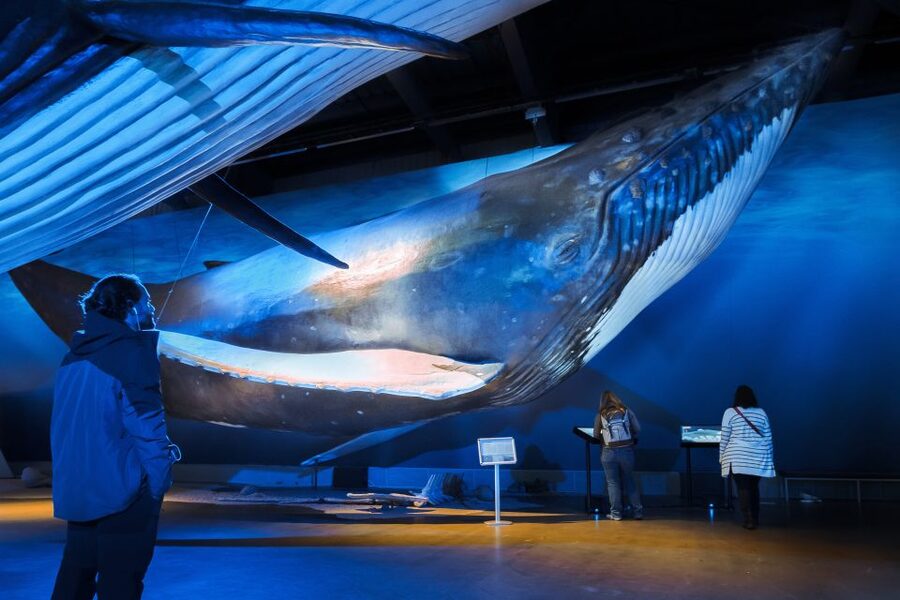
Whales can make a museum feel enormous. At Whales of Iceland in Reykjavík, more than 25 life-size models represent 23 whale types found in Icelandic waters, including the blue whale, sperm whale, and North Atlantic right whale. I like the sheer scale of the displays, and I like that the ticket includes thoughtful films and an audio guide in 17 languages.
The main drawback is the museum’s size. You can see the central exhibits in about 30 minutes if you move quickly, so $34 feels high for a short visit. Give yourself closer to an hour, watch a documentary, and use the interactive displays to get better value.
In This Review
- Key things to know before you go
- Entering the giant hall at Fiskislóð 23
- The 23 whale types and why size matters
- Interactive exhibits that make the science easier
- The Fin Whale Theatre and its moving films
- Using the 17-language audio guide
- How long to allow, and how to get your money’s worth
- Best times to fit it into a Reykjavík day
- Who will enjoy Whales of Iceland most
- Practical details worth knowing
- Should you book Whales of Iceland?
- FAQ
- Where is Whales of Iceland located?
- How much does admission cost?
- How long is the ticket valid?
- How many whale types are represented?
- How many life-size models are in the museum?
- Is an audio guide included?
- What languages are available for the audio guide?
- Are documentaries included in the ticket?
- Is parking available?
- Is the museum wheelchair accessible?
Key things to know before you go
- The blue whale model changes your sense of scale: Seeing a whale at full size is far more striking than seeing one in a photograph.
- The museum covers 23 whale types: The models include species recorded in Icelandic waters, from familiar humpbacks to less commonly seen whales.
- The Fin Whale Theatre adds real substance: Films such as Whale Wisdom, narrated by Sir David Attenborough, and Sonic Sea, narrated by Rachel McAdams, focus on conservation and underwater noise.
- The visit works well in bad weather: You get an educational indoor activity when rough seas cancel a whale-watching trip.
- Children have extra ways to stay involved: Question sheets and a certificate can turn the visit into a small learning mission.
- The ticket includes useful extras: You get the audio guide, Wi-Fi, and free parking, while drinks and refreshments are sold at the Whale Cafe.
Entering the giant hall at Fiskislóð 23
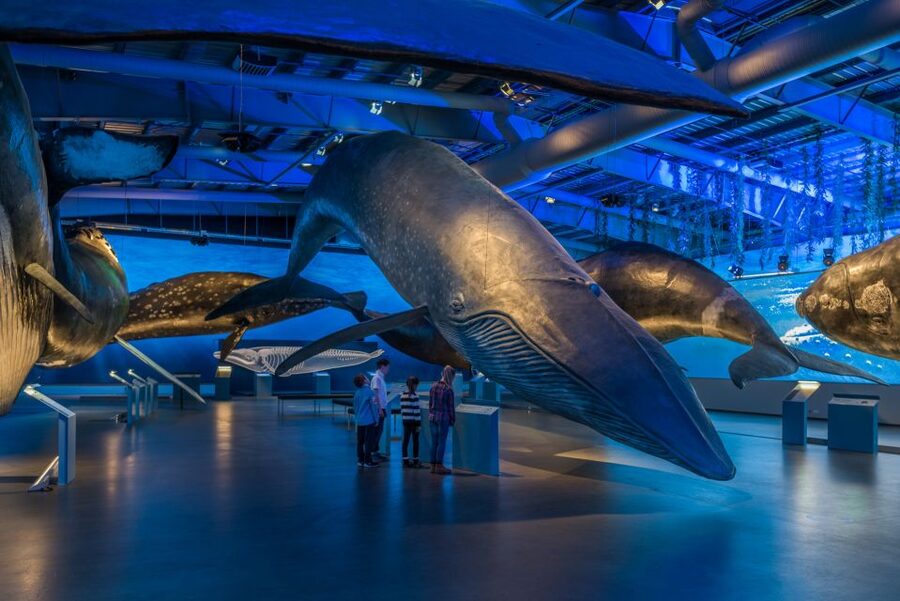
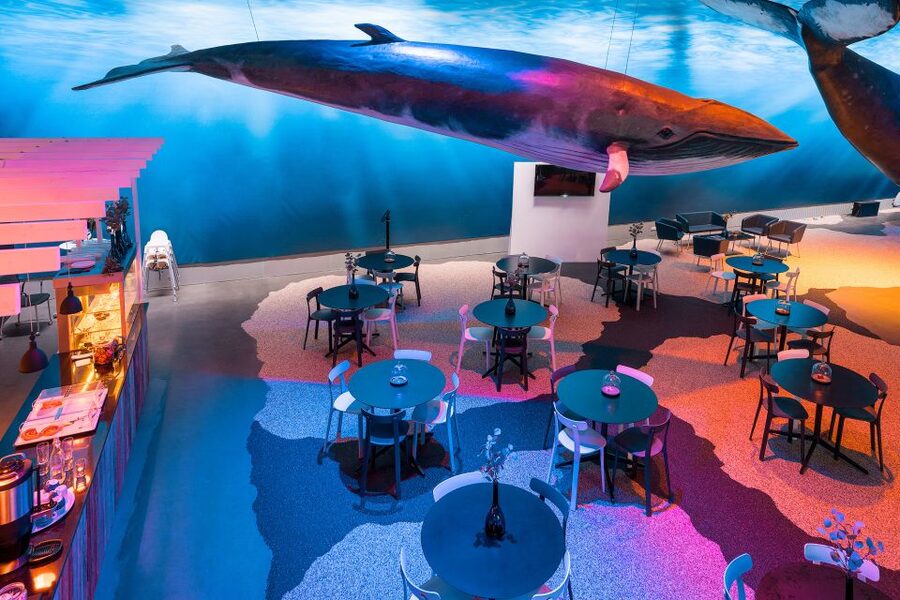
Whales of Iceland is at Fiskislóð 23 in Reykjavík’s Capital Region. It is not a tiny cabinet of curiosities with a few bones behind glass. The main room is arranged around huge, suspended whale models, giving the museum a calm, open feel.
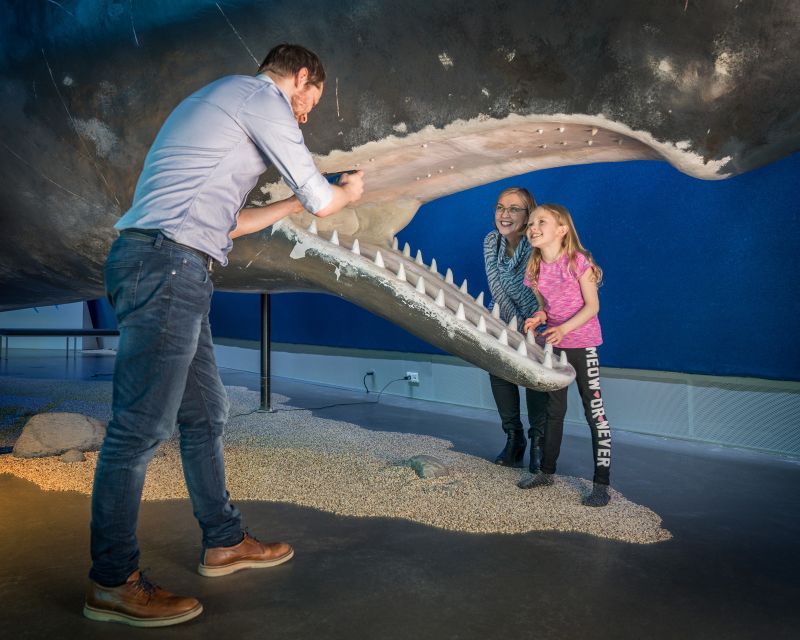
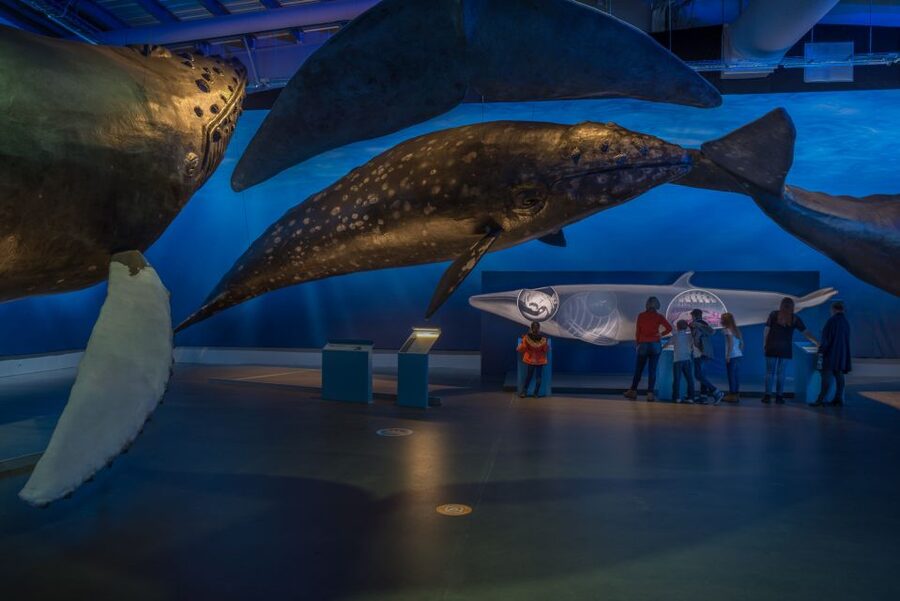
The first thing you notice is size. A life-size whale model gives you an honest sense of the animal’s length and mass. Even if you have seen whales from a boat, distance and sea conditions can make it hard to understand what you are looking at. Here, you can walk beneath and beside the models and take in their proportions without waves, spray, or a moving vessel getting in the way.
The atmosphere is peaceful and semi-quiet. Underwater sounds help create the setting, but the museum does not feel like a noisy theme park. I think that suits the subject. The animals are impressive enough without a lot of theatrical clutter.
The models are recreations rather than preserved animals. That matters if you want a museum built around original specimens or a large collection of artifacts. This experience is instead about visual scale, clear information, and a close look at body shape.
More Museum Visits in Reykjavík
- Reykjavik: Perlan Museum Wonders of Iceland Entrance Ticket
★ 4.7 · 2,575 reviews - Reykjavík: Hop-On Hop-Off Bus and Perlan Museum Entry Ticket
★ 4.3 · 719 reviews - Reykjavík: National Museum of Iceland Entry Ticket
★ 4.4 · 432 reviews
The 23 whale types and why size matters
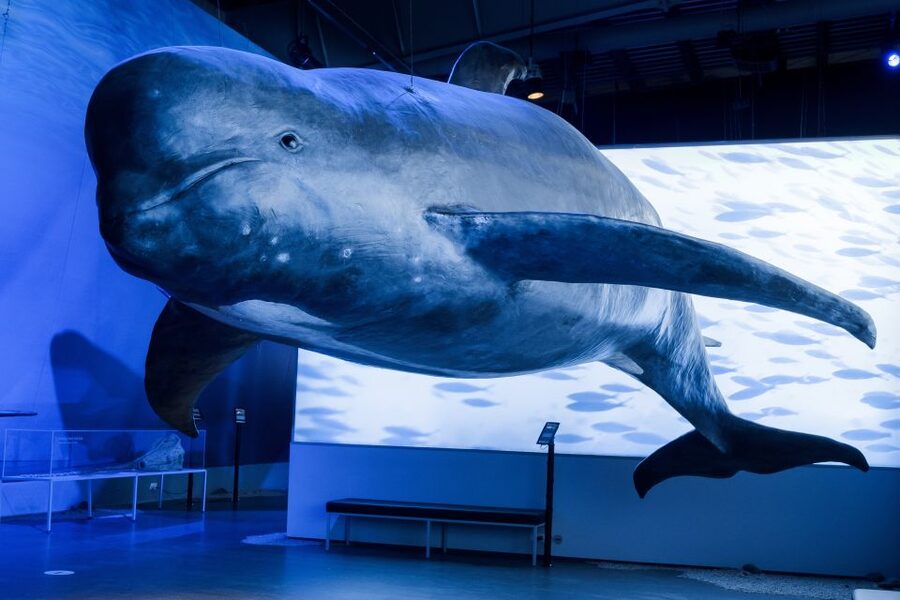
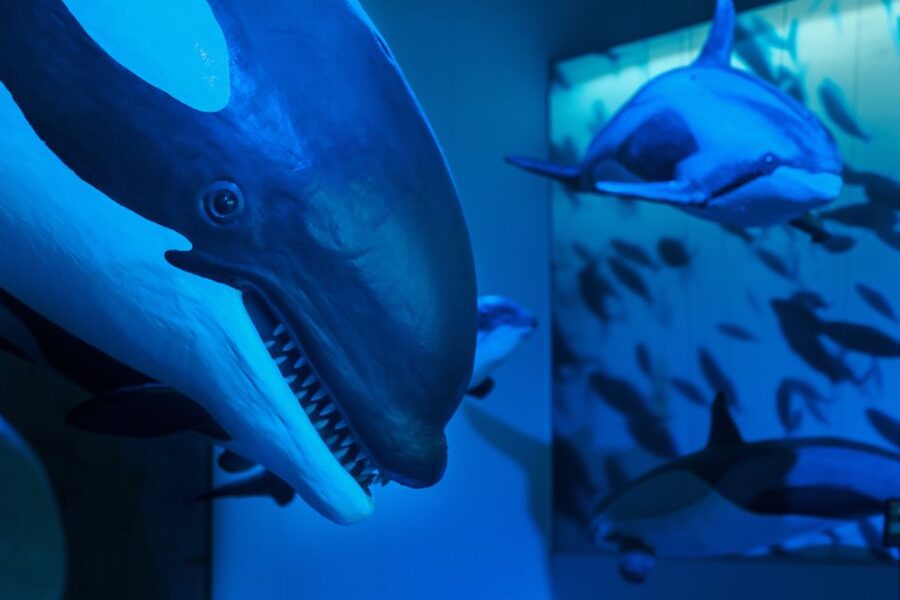
The central collection represents every whale type recorded in Icelandic waters, with more than 25 life-size models. The range includes the enormous blue whale, the long, distinctive sperm whale, and the critically endangered North Atlantic right whale.
You also get a useful reminder that the word whale covers a wide variety of animals. Different bodies, heads, fins, and feeding styles become easier to understand when the models are placed in the same room. A panel or audio segment can tell you a species is large, but standing beside its full-size form makes that fact stick.
The displays include information about whales in Iceland and around the world. You can learn about anatomy, behavior, conservation, and the role of sound in ocean life. The museum is especially effective when it connects a physical feature to a practical fact. Instead of simply reading a species name, you get a better idea of how its body fits its way of living.
I recommend walking through the room once without trying to absorb every panel. Then return to the models that catch your attention and use the audio guide for more detail. This simple two-pass approach works better than attempting to read everything in order.
One limitation is that some visitors may want more original material. If you expect historic whaling equipment, extensive skeleton displays, or a large collection of artifacts, you may find the museum light on those things. The models do the main work here.
Interactive exhibits that make the science easier
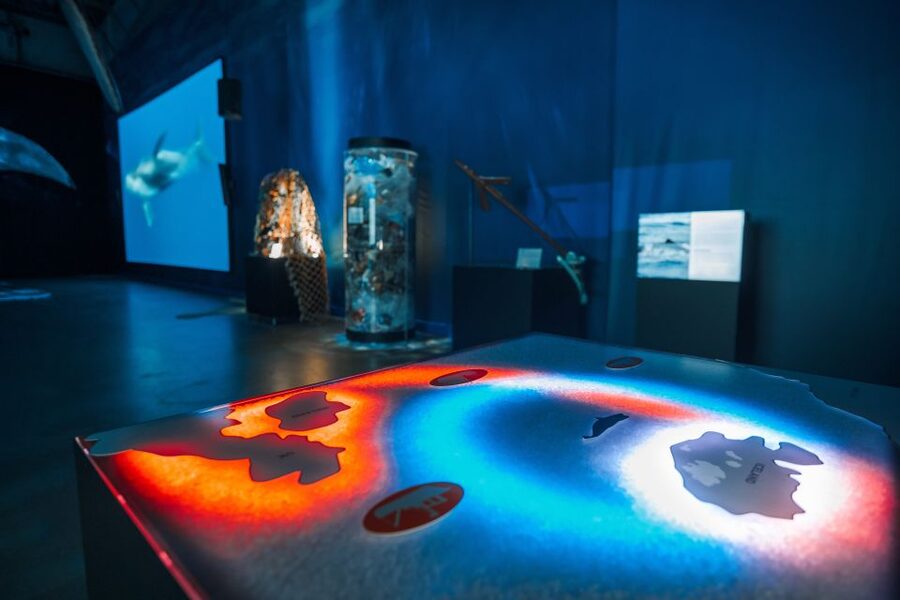
The interactive stations help break up the reading. They let you explore whale anatomy and behavior in a more active way, which is useful for children and for anyone who learns better by seeing and doing.
I would not treat these displays as filler. They give context to the models. The giant forms are memorable, but interactive material helps explain how these animals live, communicate, and respond to their surroundings.
Families get a clear advantage. Children can answer questions about what they are learning, and a certificate at the end gives the visit a small sense of purpose. That can make a difference when you are asking a child to slow down and read information panels.
Adults should not dismiss the family features. The museum presents serious subjects in a way that is easy to follow, including conservation and the effect of human activity on the sea. It is educational without requiring a science background.
The interactive sections also make this a useful choice when the weather turns bad. Reykjavík can easily produce a wet, windy afternoon, and this museum offers a quiet indoor change from cafés and shops.
The Fin Whale Theatre and its moving films
The included films are one of the strongest reasons to spend more than 30 minutes here. Documentaries play throughout the day in the Fin Whale Theatre, so you do not need to buy a separate cinema ticket.
The program includes Whale Wisdom, narrated by Sir David Attenborough, and Sonic Sea, narrated by Rachel McAdams. The films look at whale conservation, research, and the effects of underwater noise pollution.
The subject matter is not all cheerful. The film about underwater noise can be moving and depressing, especially when it explains how human activity affects animals that depend on sound. That serious tone is part of the museum’s value, but it may not suit someone seeking a purely light attraction.
I would check the film schedule when you arrive and plan your walk around it. The documentary may become the emotional center of your visit. Several people find the film more memorable than the models because it links the beautiful animals in the hall with real conservation problems.
If your time is limited, do not automatically skip the film. The models show you what whales look like. The theatre explains why their survival matters.
More Tickets in Reykjavík
- Small-Group Golden Circle, Blue Lagoon with Ticket & Kerid Crater
★ 5.0 · 5,631 reviews - Reykjavik: FlyOver Iceland Entry Ticket
★ 4.7 · 3,499 reviews - Reykjavik: LAVA SHOW – Immersive Experience Entry Ticket
★ 4.8 · 3,360 reviews - Lava Show Reykjavik Admission Ticket – Optional Premium Upgrade
★ 5.0 · 3,278 reviews
Using the 17-language audio guide
The audio guide is included and available in English, Icelandic, French, German, Polish, Chinese, Portuguese, Finnish, Japanese, Spanish, Danish, Dutch, Swedish, Norwegian, Italian, Russian, and Faeroese.
That range makes the museum easier for international visitors, and it lets you set your own pace. You can listen closely at a favorite model, skip material you already understand, and avoid trying to read every panel in a busy moment.
Bring headphones. They are listed as something to bring, and using your own pair is the most practical option. The guide is especially useful if you visit without catching a free English or Icelandic explanation from a host or greeter.
The museum’s staff language is English and Icelandic. If you prefer a more personal explanation, you might find a free guided introduction during your visit, but the timing is not guaranteed. The audio guide is the dependable choice.
How long to allow, and how to get your money’s worth
The ticket is valid for one day, but that does not mean you need a full day at the museum. A quick look can take around 30 minutes. A more worthwhile visit takes about 45 to 75 minutes, depending on how much you read, how long you spend at the interactive stations, and whether you watch a full documentary.
At $34 per person, the price deserves a closer look. For a brief walk through a single hall, it is expensive. That is the clearest weakness of the experience, particularly for adults who do not plan to use the film or audio guide.
The value improves if you:
- Watch one of the documentaries.
- Use the audio guide rather than only photographing the models.
- Spend time with the interactive stations.
- Bring children who will enjoy the questions and certificate.
- Need a reliable indoor activity after a cancelled whale-watching trip.
- Use the free parking and Whale Cafe during a longer visit.
A coffee or refreshment at the Whale Cafe can round out the stop, and a small gift shop offers souvenirs. Food and drinks are not included in admission, so plan to pay separately.
I would not book this as your only whale experience if your main dream is to see a living whale in the sea. A museum cannot replace a boat trip. It does, however, give you useful preparation before whale watching and remains a good backup when weather cancels a sailing.
Best times to fit it into a Reykjavík day
The museum can work at several points in your schedule. Before whale watching, it gives you a better idea of the animals you might encounter. After a boat trip, it helps you compare what you saw at sea with the full-size models on land.
It is also a sensible rainy-day plan. One visitor used it when whale watching was cancelled due to bad weather and still found it worthwhile, though the experience was not a replacement for going out on the water.
Because the actual visit is relatively short, you can pair it with other plans in the area. That is also why expectations matter. You are not setting aside an entire day of exhibitions. You are making room for a focused museum visit, a film, a café stop, or a nearby activity.
The calm atmosphere can be a welcome break from central Reykjavík. The location is outside the city center, but free parking helps if you are driving. Hotel transfers are not included, so you need to arrange your own way there.
Who will enjoy Whales of Iceland most
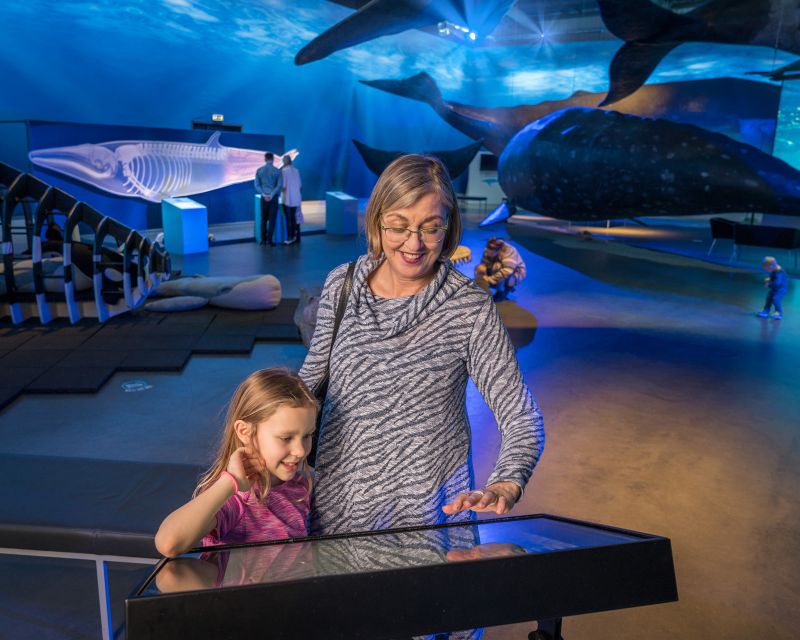
I recommend it most strongly to families, nature lovers, and people who want to understand whale size before or after a sea tour. Children have plenty to look at, and the certificate gives them a reason to take part instead of simply racing through the room.
It also suits adults who enjoy conservation films and clear scientific displays. The underwater noise material adds weight to the visit and may change how you think about the sounds produced by ships and other human activity.
You may be less impressed if you want a large, traditional museum with many historical objects. The museum is mainly a giant hall of life-size sculptures, information boards, interactive stations, and a film theatre. That focus is its strength and its limitation.
For photography, the models offer unusual scale comparisons and dramatic shapes. Just remember that a photograph of a whale model does not fully communicate how large it feels in person. The visual effect works best when you walk beneath the animals rather than only viewing them on a screen.
Practical details worth knowing
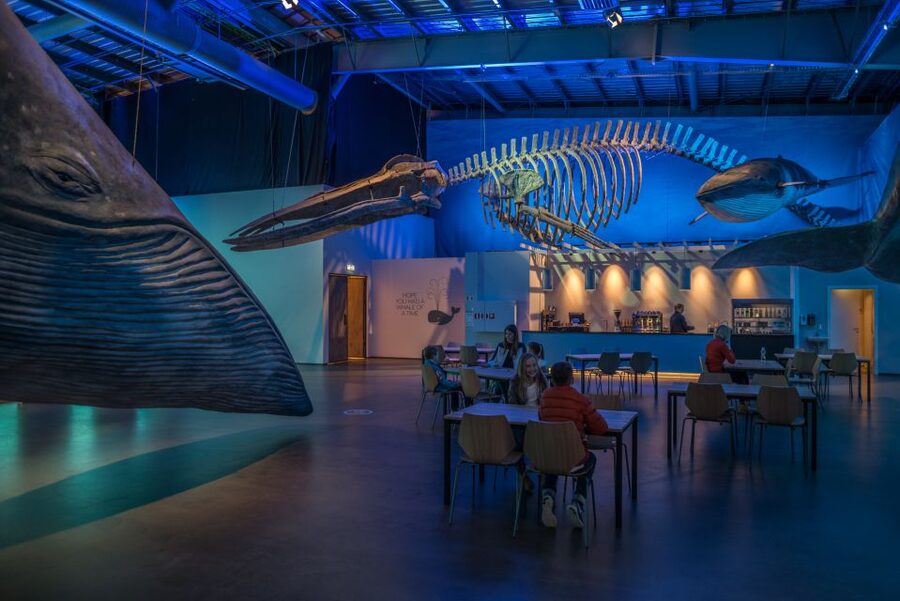
Admission includes museum entry, the audio guide, Wi-Fi, and free parking. Food and drinks are available for purchase at the Whale Cafe, and a gift shop sells small souvenirs.
The museum is wheelchair accessible. The listed host and greeter languages are English and Icelandic, while the audio guide offers the wider language selection.
You can cancel up to 24 hours before the visit for a full refund, and a reserve-now, pay-later option is available. The ticket is valid for one day, with availability and starting times shown when you check the date.
If you plan to listen to the guide, bring headphones. That small item is easy to forget and can make the visit more comfortable.
Should you book Whales of Iceland?
Book it if you want a close look at whale scale, need a strong rainy-day activity, or are visiting with children. The life-size models are the main draw, but the included documentaries and audio guide give the visit more substance than a quick photo stop.
Think twice if $34 feels steep for a museum you may finish in 30 minutes, or if you want original artifacts rather than recreations. I would book it for roughly an hour, make time for a Fin Whale Theatre film, and treat it as a companion to whale watching, not a substitute for the real thing.
FAQ
Where is Whales of Iceland located?
Whales of Iceland is located at Fiskislóð 23 in Reykjavík, in Iceland’s Capital Region.
How much does admission cost?
The listed price is $34 per person.
How long is the ticket valid?
The ticket is valid for one day.
How many whale types are represented?
The museum represents 23 types of whales seen in Icelandic waters.
How many life-size models are in the museum?
The museum contains more than 25 life-size whale models.
Is an audio guide included?
Yes. An audio guide is included with admission and is available in 17 languages.
What languages are available for the audio guide?
The audio guide is available in English, Icelandic, French, German, Polish, Chinese, Portuguese, Finnish, Japanese, Spanish, Danish, Dutch, Swedish, Norwegian, Italian, Russian, and Faeroese.
Are documentaries included in the ticket?
Yes. Documentaries are shown in the Fin Whale Theatre, and the screenings are included in admission.
Is parking available?
Yes. Free parking is included.
Is the museum wheelchair accessible?
Yes. Whales of Iceland is wheelchair accessible.
More Whale Watching Tours in Reykjavík
- Reykjavík: Whale Watching and Marine Life Cruise
★ 4.6 · 9,838 reviews - Reykjavík: Whale Watching Cruise on the Amelia Rose Yacht
★ 4.5 · 2,911 reviews - The Original Classic Whale Watching from Reykjavik
★ 4.5 · 2,626 reviews - Reykjavik: Whale Watching Tour with Expert Guide
★ 4.2 · 2,307 reviews
Fresh around Reykjavík
- Tipsy in Reykjavik: Drink with a Viking (Food, Beer, Music)★ 5.0 · 3 reviews
- Exclusive Snaefellsnes Peninsula Private Day Tour★ 4.0 · 3 reviews
- Sólheimajökull Glacier Hiking Tour★ 3.7 · 3 reviews
- Northern Lights 3 Hours Private tour★ 4.5 · 3 reviews
- Northern Lights Private Tour from Reykjavik★ 5.0 · 3 reviews
- From Reykjavik: Private South Coast Tour in Iceland★ 4.3 · 3 reviews
- Private Superjeep Tour To Landmannalaugar and Hekla Volcano★ 5.0 · 3 reviews
- Iceland’s south coast G spots★ 5.0 · 3 reviews
Whale Watching, compared.


Whale Watching Cruise on the Amelia Rose Yacht
Read our review →
The Original Classic Whale Watching from Reykjavik
Read our review →
Traditional Whale Watching by Local Family Company
Read our review →
Browse the lists this tour appears in