Reviewed · TOURS
The Great Round Tour: Around Iceland in 13 Days
Iceland rewards the traveler who keeps moving. This 13-day Great Round Tour circles the country with a maximum of 12 people, mixing famous sights with remote roads, farm stays, and the rugged Westfjords. I like the small group and the fact that dinners, breakfasts, lodging, and the major boat trip are included. I also like the range: waterfalls, glaciers, volcanoes, bird cliffs, black beaches, and old fishing towns all fit into one trip.
The tradeoff is pace. You cover roughly 3,200 to 4,200 kilometers, depending on the route taken, and change hotels almost every night. That makes this a strong choice for seeing Iceland in depth, but a weak choice if you want lazy mornings, long stays in one town, or full control of your daily schedule.
In This Review
- Key points at a glance
- Why 13 days makes a difference in Iceland
- Days 1 to 4: From Reykjavík to ice and black sand
- Days 5 to 7: East Iceland and the volcanic north
- Days 8 to 10: The remote Westfjords
- Days 11 to 13: Snæfellsnes and the return to Reykjavík
- Lodging, food, and the small-group setup
- Jens Olafsson’s guiding and the practical pace
- Is $7,228.71 good value?
- Who should book this Iceland tour?
- FAQ
- Where does the tour start?
- Where does the tour end?
- How long is the Great Round Tour?
- How many people can join the tour?
- Is the tour offered in English?
- Are hotels included?
- Are meals included?
- Is the Glacier Lagoon boat trip included?
- Is the Skogar Museum admission included?
- How physically demanding is the tour?
- Can the itinerary change because of weather?
- Is the tour refundable if I cancel?
- Should you book it?
Key points at a glance
- A true country-wide route: You see the Golden Circle, south coast, Eastfjords, North Iceland, the Westfjords, and the Snæfellsnes Peninsula.
- Only 12 people maximum: A small van group allows for more personal guiding and easier stops than a large coach.
- Meals reduce the daily hassle: Twelve breakfasts and 11 dinners are included, while lunches, drinks, and snacks are your responsibility.
- The Westfjords are a major prize: Dynjandi, Látrabjarg, Rauðasandur, and remote coastal roads add places many shorter Iceland trips skip.
- Light hiking, not hard-core trekking: Expect walks to Svartifoss, Grábrók crater, beaches, cliffs, and viewpoints, with moderate fitness required.
- Weather still calls the shots: The operator may change the route or timing when conditions make a planned stop unsafe or impractical.
Why 13 days makes a difference in Iceland
Most first-time trips focus on Reykjavík and the Ring Road. This one goes farther. You get the familiar Iceland highlights, then continue into the Eastfjords, North Iceland, the Westfjords, and western volcano country.
That wider reach is the main reason to consider the price of $7,228.71 per person. It is not a cheap holiday, but the fee covers 12 nights of lodging, 12 breakfasts, 11 dinners, guiding, the Skogar Folk Museum, and a boat trip on the glacial lagoon. You also avoid renting a car, planning remote roads, finding every hotel, and making daily weather decisions.
I especially like the balance between major sights and smaller stops. The route does not simply tick off the Golden Circle and a few waterfalls. It includes Modrudalur, the highest inhabited place in Iceland at 469 meters, quiet Strandir, the fishing village of Sudureyri, and the long roads of the Westfjords.
The cost still needs careful thought. Lunches, beverages, airfare, and any service not listed are extra. Iceland is expensive, so your daily spending can rise quickly if you buy restaurant lunches and drinks. One useful approach is to bring picnic supplies when possible. The guide, Jens Olafsson, has helped people find suitable places for picnic lunches, which can save money without turning the day into a chore.
A few more trips people compare before booking
- Reykjavik: Golden Circle Full-Day Tour with Kerid Crater
★ 4.8 · 24,485 reviews - Reykjavik Food Walk – Local Foodie Adventure in Iceland
★ 5.0 · 18,952 reviews - Iceland: Northern Lights Bus Tour from Reykjavik
★ 4.1 · 11,161 reviews
Days 1 to 4: From Reykjavík to ice and black sand
Day 1 is simple. You make your own way to the hotel in Reykjavík, Hótel Klettur, at Mjölnisholt 12 to 14. This arrival night gives you a place to sleep before the sightseeing begins, though the supplied details do not include a scheduled city tour. I would add extra time in Reykjavík if you want museums, harbor walks, or a slower start.
Day 2 opens with Iceland’s classic Golden Circle. At Thingvellir National Park, you see the site of the old Icelandic parliament and a major geological feature. An hour gives you time to walk, take photographs, and hear how Iceland’s political story connects with the ground beneath your feet.
Gullfoss gets about 90 minutes. The waterfall drops in two stages into a deep gorge, and the spray can make the viewing area wet and slippery. Bring a waterproof outer layer, even when the sky looks friendly.
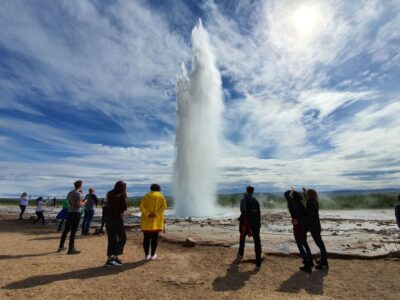
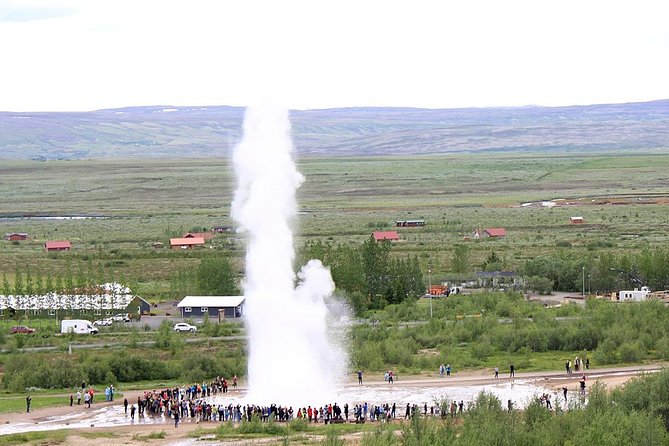
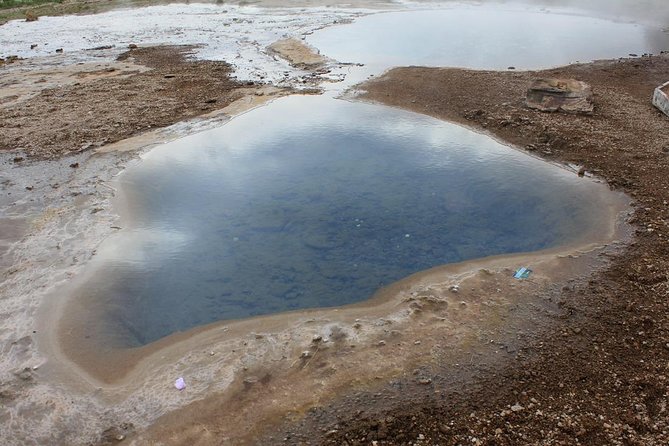
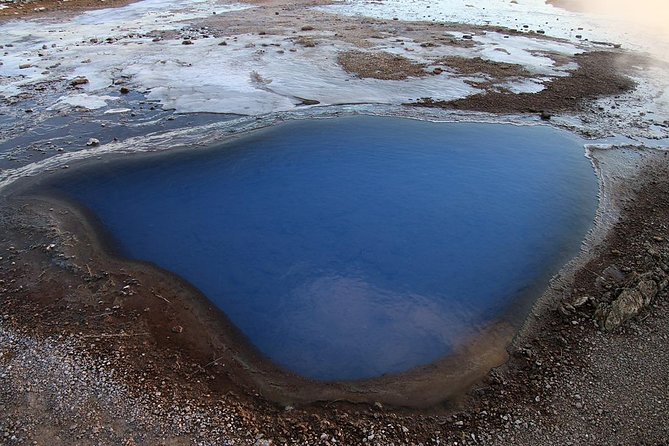
The final stop is the Geysir geothermal area, where hot ground and steaming vents make the earth feel active under your boots. An hour is enough to see the main features. This first full day gives you the big-ticket scenery, but it also introduces the walking and weather exposure that continue through the trip.
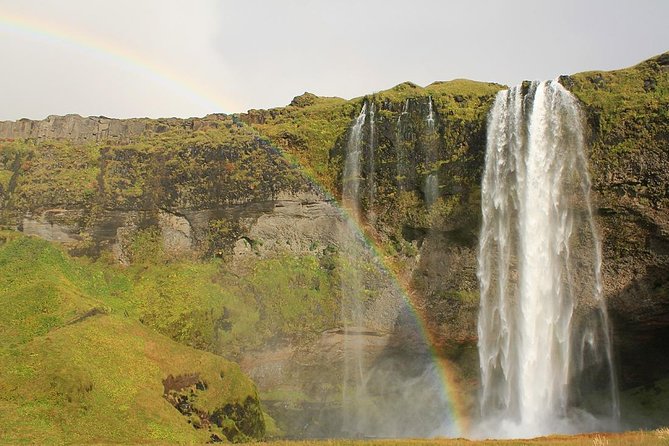
Day 3 follows the south coast. Seljalandsfoss is a quick 20-minute stop, but it is memorable because the path can take you behind the falling water when conditions allow. Expect spray and muddy footing.
Skogafoss gets 30 minutes, enough to appreciate its broad curtain of water. The nearby Skogar Museum receives 90 minutes and adds useful cultural context through its folk collection. I value this pause because a trip made only of waterfalls and viewpoints can become a blur. The museum gives the scenery a human setting.
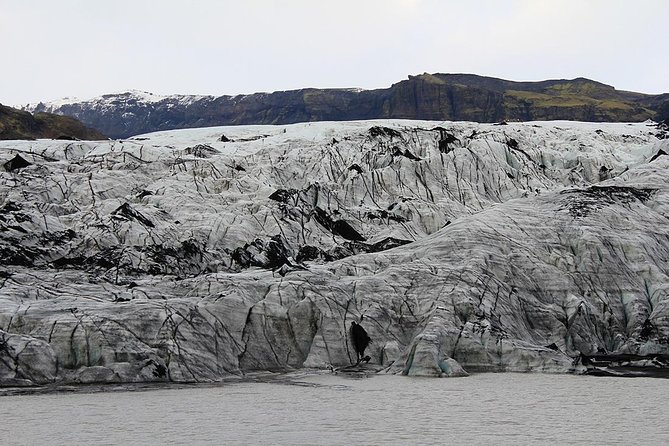
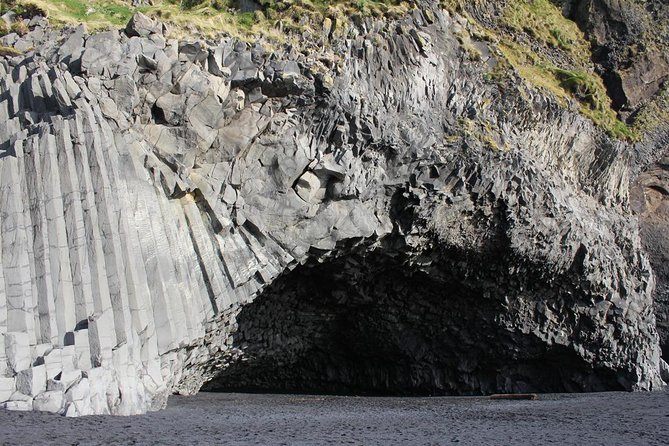
At Solheimajokull, you look across a glacier for about an hour. This is a viewing stop, not a glacier hike. Later, Dyrholaey brings sea arches and coastal views, while Reynisfjara offers black sand, basalt formations, and powerful surf. Stay well back from the water here. The beach is beautiful, but the sea is not a place to treat casually.
Day 4 is one of the trip’s biggest scenic days. At Skaftafell National Park, you have two hours for walking, followed by a 90-minute hike to Svartifoss. The waterfall is framed by dark basalt columns, so the path matters as much as the final view. Good walking shoes are important.
The Glacier Lagoon receives two hours, including a boat tour among floating icebergs. This is one of the clearest examples of an included feature adding real value. A separate lagoon trip can be costly, and the boat brings you closer to the ice than a quick roadside stop would.
Days 5 to 7: East Iceland and the volcanic north
Day 5 shifts from famous sights to quieter country. Hvalnes Lighthouse is a short stop, followed by Lagarfljót and the town of Egilsstaðir. The most unusual part is the long stay at a farm in the Modrudalur valley, where the group spends the night.
This is one of the tour’s better choices. The farmhouse setting gives you a sense of rural Iceland that a standard hotel circuit misses. The stay also breaks up the long drive and places you close to the next morning’s route. The tradeoff is that remote accommodation can feel isolated, and you should not expect city-style entertainment.
Day 6 is packed with geological sights. Dettifoss is described as Europe’s mightiest waterfall, and its force is the point. At Ásbyrgi, a horseshoe-shaped canyon, the mood changes from raw power to broad, quiet rock walls.
Krafla’s lava fields show Iceland’s volcanic past and present. The ground in parts of the area remained warm decades after an eruption, a detail that makes the geology feel immediate rather than locked in a textbook. Dimmuborgir follows with a maze of lava formations that invite short walks and photographs.
At Námafjall Hverir, boiling mud pots and steaming ground create strong smells and vivid colors. Skútustaðagígar adds pseudo-craters beside Lake Mývatn, though the listed stop is only five minutes, so expect a quick look rather than a long walk.
Day 7 begins at Goðafoss, the Waterfall of the Gods. The 20-minute stop is brief, but the waterfall is easy to view and photograph. In Akureyri, you get three hours of free time and can see Akureyrarkirkja, the town church, while taking a break from the van.
The route then reaches Siglufjörður, a former herring town, before continuing to Hvitserkur, a distinctive rock formation on the coast. The stops are short, which keeps the route moving but gives you limited time to explore each place beyond the main viewpoint.
Days 8 to 10: The remote Westfjords
Day 8 is mainly a road day, and that is not a criticism. From Hrútafjörður, the route heads toward the remote Strandir area, where the coast includes driftwood and small dark beaches. You continue toward Ísafjörður before spending the night in the fishing village of Súðureyri.
This section shows why a small vehicle matters. The Westfjords are less about a single famous attraction and more about the sequence of empty roads, steep coast, scattered farms, and fishing settlements. If you dislike long drives, this will test your patience. If you want to see a less polished side of Iceland, it may be one of your favorite parts.
Day 9 brings Dynjandi, a broad, tiered waterfall that spills down the mountainside. You have 45 minutes, enough for a walk toward the falls if conditions permit. The path and views make this more than a quick roadside photograph.
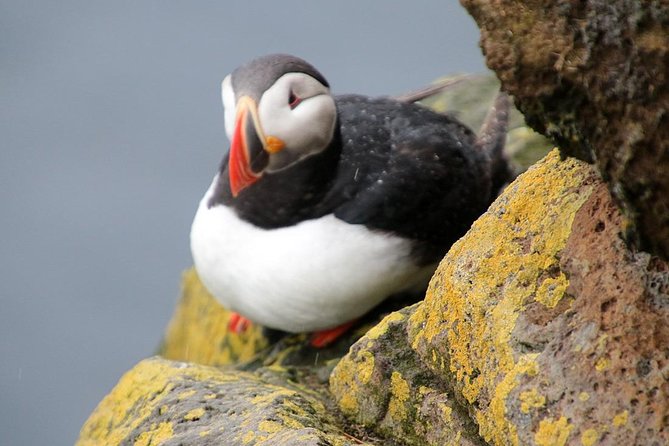
Látrabjarg is Iceland’s westernmost point and one of the most important bird cliffs in the country. The cliffs run for about 14 kilometers and rise as much as 400 meters above the sea. The scheduled hour gives you a chance to look for seabirds and experience the scale of the coast. Keep away from cliff edges, especially in wind or poor visibility.
Day 10 continues along the southern Westfjords to Rauðasandur, the Red Sands. The unusual sand color makes this a welcome change after Iceland’s many black beaches. The region is among the least populated parts of the country, so the appeal is quiet scenery rather than shops, nightlife, or a long menu of activities.
Another way to fill a day from Reykjavík:
- Reykjavík: South Coast Waterfalls, Black Sand & Glacier Tour
★ 4.8 · 11,030 reviews - Reykjavík: Whale Watching and Marine Life Cruise
★ 4.6 · 9,838 reviews - Reykjavik: Sky Lagoon Entrance Pass With 7-Step Spa Ritual
★ 4.8 · 6,166 reviews - From Reykjavik: Golden Circle, Kerid, & Secret Lagoon Tour
★ 4.8 · 6,009 reviews
Days 11 to 13: Snæfellsnes and the return to Reykjavík
Day 11 reaches Kirkjufellsfoss, one of Iceland’s most photographed waterfalls, with Kirkjufell mountain nearby. The stop lasts 20 minutes, so you get the classic view without a long visit.
At Djúpalónssandur, a basalt pebble beach, you spend about 45 minutes. A short walk along coastal cliffs adds birdlife and open-sea views. The coast can be rough, so sturdy footwear and a windproof layer will serve you better than stylish city shoes.
Day 12 turns inland toward Grábrók crater. The walk to the old volcano’s top takes about 30 minutes, giving you a final elevated view over the surrounding countryside. It is a manageable hike, but the tour does require moderate fitness overall, not just the ability to step out for photographs.
Hraunfossar and Barnafoss finish the sightseeing. Hraunfossar is unusual because water appears to flow through lava formations, while Barnafoss has a faster, more forceful character. Both are short stops, each listed at 30 minutes, so you should be ready to walk directly to the viewpoints.
Day 13 is for making your way to Keflavík Airport. The meeting information also says the activity ends back at the Reykjavík meeting point, so I would confirm the exact final transfer details before booking flights. The itinerary itself clearly directs you toward the airport, but the two descriptions do not match perfectly.
Lodging, food, and the small-group setup
Accommodation is one of the strongest parts of this trip. The route uses hotels, guesthouses, and family-run farmhouses, including remote overnight locations. The standard is described as comfortable rather than luxury, but that distinction matters less in Iceland than having a warm bed and a good dinner after a long day outside.
The farmhouse stays are especially appealing if you want local character. You may wake up in a rural valley rather than a chain hotel district, and the setting can make the trip feel less packaged. Some nights are in remote places, so do not expect the same facilities or evening options you would find in Reykjavík.
Breakfast is included each morning, and 11 dinners are included. Food has been praised as a major strength, with several dinners described as excellent. Lunch is not included, and that gives you less predictability in your daily budget. Icelandic food and drinks can be expensive, so ask about lunch plans early each day and use picnic options when practical.
With only 12 people maximum, the van setting also helps the social side of the trip. Solo travelers can find the smaller group more companionable than a large bus, while couples should know that the daily schedule naturally brings everyone together for long stretches.
Jens Olafsson’s guiding and the practical pace
Jens Olafsson is the named guide, and his role is central to the experience. He handles hotel registration, manages the driving schedule, and provides explanations about geology, history, geography, and Icelandic folk stories. That combination matters because the route contains many stops that benefit from context.
The driving is a serious part of the tour. One account describes roughly 3,200 kilometers, while another estimates up to 4,200 kilometers, likely reflecting route details and side roads. Either way, you will spend many hours in the vehicle.
I like the way the schedule includes short photo stops and lesser-known roads, but you should not confuse this with a slow scenic retreat. Most days involve several departures, a new overnight place, and a list of stops. Bring a book, refillable water bottle, layers, and something to occupy you between viewpoints.
Walking sticks were useful on some paths, according to one detailed account, and I would pack them if you regularly use them. The tour is not a hard-core adventure program, but beaches, cliffs, crater paths, and waterfall trails call for moderate fitness.
Is $7,228.71 good value?
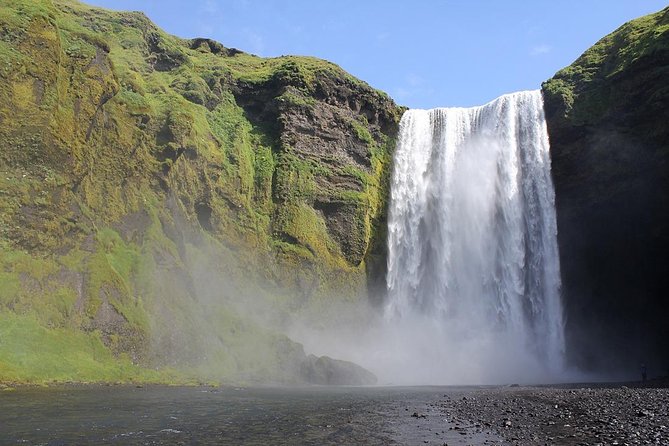
The price is easiest to judge by comparing what you would need to arrange yourself. You are paying for 12 nights, 12 breakfasts, 11 dinners, a guide, transport, admission to the Skogar Museum, and the Glacier Lagoon boat ride. You also receive route planning through areas that can be difficult to organize independently.
A self-drive trip might cost less in some seasons, but it would require a rental vehicle, fuel, lodging, restaurant meals, route research, and the confidence to handle Icelandic weather. This tour also removes the burden of driving after a long day of sightseeing.
The price is not ideal for someone who wants budget travel or complete independence. It is more attractive if you value time, local guiding, remote areas, and included evening meals. The consistently high rating of 4.9 from 25 ratings, along with a 100 percent recommendation rate, supports the idea that the service and itinerary deliver what they promise. Still, ratings cannot remove the basic tradeoff: this is a full country circuit at a premium price.
Who should book this Iceland tour?
I would choose this trip if you want to see nearly every major region in one visit and prefer someone else to manage the roads, hotels, and timing. It suits first-time visitors who want both the famous sights and harder-to-reach areas such as the Westfjords.
It also fits solo travelers who like a small social setting, couples who prefer a planned route, and photographers who want many different settings. You will see waterfalls, glaciers, icebergs, volcanoes, lava fields, beaches, cliffs, horses, sheep, birds, and remote farms.
I would skip it if your ideal Iceland holiday means three nights in one place, late starts, nightlife, or a long hike every day. I would also think twice if you dislike changing accommodation often or find long drives tiring.
The cancellation terms are strict: the experience is non-refundable and cannot be changed after booking. The operator can also alter the route because of weather or other conditions, which is normal for Iceland but worth accepting before you commit.
FAQ
Where does the tour start?
The listed starting point is Hótel Klettur, Mjölnisholt 12 to 14, Reykjavík.
Where does the tour end?
The day 13 plan directs you to Keflavík Airport, while the meeting information says the activity ends back at the meeting point. Confirm the final transfer details before booking.
How long is the Great Round Tour?
The tour lasts approximately 13 days and includes 12 nights of accommodation.
How many people can join the tour?
The maximum group size is 12 travelers.
Is the tour offered in English?
Yes. The tour is offered in English.
Are hotels included?
Yes. Accommodation for 12 nights is included.
Are meals included?
Twelve breakfasts and 11 dinners are included. Lunches and beverages are not included.
Is the Glacier Lagoon boat trip included?
Yes. The boat tour around the icebergs at the Glacier Lagoon is included.
Is the Skogar Museum admission included?
Yes. Admission to the Folk Museum of Skogar is included.
How physically demanding is the tour?
A moderate level of physical fitness is required. The route includes walks and hikes at places such as Svartifoss, Grábrók crater, beaches, and coastal cliffs.
Can the itinerary change because of weather?
Yes. The operator may alter the itinerary because of weather or other conditions outside its control.
Is the tour refundable if I cancel?
No. The experience is non-refundable and cannot be changed for any reason after booking. If the operator cancels because the minimum number of participants is not reached, you will be offered another date or experience, or a full refund.
Should you book it?
Book this tour if your goal is to see Iceland broadly and deeply without driving yourself. The strongest reasons are the small group, Jens Olafsson’s hands-on guiding, the included dinners, the remote farmhouse stays, and the Westfjords section that many shorter routes leave out.
Do not book it expecting luxury, free time, or a gentle pace. At $7,228.71, it asks for a serious budget and a willingness to spend long days on the road. For the right person, though, it is a well-planned way to gather an extraordinary amount of Iceland into one trip, with enough local detail to make the journey feel like more than a parade of viewpoints.
Fresh around Reykjavík
- Tipsy in Reykjavik: Drink with a Viking (Food, Beer, Music)★ 5.0 · 3 reviews
- Exclusive Snaefellsnes Peninsula Private Day Tour★ 4.0 · 3 reviews
- Sólheimajökull Glacier Hiking Tour★ 3.7 · 3 reviews
- Northern Lights 3 Hours Private tour★ 4.5 · 3 reviews
- Northern Lights Private Tour from Reykjavik★ 5.0 · 3 reviews
- From Reykjavik: Private South Coast Tour in Iceland★ 4.3 · 3 reviews
- Private Superjeep Tour To Landmannalaugar and Hekla Volcano★ 5.0 · 3 reviews
- Iceland’s south coast G spots★ 5.0 · 3 reviews
Tours, compared.
Golden Circle Full-Day Tour with Kerid Crater
Read our review →
South Coast Waterfalls, Black Sand & Glacier Tour
Read our review →
Iceland South Coast Full Day Small-Group Tour from Reykjavik
Read our review →
Golden Circle Classic Day Tour from Reykjavik
Read our review →
Reykjavík Small group Walking Tour – by CityWalk
Read our review →