
Reviewed · VOLCANO & LAVA TOURS
Volcano Movie – Experience the Latest Eruptions in Iceland
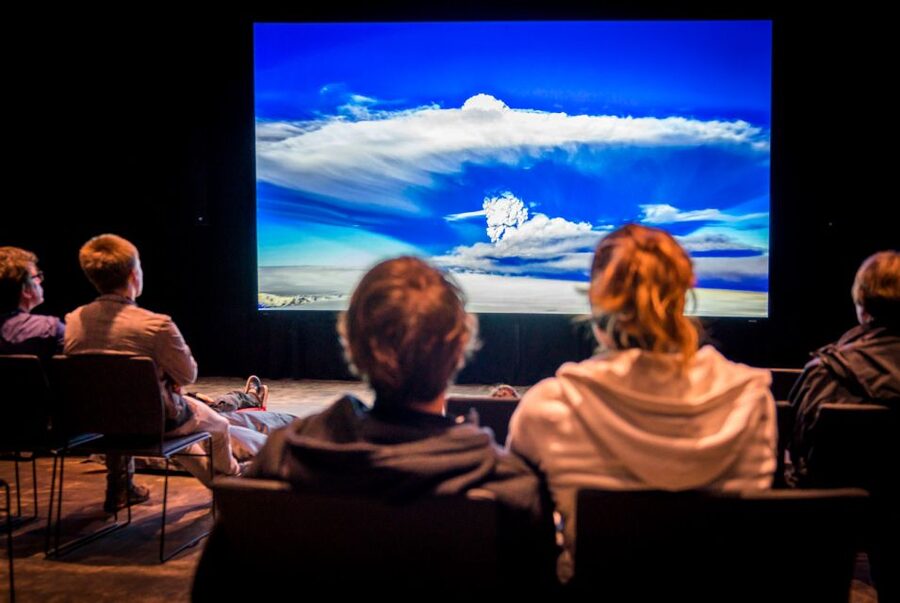
Iceland’s volcanoes make a powerful cinema show. At the LAVA Centre in Hvolsvöllur, you’ll watch eruption footage in 4K, moving from historic events to the latest activity at Fagradalsfjall. I like the film’s sharp images and its focus on real Icelandic events, especially Eyjafjallajökull in 2010 and Holuhraun in 2014. I also like that the film uses natural sound instead of a voice-over, though some viewers may miss having a narrator explain what they are seeing.
The movie works best as a short, focused stop during a drive along Iceland’s south coast or a visit to the Golden Circle. At $16 per person, it is not an all-day attraction by itself, but it offers useful context before you see Iceland’s volcanic sites in person. A German visitor described it as entertaining, brief, and very interesting, which is a fair guide to the experience.
In This Review
- Five things to know before you go
- Starting with Iceland’s long eruption record
- Seeing Eyjafjallajökull’s 2010 eruption
- Moving from Grímsvötn to Holuhraun
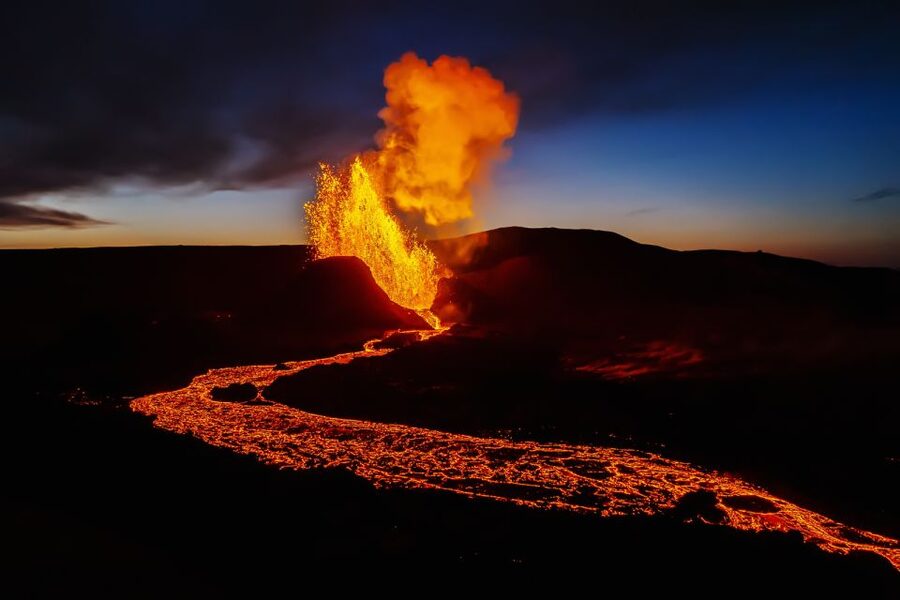
- The latest Fagradalsfjall eruptions
- Why the 4K footage matters
- A practical stop at LAVA Centre
- Is $16 good value?
- Who will enjoy this movie most?
- Booking, cancellation, and access
- Should you book the Volcano Movie?
- FAQ
- Where is the Volcano Movie shown?
- How do I find the LAVA Centre?
- How much does the Volcano Movie cost?
- How long is the experience valid?
- What footage does the movie include?
- Is the movie narrated?
- What image quality is used?
- Is food included?
- Is the experience wheelchair accessible?
Five things to know before you go
- The story begins with Katla in 1918: The film sets up Iceland’s modern eruption record before moving into more recent events.
- Eyjafjallajökull gets the attention it deserves: You see the 2010 eruption that disrupted air traffic across Europe.
- Holuhraun adds a less familiar chapter: The 2014 to 2015 eruption shows how major volcanic activity can happen with less public attention.
- There is no voice-over: Video and sound carry the story, so you watch rather than listen to a presenter.
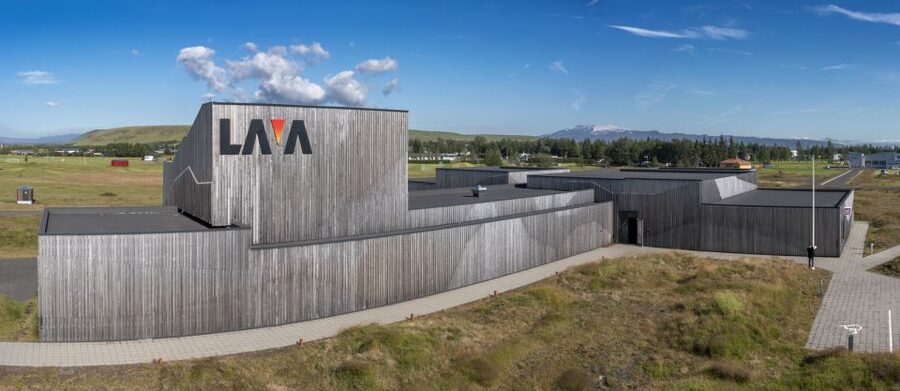
- The LAVA Centre is easy to find: It is the first building on the left when driving from Reykjavík or the Golden Circle into Hvolsvöllur.
- The ticket costs $16: Food is not included, but the in-house Katla restaurant and shop offer a practical place to eat.
Starting with Iceland’s long eruption record
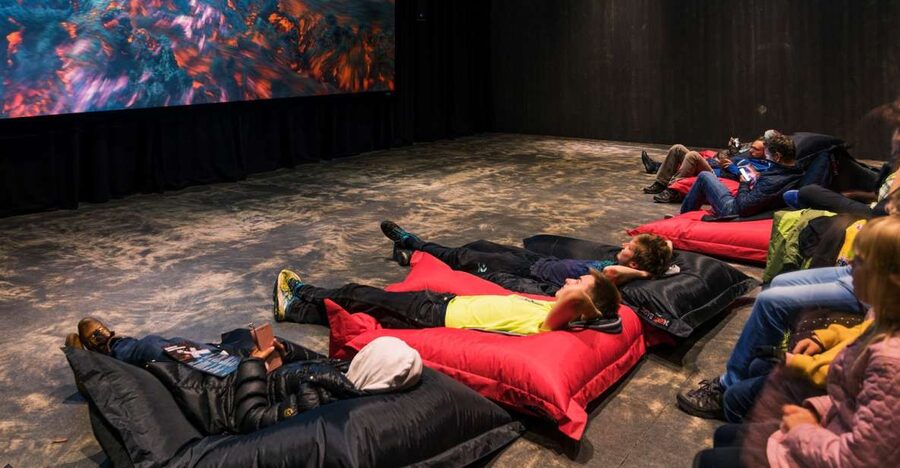
The movie opens with a short historical overview. You begin with the Katla eruption of 1918, then move through Hekla in 1947, Askja in 1961, Surtsey in 1963, the Westman Islands in 1973, Krafla in 1975, and other major events.
This opening matters because Iceland’s eruptions are not isolated oddities. They form a continuing part of life on the island. The movie gives you a basic timeline, helping you see how volcanic activity has affected settlements, transport, farming, and daily routines over the years.
I appreciate that the film does not begin with the most famous event. Starting with earlier eruptions gives you a better sense of scale. By the time the story reaches the 21st century, you have already seen that Iceland has lived with volcanic change for generations.
The historic section is also useful if you are visiting the LAVA Centre before heading farther into southern Iceland. You may already know the names Hekla, Katla, or Askja from road signs and guidebooks. This film gives those names a clear place in the country’s wider story.
More Volcano and Lava Tours:
- Reykjavik: Golden Circle Full-Day Tour with Kerid Crater
★ 4.8 · 24,485 reviews - Small-Group Golden Circle, Blue Lagoon with Ticket & Kerid Crater
★ 5.0 · 5,631 reviews - Reykjavik: Golden Circle, Kerid Crater, & Blue Lagoon Tour
★ 4.9 · 4,351 reviews
Seeing Eyjafjallajökull’s 2010 eruption
The centerpiece for many people will be Eyjafjallajökull. The 2010 eruption became famous around the world after ash clouds disrupted air traffic across Europe for days. The movie first covers the Fimmvörðuháls eruption, then follows with the larger Eyjafjallajökull event.
The value here is seeing the eruption as a physical event, not just a headline. On a map, the disruption to flights can seem disconnected from the volcano itself. High-quality footage helps connect the ash, fire, ice, and weather to the wider effect on people far beyond Iceland.
You will also get a stronger sense of why Icelandic volcanoes can be difficult to understand from a distance. Eruptions may happen under ice, across remote ground, or in conditions that change quickly. The film shows the force of nature without needing a presenter to tell you how dramatic it is.
I like the choice to include both Fimmvörðuháls and Eyjafjallajökull. They are linked in time, but they were not simply one identical event. Seeing them in sequence gives you a more complete picture of what happened in 2010.
Moving from Grímsvötn to Holuhraun
After 2010, the film turns to the Grímsvötn eruption of 2011. This keeps the story moving through Iceland’s recent volcanic activity instead of treating Eyjafjallajökull as a one-off event.
The Holuhraun eruption from 2014 to 2015 is especially useful. Many people know about Eyjafjallajökull because it affected flights, but Holuhraun received far less attention outside Iceland. The movie points out that this was a massive eruption, even though much of the world barely heard about it.
That contrast is one of the film’s best ideas. Public attention does not always match the size or importance of an eruption. A volcano can create enormous lava flows and major local effects without causing a worldwide travel problem.
For you, this section adds balance. You are not only watching the most famous Icelandic eruption. You are also seeing how volcanic events can matter greatly to people in Iceland while remaining almost invisible to international news audiences.
The latest Fagradalsfjall eruptions
The final section covers the recent eruptions at Fagradalsfjall, also referred to as the Fagradalseldar series. The information provided for the film does not give a precise date for the final footage, so you should treat the word latest as tied to the movie’s current version rather than as a promise of every eruption happening now.
The Fagradalsfjall material brings the film into the present day. After watching historical footage and major events from 2010 through 2015, you see the continuing activity that has made this part of Iceland so widely known.
This is likely to be the most immediately recognizable section for people who have followed recent Iceland news. It also helps explain why volcanic activity remains part of current life rather than only a chapter in the past.
You should not expect the movie to replace a live visit to an eruption area. Instead, it gives you a clearer idea of the scale and changing character of volcanic activity before or after you see Iceland’s volcanic country for yourself.
Another way to fill a day from Iceland:
- Reykjavik Food Walk – Local Foodie Adventure in Iceland
★ 5.0 · 18,952 reviews - Iceland: Northern Lights Bus Tour from Reykjavik
★ 4.1 · 11,161 reviews - Reykjavík: South Coast Waterfalls, Black Sand & Glacier Tour
★ 4.8 · 11,030 reviews - Reykjavík: Whale Watching and Marine Life Cruise
★ 4.6 · 9,838 reviews
Why the 4K footage matters
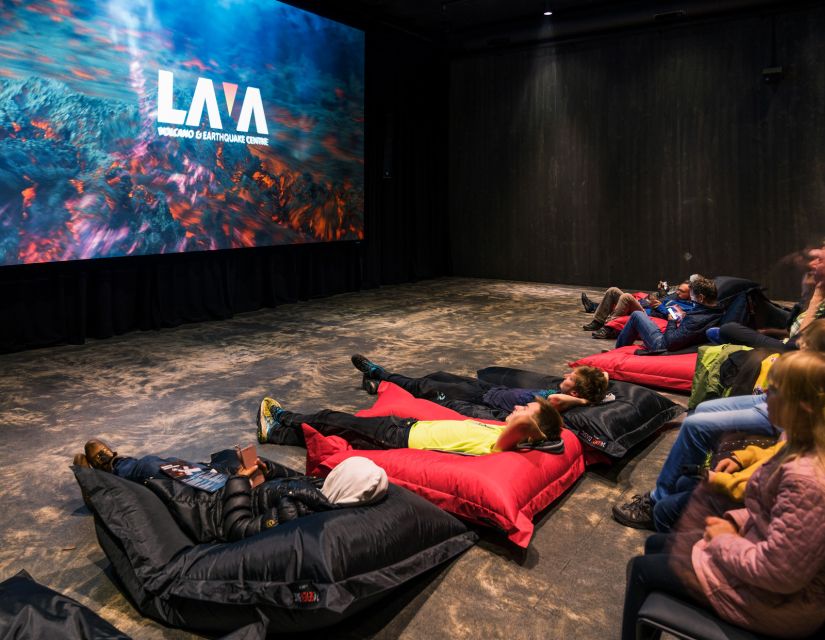
The film uses footage shot in 4K or better. That is more than a technical detail. Eruptions involve fine textures and rapid changes: ash clouds, glowing lava, steam, smoke, ice, and shifting light. Better image quality makes those details easier to follow.
I like that the presentation relies on video and sound rather than a vocal narrative. You are not listening to a guide talk over every scene. The approach lets the footage carry the mood and force of each eruption.
That choice will suit you if you prefer a visual show. It may be less satisfying if you want dates, scientific explanations, maps, or a detailed spoken account during the film. The free information available at the entrance helps fill in some of that background, especially on earthquakes and the major volcanoes around the LAVA Centre.
Think of the movie as an audiovisual introduction, not a full geology lesson. You get the feeling and broad sequence of Iceland’s eruptions, while the center’s other information can provide more factual context.
A practical stop at LAVA Centre
The meeting point is simple. LAVA Centre is at Austurvegur 14 in Hvolsvöllur, in Iceland’s Southern Region. When you arrive from Reykjavík or the Golden Circle, it is the first building on the left, and the directions say you cannot miss it.
That location makes the movie easy to add to a driving day. You do not need to arrange a separate transport service for the film, and there is no complicated meeting point to find in a remote valley. Check the available starting times when you book, since the activity is valid for one day and the exact schedule can vary.
The entrance includes only the cinema admission. Food and drinks are not allowed inside, but you can buy food at Katla, the in-house restaurant and shop. The free information at the entrance is a useful extra, particularly if you arrive early or want a little more context before the film begins.
The center is wheelchair accessible. Host or greeter support is available in English and Icelandic, and the listed languages for the experience are English and Icelandic.
Is $16 good value?
At $16 per person, the Volcano Movie is priced as a modest add-on rather than a full day out. You are paying for a focused film presentation, not a guided volcano hike, a museum admission package, or a meal.
I think the price works best when you are already passing through Hvolsvöllur. The film gives you a compact way to see eruptions that you could not safely or easily watch in person. It also adds meaning to the volcano names and ash stories you encounter during a south coast trip.
The value is weaker if you expect a long program or extensive spoken teaching. The movie is described as brief and entertaining, and there is no stated runtime beyond the one-day validity of the booking. You should plan it as one stop within a larger outing, not as the main activity for an entire day.
The strongest value comes from the quality of the footage and the range of events covered. In one sitting, you move from Katla and Hekla to Surtsey, the Westman Islands, Eyjafjallajökull, Holuhraun, and Fagradalsfjall. That is a lot of volcanic history for the cost of a simple cinema ticket.
Who will enjoy this movie most?
I would recommend it to you if you want a clear visual introduction to Iceland’s volcanic activity. It suits first-time visitors, families who prefer an indoor stop, and anyone planning to see the south coast without much background on the country’s volcanoes.
It is also a good choice if you have already seen footage of Eyjafjallajökull but know little about Holuhraun, Grímsvötn, or older eruptions. The historical sequence helps turn a collection of famous names into a connected story.
The experience may not suit you if you want an interactive exhibition, a live guide, or detailed technical explanations throughout. The lack of voice-over is part of its appeal, but it is also the clearest limitation.
For children, the natural sounds and eruption footage may hold attention better than a long lecture. Still, the available information does not specify a recommended age or the exact length, so you should check the current starting time and program details before committing.
Booking, cancellation, and access
You can cancel up to 24 hours in advance for a full refund. The reserve now and pay later option lets you hold a place without paying immediately, which is useful when Iceland’s driving plans depend on weather and road conditions.
The experience is valid for one day, with availability and starting times shown during booking. It is wheelchair accessible, and assistance is offered in English and Icelandic.
Keep your food and drinks outside the cinema. If you need lunch or a snack, plan to use Katla rather than trying to bring something into the screening.
Should you book the Volcano Movie?
Book it if you are driving through Hvolsvöllur and want a sharp, atmospheric look at Iceland’s eruptions for $16. I especially like the combination of Eyjafjallajökull, the less widely known Holuhraun eruption, and the recent Fagradalsfjall footage.
Skip it if you need a long guided lesson or a full museum visit included in the ticket. The film is a compact visual experience with no narration, but that simplicity can work well after a day on the road.
My practical advice is to pair it with the LAVA Centre’s free earthquake and volcano information, then use Katla for food if needed. That gives you more context without turning a short cinema stop into a costly detour.
FAQ
Where is the Volcano Movie shown?
It is shown at the LAVA Centre, Austurvegur 14, 860 Hvolsvöllur, Iceland, in the Southern Region.
How do I find the LAVA Centre?
It is the first building on the left when you drive from Reykjavík or the Golden Circle toward Hvolsvöllur.
How much does the Volcano Movie cost?
The price is $16 per person.
How long is the experience valid?
The booking is valid for one day. You should check availability for the available starting times.
What footage does the movie include?
It includes footage of Iceland’s historic and recent eruptions, including Eyjafjallajökull in 2010, Grímsvötn in 2011, Holuhraun from 2014 to 2015, and the recent Fagradalsfjall or Fagradalseldar eruptions.
Is the movie narrated?
No. There is no vocal narrative or voice-over. The story is presented through video and sound.
What image quality is used?
The film uses footage shot in 4K or better.
Is food included?
No. Food is not included, and food and drinks are not allowed inside the cinema. You can buy food at the in-house Katla restaurant and shop.
Is the experience wheelchair accessible?
Yes. The Volcano Movie experience is wheelchair accessible.
Fresh around Iceland
- Exclusive Snaefellsnes Peninsula Private Day Tour★ 4.0 · 3 reviews
- Tipsy in Reykjavik: Drink with a Viking (Food, Beer, Music)★ 5.0 · 3 reviews
- Sólheimajökull Glacier Hiking Tour★ 3.7 · 3 reviews
- Northern Lights 3 Hours Private tour★ 4.5 · 3 reviews
- Super Jeep Private tour in Þórsmörk★ 5.0 · 3 reviews
- Northern Lights Private Tour from Reykjavik★ 5.0 · 3 reviews
- From Reykjavik: Private South Coast Tour in Iceland★ 4.3 · 3 reviews
- Easy Hike on Sólheimajökull Glacier★ 5.0 · 3 reviews
Volcano & Lava Tours, compared.
Golden Circle Full-Day Tour with Kerid Crater
Read our review →
Small-Group Golden Circle, Blue Lagoon with Ticket & Kerid Crater
Read our review →
Golden Circle, Kerid Crater, & Blue Lagoon Tour
Read our review →
LAVA SHOW – Immersive Experience Entry Ticket
Read our review →
Lava Show Reykjavik Admission Ticket – Optional Premium Upgrade
Read our review →
Golden Circle with Kerid Volcanic Crater Day Tour from Reykjavik
Read our review →
Browse the lists this tour appears in