
Reviewed · 7-DAY EXPERIENCES
7 Day Around Iceland Tour- PRIVATE TOUR
Iceland packs a lot into one week. I like the private guide, which gives you a more personal way to understand Icelandic geology, folklore, and daily life, and I like the sheer range of sights, from Thingvellir and Gullfoss to Jökulsárlón and the Snæfellsnes Peninsula. You avoid the strain of driving unfamiliar roads, while still seeing remote areas that can be awkward to reach without a car.
The main concern is the price: $11,101.77 per person is a serious investment, even with hotels, breakfast, private transport, activities, entrance fees, and taxes included. Seven days also means long drives and a quick pace. You will see a great deal, but you will not have hours to linger at every waterfall, beach, or village.
In This Review
- Key points to know before booking
- Why private guiding matters on a seven-day circuit
- Golden Circle: history, geysers, and a geothermal lunch
- The south coast: waterfalls, black sand, and glacier views
- Vatnajökull country and the two glacier lagoons
- East Iceland: villages, waterfalls, and a change of pace
- Lake Mývatn: powerful water, steaming ground, and lava forms
- Snæfellsnes: mountain views, sea cliffs, and Icelandic legend
- Into the Glacier and the final waterfalls
- What the $11,101.77 price includes
- The pace, comfort, and best fit
- Should you book this private Iceland tour?
- FAQ
- Where does the tour start?
- How long does the experience last?
- What accommodation is included?
- Are meals included?
- Is the tour private?
- Which glacier activity is available in each season?
Key points to know before booking
- A true ring-road-style week: The route covers southwest Iceland, the south coast, Eastfjords, Lake Mývatn, Akureyri, Snæfellsnes, and western Iceland.
- Private guiding is the main luxury: Your group travels alone with a guide, allowing more room for questions and possible adjustments.
- Seasonal glacier activities: Natural ice-cave exploration is listed for November through March, while Into the Glacier is offered from April through October.
- Hotels and breakfast are included: Six nights of accommodation at local hotels or guesthouses come with daily breakfast.
- Meals beyond the first lunch cost extra: Lunch on day one is included. Other lunches and all dinners can be purchased during the trip.
- The sightseeing list is ambitious: With 38 listed stops, the schedule favors variety and coverage over a slow, restful pace.
Why private guiding matters on a seven-day circuit
Iceland is not difficult to admire, but it can be difficult to understand while you are focused on roads, weather, parking, and directions. A private guide takes care of the driving and gives the scenery a human and geological story.
That matters at places such as Thingvellir, where Iceland’s Parliament was established in 930. You walk toward Öxaráfoss waterfall while learning about the site’s role in Icelandic government and the country’s early democracy. The guide can also connect the visible rock formations with Iceland’s volcanic past, rather than leaving you with only a series of impressive photographs.
The private format also suits families and small groups with different interests. You can ask more questions than you usually could on a large coach, and the pace may feel less rigid. The published experiences of the company specifically praise guides Helga Bára, Sigrún, and Addy for their care, personal attention, and ability to explain Iceland’s culture and natural features.
That personal service is the strongest reason to consider paying a premium. If you only want transportation between famous sights, a regular group tour will likely cost less. If you want a guide who can put the scenery into context throughout the week, private travel has a clearer advantage.
A few more trips people compare before booking
- 7-Day Complete Iceland: South Coast, Golden Circle, Akureyri & Snaefellsnes
★ 4.5 · 139 reviews - 4, 5, 6 or 7-Day Small-Group Ring Road Tour from Reykjavik
★ 5.0 · 43 reviews - From Reykjavík: 4, 5, 6 or 7-Day Small-Group Ring Road Tour
★ 4.8 · 24 reviews
Golden Circle: history, geysers, and a geothermal lunch
The opening section brings together three of Iceland’s most famous sights. At Thingvellir, allow about 90 minutes for the walk to Öxaráfoss and the historic parliament site. It is an easy place to begin because it combines open scenery, national history, and geology without requiring a full-day hike.
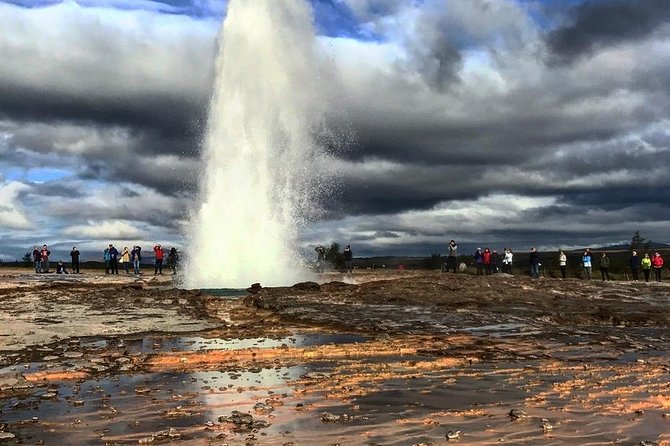
At Geysir, the original geyser is now almost inactive, but nearby Strokkur erupts roughly every four minutes. You have about an hour here, which should give you several chances to see the hot-water burst. Keep your camera ready, but also watch the ground and follow marked paths around the steaming pools.
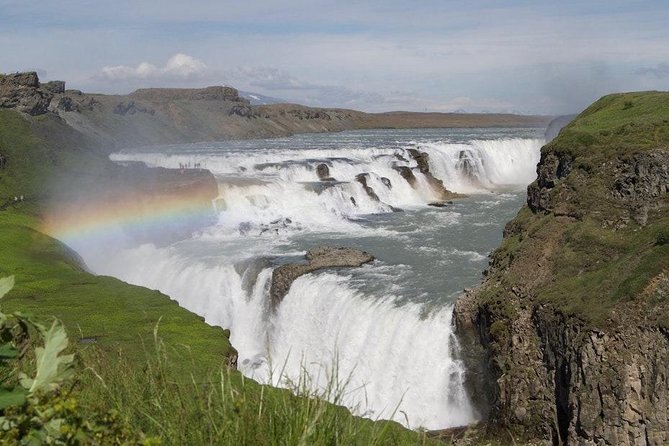
Gullfoss comes next. The viewing route lets you see the waterfall from above before following the path closer to the rushing water. The hour allotted here gives you time for both viewpoints, though wind and rain can affect how comfortable the walk feels.
Lunch at Friðheimar is one of the tour’s most distinctive stops. Tomatoes grow in a greenhouse warmed by geothermal heat and powered with geothermal electricity, and the restaurant sits among the tomato plants. It is not simply a convenient meal stop. It shows how Iceland turns a challenging climate into a practical source of food and energy.
The day ends at the Secret Lagoon, known locally as Gamla Laugin. This natural geothermal bath offers a quiet way to relax in open surroundings after a full sightseeing day. Accommodation is near Hvolsvöllur. Since dinner is not included, plan to buy it during the trip rather than expecting the hotel stay to cover evening meals.
The south coast: waterfalls, black sand, and glacier views
The southern coast gives you some of Iceland’s most recognizable sights in a compact run. Seljalandsfoss drops about 60 meters, and its path allows you to walk behind the waterfall. Waterproof clothing and sturdy footwear are sensible here because spray can make the ground wet.
Skógafoss is broader and more forceful in appearance. Both waterfalls carry meltwater from glaciers, including Eyjafjallajökull and Mýrdalsjökull. That connection helps explain why Iceland’s waterfalls are not isolated sights. They are part of a larger system of ice, volcanic rock, and running water.
At Sólheimajökull, you see an outlet glacier flowing from the Mýrdalsjökull ice cap. The volcano Katla lies beneath that ice cap, giving the stop an extra layer of geological interest. The listed 90 minutes is enough for a look and a walk near the glacier, but this is not described as a technical glacier hike.
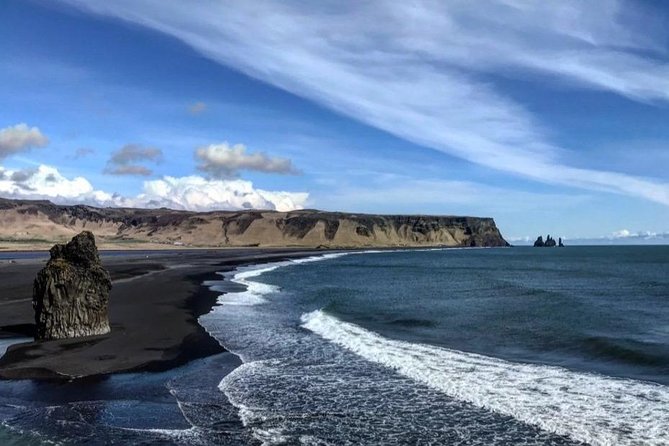
Dyrhólaey provides a high view over the southern coast and black beaches. The 120-meter promontory was shaped by the sea, and its position makes it a strong place for wide coastal views. At Reynisfjara, basalt columns and the Reynisdrangar sea stacks show off the volcanic materials that give Iceland’s beaches their dark color.
You should treat Reynisfjara with care. The tour description emphasizes the beauty and geology, but the coast is a powerful natural setting, not a swimming beach. Stay attentive near the water and follow the guide’s instructions.
You spend the night near Vík. This keeps the route moving east without forcing you back toward Reykjavík, though the day remains full. For photographers, the black sand and basalt formations may tempt you to stay longer than the schedule allows.
Vatnajökull country and the two glacier lagoons
Skaftafell, now part of Vatnajökull National Park, brings you into a larger area of glaciers and wilderness. The two-hour visit gives you more breathing room than several of the shorter stops. It is a useful place to experience Iceland beyond roadside viewpoints.
Fjaðrárgljúfur is a canyon shaped by glacial water after the last ice age. It reaches about 100 meters deep and stretches for roughly two kilometers. Its appearance became widely known after featuring in a Justin Bieber music video, but the canyon’s appeal does not depend on pop culture. The layered rock and narrow gorge are the real draw.
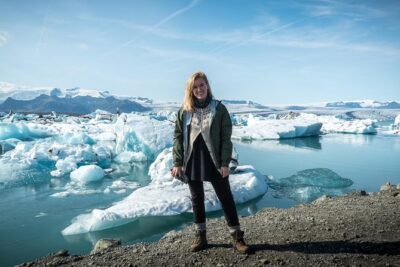
Near Jökulsárlón, you visit both the glacier lagoon and Fellsfjara, often called Diamond Beach. Icebergs break away from the glacier and float in the lagoon before some pieces wash onto the black shore. The contrast between dark sand, clear ice, and blue water is one of the most memorable visual combinations in Iceland.
Jökulsárlón receives an hour, while Fellsfjara receives 30 minutes. That split makes sense for a first visit, but you may wish you had more time on the beach if the ice is especially photogenic.
Fjallsárlón offers a quieter companion to Jökulsárlón. It is another calving glacier lagoon, with ice flowing down a steep valley from Vatnajökull. Seeing both lagoons lets you compare two different settings instead of treating every glacier stop as the same.
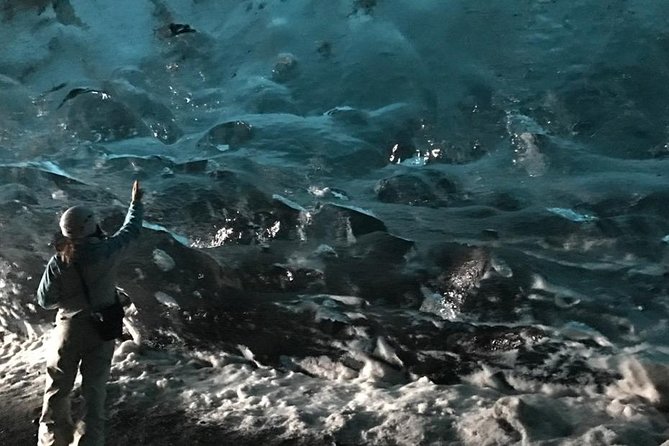
The seasonal ice-cave visit is listed for November through March and lasts three hours. Natural ice caves change over time, so the exact conditions depend on weather and the season. This is an important distinction when choosing travel dates: the winter ice-cave experience is not the same activity as the summer Into the Glacier visit later in the route.
Another way to fill a day from Reykjavík:
- Reykjavik: Golden Circle Full-Day Tour with Kerid Crater
★ 4.8 · 24,485 reviews - Reykjavik Food Walk – Local Foodie Adventure in Iceland
★ 5.0 · 18,952 reviews - Iceland: Northern Lights Bus Tour from Reykjavik
★ 4.1 · 11,161 reviews - Reykjavík: South Coast Waterfalls, Black Sand & Glacier Tour
★ 4.8 · 11,030 reviews
East Iceland: villages, waterfalls, and a change of pace
Djúpivogur is a picturesque fishing village with art and coastal views. After the large glacier sights, a small settlement offers a welcome change. You get about an hour to see the village and absorb a more local side of Iceland.
The Hengifoss track takes about two hours and includes Hengifoss and Litlanesfoss. Hengifoss is among Iceland’s highest waterfalls and sits in a striking geological setting. Litlanesfoss is framed by basalt columns, giving this stop a different character from the broad, open waterfalls of the south.
The route continues through Egilsstaðir before reaching Lake Mývatn. Overnight accommodation is near Mývatn. This is another long transfer day, but the eastern section is valuable because it moves beyond the busiest famous stops and gives you more variety in settlements and terrain.
Lake Mývatn: powerful water, steaming ground, and lava forms
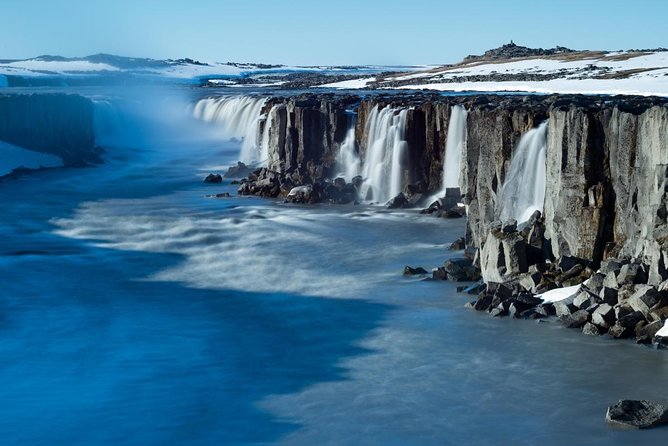
The Mývatn area is one of the tour’s busiest sightseeing zones. Dettifoss is described as Iceland’s largest and most powerful waterfall, with water dropping about 100 meters into Jökulsárgljúfur canyon. The one-hour stop focuses on the force of the falls rather than a long hike.
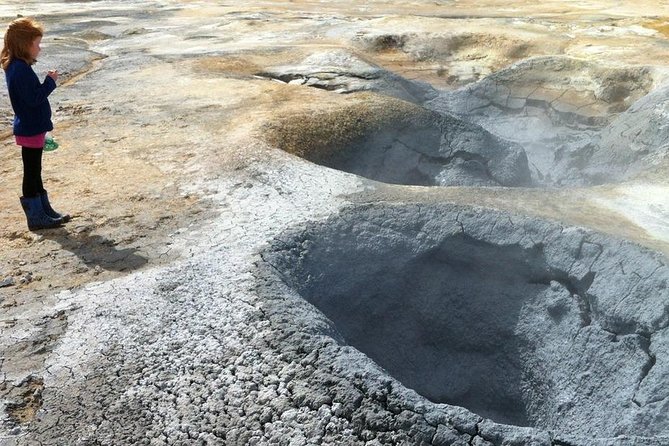
At Námaskarð, you see boiling mud, steaming ground, fumaroles, and colorful mineral deposits. Sulphur gives parts of the area a strong smell, and the ground is active and ever changing. Stay on the marked routes because the hot pools and steam are not just scenic decorations.
Krafla is a central volcano surrounded by lava fields. Dimmuborgir adds another chapter to the volcanic story, with massive lava tubes formed when hot lava flowed over a small lake. Icelandic folklore gives the area an extra touch: Dimmuborgir is associated with the Icelandic Yule Lads.
Lake Mývatn itself is important for birdlife, especially migrating birds in summer. At the southwestern edge, Skútustaðagígar offers pseudocraters formed by volcanic activity rather than traditional eruptions from a central vent.
The two-hour visit to the Mývatn Nature Baths gives you a chance to slow down. Jarðböðin is a man-made lagoon fed by naturally heated, mineral-rich water. After the geothermal fields and long drives, this is a practical place to rest your legs.
Goðafoss, the Waterfall of the Gods, comes before Akureyri. You get about an hour at the falls, then reach Akureyri for a city tour and dinner on your own. Overnight accommodation is in Akureyri, giving you a chance to experience Iceland’s second-largest urban center rather than passing through another rural overnight stop.
Snæfellsnes: mountain views, sea cliffs, and Icelandic legend
Kirkjufell is among Iceland’s most photographed mountains, especially when seen with Kirkjufellsfoss nearby. The mountain and waterfall combination is compact, so the 90 minutes across the two stops should be enough for photographs and a short look.
Djúpalónssandur offers a very different coast. Smooth black pebbles cover the beach, and pieces of a shipwreck from 1948 remain scattered among them. The shore is attractive but rugged, and the wreckage gives the place a reminder of the sea’s hazards.
Hellnar and Arnarstapi show the human and legendary side of Snæfellsnes. Hellnar is an old fishing village with unusual rock formations along the shore. Arnarstapi is associated with Bárður, a half-human, half-ogre figure said to have become the guardian spirit of the peninsula. The sculpture and local story add meaning to what might otherwise be just another coastal stop.
At Lóndrangar, basalt volcanic plugs rise 75 and 61 meters above the surrounding rock. These cliffs were shaped by erosion, so the stop neatly combines volcanic origins with the steady work of wind and water.
Vatnshellir is an 8,000-year-old lava tube in a lava field. The 90-minute visit lets you enter the cave and see how cooling lava can leave a hollow passage below the surface. This is a more active stop than a roadside viewpoint, so you should be comfortable walking through a natural cave environment.
Into the Glacier and the final waterfalls
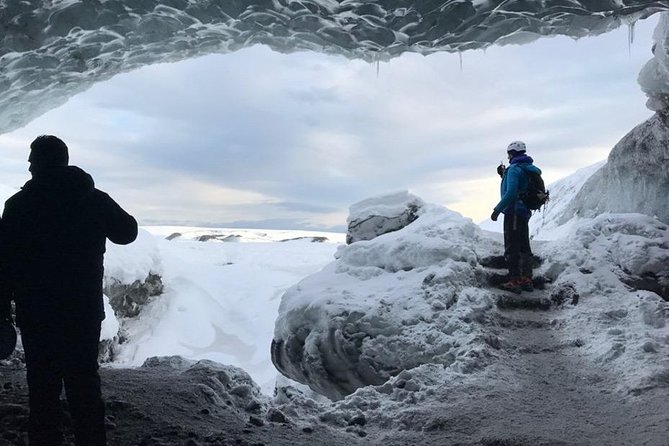
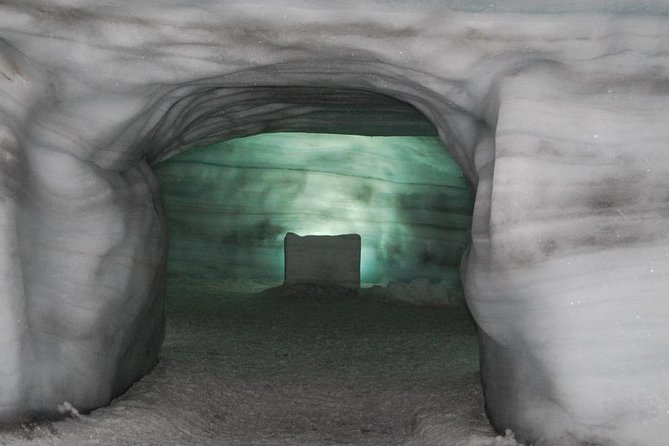
From April through October, the route includes Into the Glacier, a man-made ice tunnel in Langjökull, Iceland’s second-largest glacier. Pickup for this activity is in Húsafell, followed by transport onto the glacier in a monster truck. In good weather, the view from the glacier top can be spectacular.
This summer activity replaces the winter ice-cave option in practical terms. The two experiences are not interchangeable, and your travel month matters. If entering natural ice caves is your priority, choose November through March. If you want the constructed ice tunnel and a glacier-top ride, April through October is the relevant season.
Hraunfossar and Barnafossar finish the natural sights. Hraunfossar is a series of streams flowing out of porous lava into the Hvítá River over a stretch of about 900 meters. Barnafossar, meaning Children’s Waterfall, is tied to a local story about two children who died while crossing a natural lava bridge.
The final stop is Borgarnes, a small village on the way back to Reykjavík. It is a modest ending after a week of huge waterfalls and glaciers, but it provides a final pause before the tour concludes.
What the $11,101.77 price includes
The listed price is per person, so the total cost rises quickly for a couple or family. In exchange, you receive a private guide, private transportation, six nights of hotel or guesthouse accommodation, breakfast each day, entrance fees for included sights and activities, and all taxes and fees.
That is a substantial bundle. You are paying for the vehicle, the guide’s time, route planning, accommodation, and the convenience of not handling Iceland’s roads yourself. For a group that values privacy and wants to cover the whole island in one week, the arrangement can make practical sense.
Still, you should compare the cost with your own priorities. Meals are not fully covered. Lunch is included on the first day, but later lunches can be bought along the route, and dinners are your responsibility. The schedule also includes many activities whose listed admission price is free, so the value comes mainly from private transport, lodging, guiding, and the seasonal glacier experiences.
The tour offers group discounts, but the supplied information does not state the discount amount. Ask for the final total for your party before booking.
The pace, comfort, and best fit
This is a strong choice if you want to see nearly every major region of Iceland without renting a car. It also suits families celebrating a milestone, couples with a bucket-list trip in mind, and small groups who want a guide focused only on them.
The pace is not ideal for everyone. Thirty-eight listed stops across seven days means frequent departures, short visits, and long stretches in the vehicle. You will see more than on a relaxed regional tour, but you may have less free time for cafés, independent walks, or extended photography.
Most people can participate, and pickup is offered. Confirmation is provided at booking, and the stated start time is 9:00 am. The experience is private, so only your own group takes part.
The cancellation terms are strict: the booking is non-refundable and cannot be changed for any reason. The operator may offer a new date or full refund if poor weather cancels the experience, or if the minimum number of participants is not met. That makes travel insurance worth considering for such an expensive booking.
Should you book this private Iceland tour?
Book it if you want maximum coverage with minimum driving responsibility, and if the private guide experience matters more to you than keeping costs low. The strongest features are the route’s range, the included accommodation and breakfast, and the chance to learn about Icelandic geology, culture, myths, and history from guides such as Helga Bára, Sigrún, or Addy.
Think twice if you prefer slow mornings, independent meals, or a lower-cost trip. Ask specifically which seasonal glacier activity applies to your dates, what type of accommodation is planned, how the group discount works, and how much time you will spend driving each day.
For the right small group, this is an ambitious and memorable way to see Iceland in one sweep. Just understand the bargain you are making: you trade a relaxed pace and a lower price for privacy, convenience, and a remarkable amount of scenery.
FAQ
Where does the tour start?
The tour starts in Reykjavík, with pickup offered. The stated start time is 9:00 am.
How long does the experience last?
The tour lasts approximately seven days and includes six nights of accommodation.
What accommodation is included?
Hotels or guesthouses are included, along with daily breakfast.
Are meals included?
Lunch on the first day is included. Lunch on the other days and all dinners can be purchased during the trip.
Is the tour private?
Yes. Only your group participates in the private tour or activity.
Which glacier activity is available in each season?
Natural ice-cave exploration is offered from November through March. Into the Glacier is offered from April through October.
Fresh around Reykjavík
- Tipsy in Reykjavik: Drink with a Viking (Food, Beer, Music)★ 5.0 · 3 reviews
- Exclusive Snaefellsnes Peninsula Private Day Tour★ 4.0 · 3 reviews
- Sólheimajökull Glacier Hiking Tour★ 3.7 · 3 reviews
- Northern Lights 3 Hours Private tour★ 4.5 · 3 reviews
- Northern Lights Private Tour from Reykjavik★ 5.0 · 3 reviews
- Private Superjeep Tour To Landmannalaugar and Hekla Volcano★ 5.0 · 3 reviews
- From Reykjavik: Private South Coast Tour in Iceland★ 4.3 · 3 reviews
- Iceland’s south coast G spots★ 5.0 · 3 reviews
7-Day Experiences, compared.
7-Day Complete Iceland: South Coast, Golden Circle, Akureyri & Snaefellsnes
Read our review →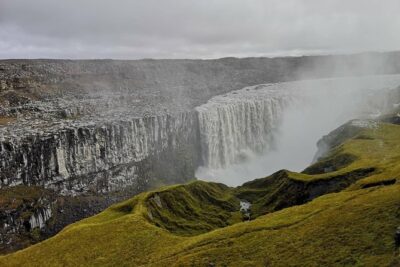
4, 5, 6 or 7-Day Small-Group Ring Road Tour from Reykjavik
Read our review →
7-Day Self-Drive Private Tour Northern Lights Adventure – Iceland South & West
Read our review →
7 Day Iceland with Reykjavik Northern Light | Blue Lagoon | Golden Circle ……
Read our review →
7 Day Iceland with Reykjavik Blue Lagoon Snæfellsnes | Golden Circle | South….
Read our review →Browse the lists this tour appears in