
Reviewed · 7-DAY EXPERIENCES
From Reykjavík: 4, 5, 6 or 7-Day Small-Group Ring Road Tour
Iceland rewards a good road map. Nicetravel’s small-group Ring Road tour packs the country’s major sights into four to seven days, with a guide handling the long drives, changing weather, hotels, and route planning. I especially like the maximum group size of 19 and the chance to combine famous stops with quieter places such as Vestrahorn, Kolugljúfur Canyon, and Ingjaldshólskirkja. The main catch is simple: the four-day version is a fast-moving trip, not a restful holiday.
I also like the mix of activities. You can watch for whales and seals, meet Icelandic horses, soak in geothermal pools, and even taste bread baked with underground heat. The $1,530 starting price is substantial, but it covers transportation, hotels, breakfast, several admissions, and the service of an English-speaking guide.
Your choice of length matters. Four days gives you a strong introduction to the Ring Road, while five to seven days adds western Iceland, lava caves, Snæfellsnes, and the Golden Circle. Guides such as Gulli, Olí, Thorey, and Filip have been praised for safe driving, local knowledge, and showing places beyond the standard stops.
In This Review
- Key points to know before booking
- What the $1,530 price really covers
- Day one: waterfalls, black sand, and geothermal bread
- Day two: icebergs at Jökulsárlón and Iceland’s eastern fjords
- Day three: Mývatn’s volcanic world and two major waterfalls
- Day four: Akureyri, whales, and the Tröllaskagi Peninsula
- Day five: Borgarfjörður, horses, and Viðgelmir Lava Cave
- Day six: seals, sea cliffs, and Snæfellsnes
- Day seven: the Golden Circle and an optional Blue Lagoon stop
- Guides, transport, hotels, and daily pace
- Who should book this Iceland Ring Road tour?
- Should you book it?
- FAQ
- How long does the Iceland Ring Road tour last?
- What is the maximum group size?
- What is included in the price?
- Are meals included?
- Is the Jökulsárlón boat tour included?
- Are geothermal spas included?
- Is whale watching included?
- What should I bring?
- When does the tour return to Reykjavík?
Key points to know before booking
- Four days means long driving days: You will see a great deal, but the schedule can feel like go, go, go.
- The small group helps: With no more than 19 passengers, the trip feels more personal than a large coach tour.
- The best optional stops cost extra: Boat rides, Forest Lagoon, Vök Floating Pools, and whale watching are not included.
- The route mixes headline sights and quieter corners: Jökulsárlón, Dettifoss, and the Golden Circle share time with Icelandic horse farms and lesser-known churches.
- The 5-day option adds real value: Viðgelmir Lava Cave, Sturlureykir Horse Farm, and Borgarfjörður make the extra day worthwhile.
- Pack for movement and weather: Warm clothes, swimwear, and hiking shoes are essential.
What the $1,530 price really covers
At $1,530 per person, this is not a budget bus ride. It is a packaged road trip where you pay for convenience as much as scenery.
The price includes hotel pickup and drop-off in Reykjavík, an English-speaking guide, onboard Wi-Fi, USB chargers, twin or double accommodation with a private bathroom, and breakfast. It also includes entry to Hveragerði Geothermal Park with bread tasting, Sturlureykir Icelandic Horse Farm, and Viðgelmir Lava Cave when you select the five-day tour or a longer version.
Lunch and dinner are not included. That is normal for a road trip in Iceland, and scheduled meal stops make it possible to buy food along the way. Still, you should budget extra for meals, drinks, and optional activities.
The value improves if you do not want to drive. Iceland’s Ring Road involves long distances, and weather can affect roads and timing. I like being able to watch the scenery instead of concentrating on navigation. You also get a guide who can explain what you are seeing and adjust the day when conditions require it.
The weak point is comfort. A previous passenger found the bus seats hard on a long four-day route, with the seat belt causing trouble for existing sciatica. If you have back or nerve problems, ask about the vehicle before booking and bring a small cushion.
A few more trips people compare before booking
- 7-Day Complete Iceland: South Coast, Golden Circle, Akureyri & Snaefellsnes
★ 4.5 · 139 reviews - 4, 5, 6 or 7-Day Small-Group Ring Road Tour from Reykjavik
★ 5.0 · 43 reviews - From Reykjavík: 7-Day Around Iceland Ring Road & Snæfellsnes
★ 4.8 · 23 reviews
Day one: waterfalls, black sand, and geothermal bread
The first day heads east from Reykjavík along Iceland’s South Coast. This is one of the country’s most concentrated sightseeing areas, so you start with several major sights before the long road sections begin.
Seljalandsfoss is famous for the path that can take you behind the falling water. Expect spray and slippery ground, so waterproof clothing and shoes with a firm grip help. Nearby Gljúfrabúi is partly hidden in a narrow opening in the rock. It feels more enclosed and adventurous than the broad view at Seljalandsfoss.
Skógafoss brings the classic Iceland view: a broad curtain of water dropping beside the road. You may be able to walk close to its base, but the spray can be heavy. These stops are easy to reach, yet they still feel powerful because the waterfalls are so large and open.
At Reynisfjara, the black volcanic sand and offshore rock formations create one of Iceland’s most memorable coastal scenes. The sea here is dangerous, so follow the guide’s instructions and keep well back from the water. The beach is not a place for casual paddling.
The Hveragerði stop adds a human touch. At the geothermal park, you can see the heat beneath Iceland’s surface and taste bread baked using geothermal energy. That small food experience helps explain how Icelanders have learned to work with the land rather than simply admire it.
The day also includes a geyser and views of a glacier. Details can vary with the selected departure and conditions, but the pattern is clear: day one gives you waterfalls, coast, hot ground, and ice in a single sweep. It is an excellent introduction, but you should expect a full day on the road.
Day two: icebergs at Jökulsárlón and Iceland’s eastern fjords
Jökulsárlón Glacier Lagoon is one of the big rewards of the Ring Road. Pieces of glacial ice float in cold water before moving toward the sea. An amphibious boat tour is available for an extra fee, giving you a closer view of the icebergs from the water.
The nearby Diamond Beach offers a striking contrast. Ice carried out from the lagoon rests on black sand, sometimes in chunks that look like polished glass. The beach changes constantly, so the amount of ice you see depends on conditions.
Vestrahorn adds a different mood, with sharp mountain forms and coastal views. It is a strong stop for photographs, but the changing weather can quickly hide the peaks. That is part of Iceland’s appeal and part of the gamble.
The route then turns through eastern Iceland, where narrow fjords and jagged mountains replace the open South Coast. This section often feels quieter and less crowded. You get a better sense of Iceland as a country of small coastal communities separated by long stretches of rock, water, and road.
The day also includes Stúðlagil Canyon, known for its steep basalt walls and unusual rock formations. Conditions and access can affect how much walking is possible. At day’s end, you can pay extra for Vök Geothermal Floating Pools, a chance to soak in warm water surrounded by eastern scenery.
This is one of the tour’s most demanding days. Jökulsárlón, Vestrahorn, Stúðlagil, and the fjords cover a lot of ground. The reward is variety, but you will want warm layers and sensible shoes.
Day three: Mývatn’s volcanic world and two major waterfalls
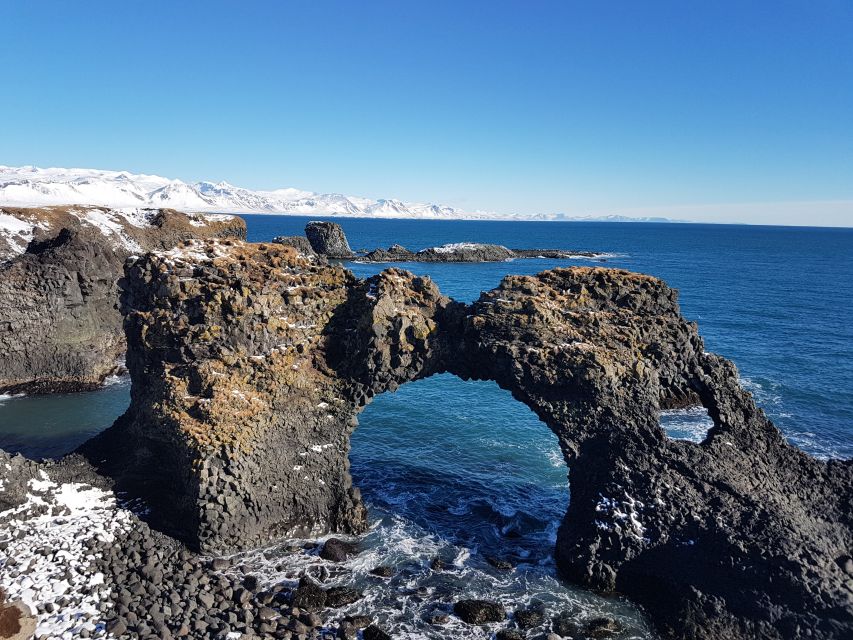
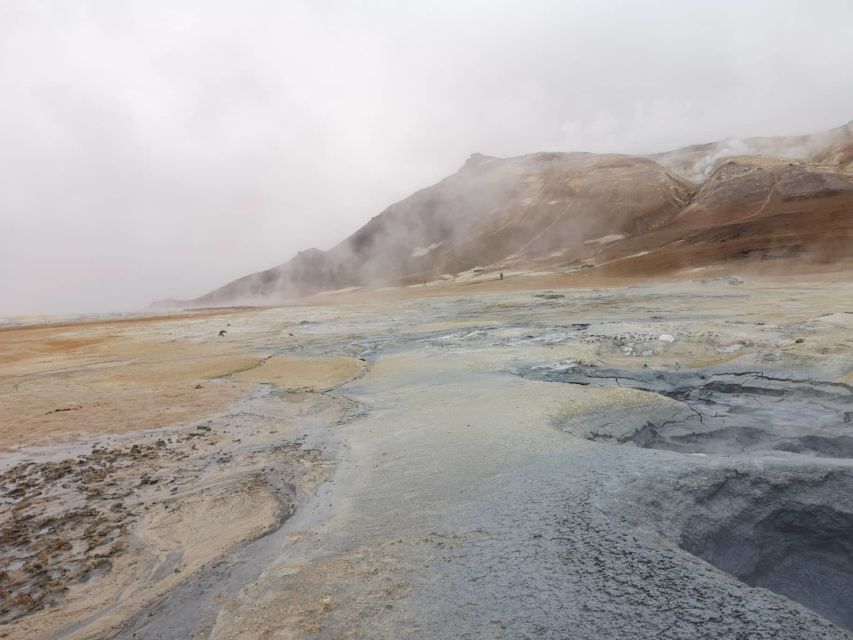
Lake Mývatn is not just a pretty body of water. Its surroundings show how volcanic activity has shaped northern Iceland. You may see steaming ground, unusual rock formations, caves filled with warm blue water, and birdlife around the lake.
The region can feel almost otherworldly, but the tour keeps the focus on accessible sights rather than difficult hiking. That makes it a good fit if you want to see volcanic features without planning a separate self-drive route.
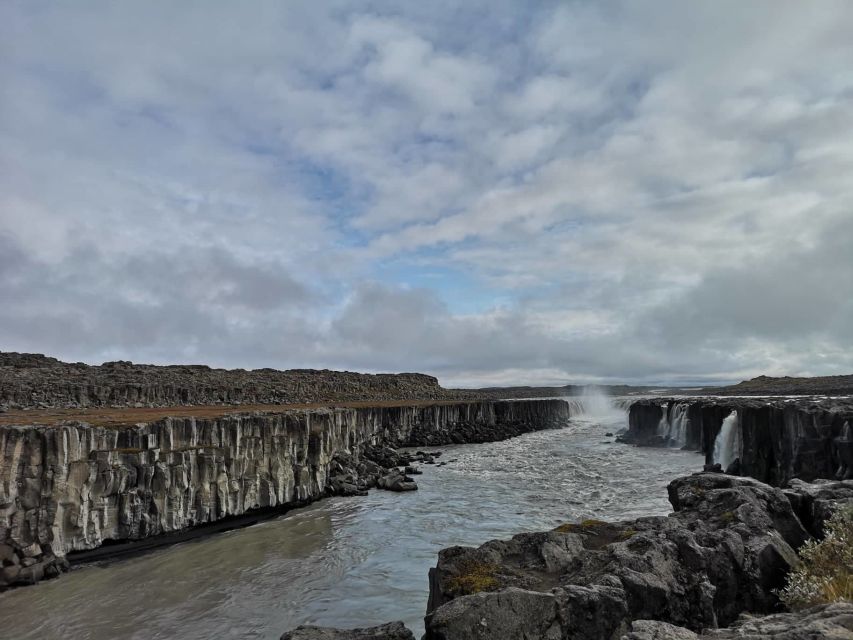
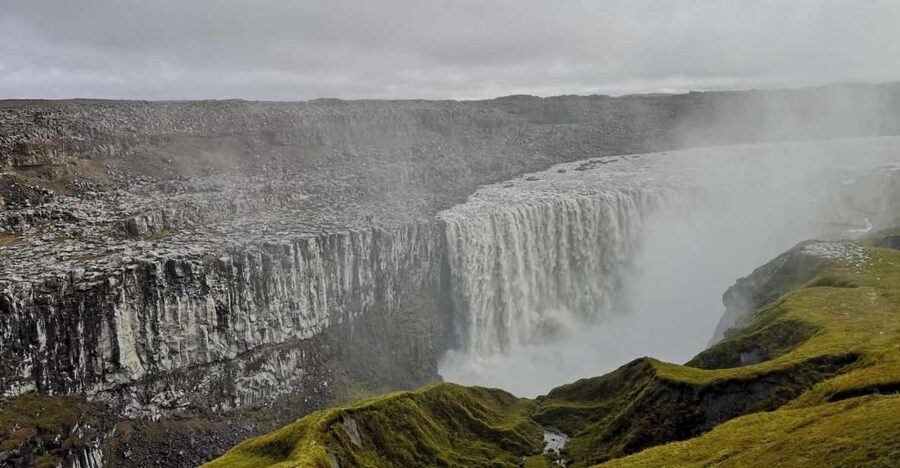
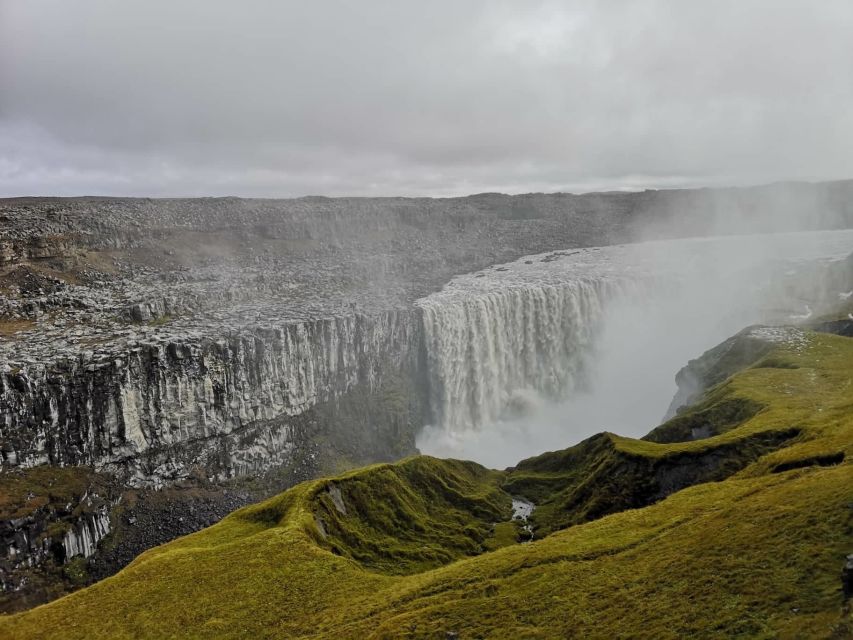
Dettifoss is the day’s heavyweight. It is known as Europe’s most powerful waterfall, and its broad rush of water makes the claim easy to understand. The walk and viewpoint can vary with the route used and weather, so sturdy shoes matter.
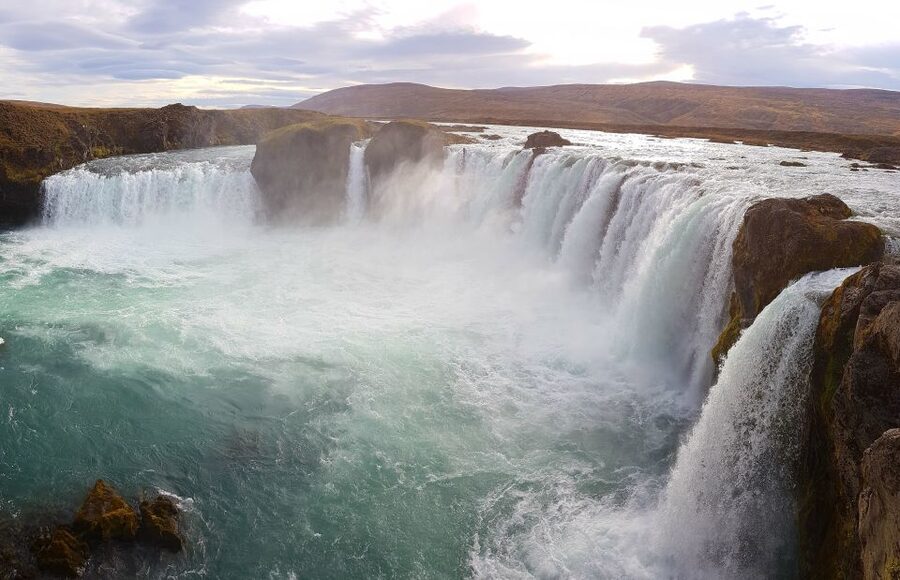
Goðafoss, the Waterfall of the Gods, offers a different experience. It is wider and more graceful, with several channels spreading across the river. Having both waterfalls on the same day gives you a useful comparison: Dettifoss feels forceful, while Goðafoss feels more composed.
The optional Forest Lagoon Geothermal Spa is a pleasant way to finish. Its blue water contains minerals associated with skin care, and the setting among trees gives it a different feel from Iceland’s more exposed pools. Admission is extra, so include it in your budget if a soak is a priority.
Day three blends geology, waterfalls, and bathing. It is also another long day, and the repeated changes in scenery can be tiring. I would choose the spa only if you still have the energy to enjoy it rather than treating it as another box to tick.
Another way to fill a day from Reykjavík:
- Reykjavik: Golden Circle Full-Day Tour with Kerid Crater
★ 4.8 · 24,485 reviews - Reykjavik Food Walk – Local Foodie Adventure in Iceland
★ 5.0 · 18,952 reviews - Iceland: Northern Lights Bus Tour from Reykjavik
★ 4.1 · 11,161 reviews - Reykjavík: South Coast Waterfalls, Black Sand & Glacier Tour
★ 4.8 · 11,030 reviews
Day four: Akureyri, whales, and the Tröllaskagi Peninsula
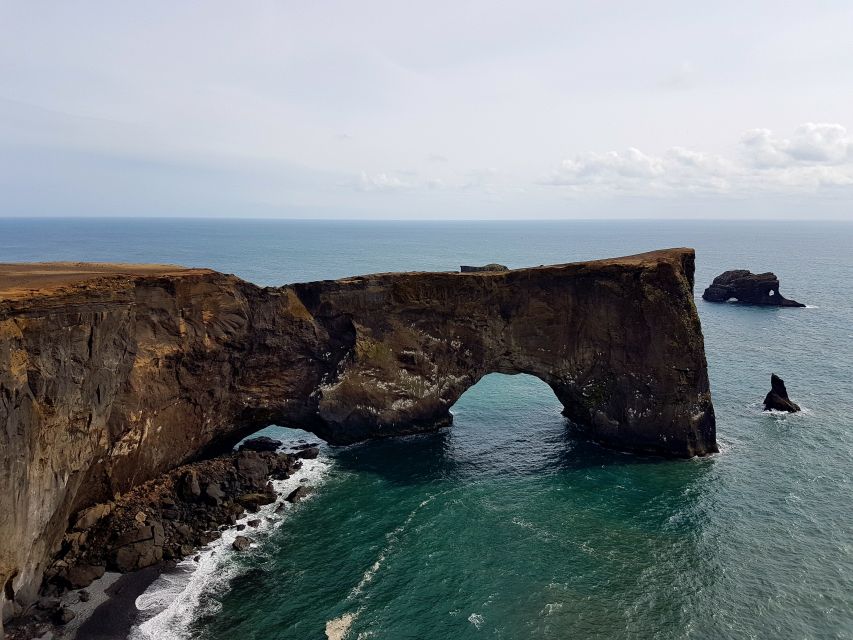
Akureyri is Iceland’s northern capital, though its size remains modest. The stop gives you time to enjoy a town rather than spending the entire day beside waterfalls and cliffs.
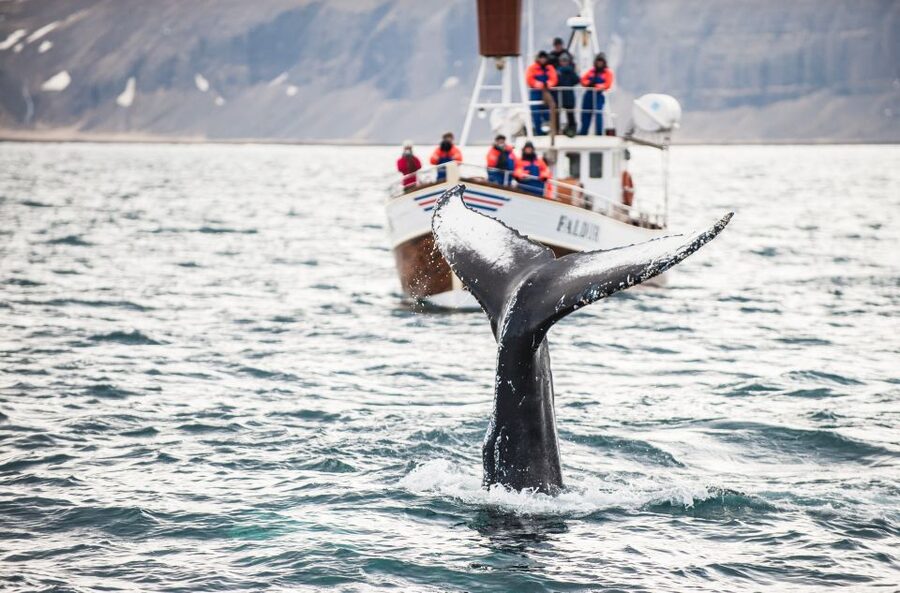
You can also choose an extra-cost whale-watching boat trip from Akureyri. The tour description does not promise a sighting, and wildlife never follows a timetable. Still, the northern coast is a sensible place to add a marine activity if seeing whales is high on your list.
The road through the Tröllaskagi Peninsula is one of the most scenic parts of the route. Mountains rise sharply from deep valleys, while the coast brings open views and changing light. This is a good section for simply watching from the window between stops.
Kolugljúfur Canyon provides a final dramatic pause, with rugged rock and flowing water. It is less famous than the headline sights, which is precisely why it can feel like a welcome change of pace.
The four-day tour ends after this northern section. You should understand the tradeoff clearly. You cover a remarkable amount of Iceland and avoid the work of driving, but you spend many hours in the vehicle. One passenger described the trip as fantastic but exhausting, especially for an older family member. That is fair advice.
Day five: Borgarfjörður, horses, and Viðgelmir Lava Cave
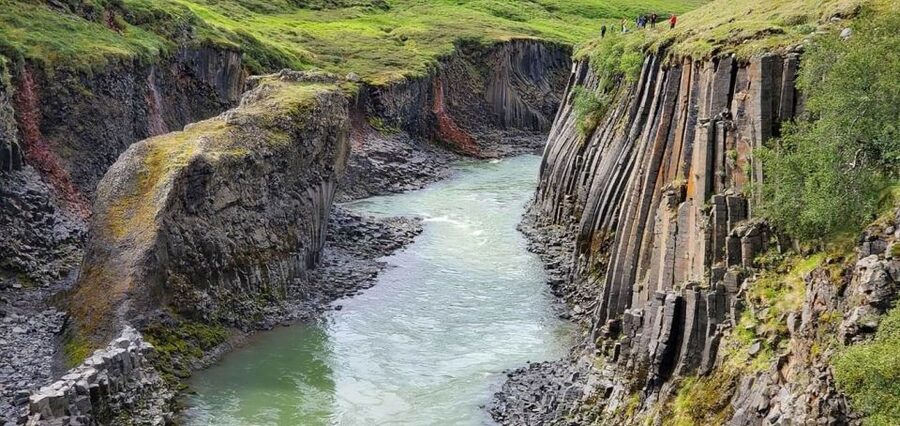
The five-day tour adds western Iceland and changes the overall balance. Instead of rushing back to Reykjavík after the northern coast, you get a fuller look at Borgarfjörður.
Hraunfossar is made up of many small streams that appear to flow from beneath the lava before dropping toward the river. The effect is broad and delicate, a contrast to the force of Dettifoss. Nearby Barnafoss has faster, more concentrated water and a different character.
Reykholt Historic Site adds cultural context to a trip otherwise dominated by nature. It gives you a reason to pause and consider Iceland’s medieval past rather than treating the country as one endless outdoor attraction.
At Sturlureykir Icelandic Horse Farm, you can meet the distinctive Icelandic horse and pet these gentle animals. This is one of the more personal stops on the route. It also gives you contact with everyday Icelandic culture, not just a view from a lookout.
Viðgelmir is Iceland’s largest lava cave, and entry is included on the five-day tour and longer versions. Going underground gives you another way to understand the country’s volcanic past. You will need hiking shoes, and anyone uncomfortable in cave settings should think carefully before choosing this add-on day.
The route finishes at Deildartunguhver, Europe’s highest-flowing hot spring. It is a strong final stop for a day built around lava, water, history, and horses.
Day six: seals, sea cliffs, and Snæfellsnes
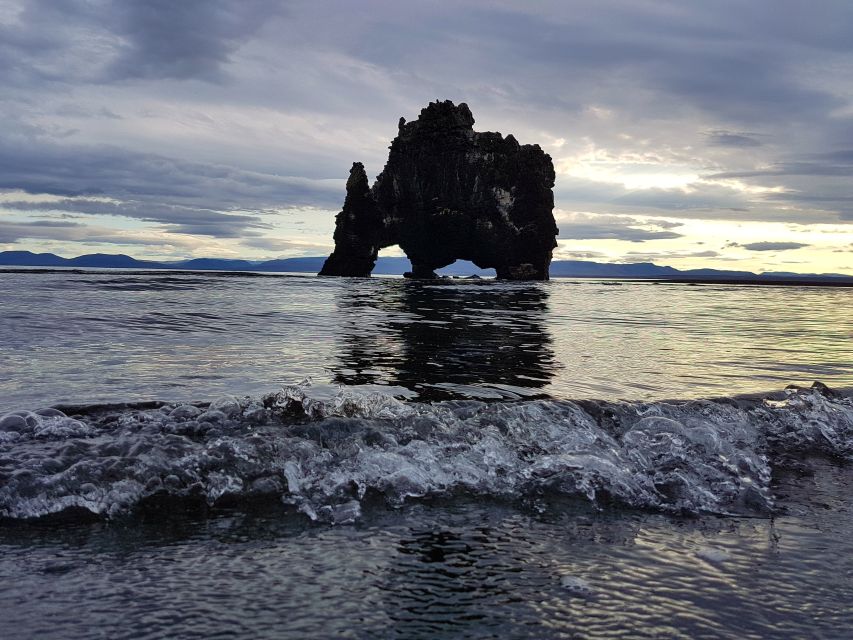
Snæfellsnes is often called Iceland in miniature because a single peninsula contains beaches, mountains, cliffs, waterfalls, and volcanic features. The sixth day is valuable because it slows the pace slightly and gives western Iceland room to breathe.
At Ytri-Tunga Beach, you may see seals resting near the shore. Wildlife is never guaranteed, so bring patience and binoculars if you have them. This is a quieter experience than a whale boat, and it depends more on careful looking than on a scheduled activity.
Arnarstapi brings dramatic coastal cliffs and walking opportunities. The sea has carved the shoreline into striking shapes, and the paths provide a chance to stretch after long drives. Hiking shoes are especially useful here.
Ingjaldshólskirkja is a small red church built in 1903 on a hilltop. It is not the most famous sight in Iceland, but it is exactly the kind of stop that adds character to the route. The setting and simple architecture offer a pause from the larger attractions.
Kirkjufell closes the day with one of Iceland’s most photographed mountains. Its familiar shape has appeared in many travel images, but seeing it in changing weather is more satisfying than simply recognizing it from a picture.
The sixth day suits you if you want variety and a little more time outside the bus. It also makes the seven-day option feel less like an extension and more like a complete circuit.
Day seven: the Golden Circle and an optional Blue Lagoon stop
The final day follows the Golden Circle, Iceland’s best-known short route. Thingvellir National Park combines geological importance with a major place in Icelandic history. Geysers bring the heat and motion, while the Golden Waterfall supplies another large waterfall view.
Kerið Volcano adds a colorful volcanic crater with water inside. By this point, you may have seen many waterfalls and volcanic sites, but the Golden Circle remains popular because the sights are easy to connect and close enough to Reykjavík for a final day.
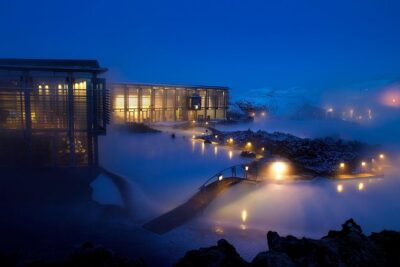
You may also add a Blue Lagoon visit. Admission is extra, and the timing of the return to Reykjavík depends on the option and season. The tour can finish between 6 pm and 10 pm, so do not schedule an important evening flight or a tight onward connection without checking the exact timing.
Guides, transport, hotels, and daily pace
The guide can make or break a road trip of this length. Gulli received especially strong praise for safe driving and clear information, while Olí was also singled out for making the route easy to enjoy. Thorey and Filip were praised for sharing local knowledge and finding places beyond the stated route.
That matters because Iceland’s scenery is not always self-explanatory. A guide can explain why a waterfall looks different from the next one, point out wildlife, and help you understand the road ahead.
The group limit of 19 is a practical advantage. You still travel in a minibus rather than a private car, but the group is small enough to feel more manageable. Wi-Fi and USB chargers are useful on long stretches.
Accommodation includes a private bathroom and breakfast. One hotel was described as spacious and well decorated, with a lake nearby and a broad breakfast selection. Specific hotels can vary, so treat that as a sign of the general standard rather than a guarantee of one property.
The pace remains the central issue. This is an active sightseeing tour with many scheduled stops. If you want long mornings, slow meals, or hours at each waterfall, self-driving or a slower itinerary may suit you better.
Who should book this Iceland Ring Road tour?
I would choose this tour if you have limited time, want to see most of Iceland, and do not want to drive. It is particularly useful for first-time visitors who want the major sights plus several less obvious stops without planning hotels, roads, and daily routes.
The four-day version suits an energetic person who accepts long drives and short visits. The five-day option is my preferred balance because Viðgelmir and Borgarfjörður add experiences that are hard to fit into a rushed circuit.
Choose six days if Snæfellsnes appeals to you, especially for seals, sea cliffs, the red church, and Kirkjufell. Choose seven days if you also want the Golden Circle and the option of a Blue Lagoon visit.
I would not pick it for a slow spa holiday, for anyone unable to manage a demanding road schedule, or for wheelchair users and pregnant women, who are listed as unsuitable for the activity. Bring warm clothes, swimwear, hiking shoes, and a small cushion if long bus rides bother your back.
Should you book it?
Book this tour if your priority is seeing a large share of Iceland safely and efficiently. The strongest features are the capable guides, broad route, small group, comfortable included hotels, and mix of major sights with local experiences such as geothermal bread and the Icelandic horse farm.
Skip it if you need plenty of free time or dislike long days on the road. For most first-time visitors, I would pay for at least five days. That extra day turns a quick Ring Road achievement into a more rounded Iceland trip.
FAQ
How long does the Iceland Ring Road tour last?
You can choose a four, five, six, or seven-day version. The four-day route covers the main Ring Road highlights, while longer options add western Iceland, Snæfellsnes, and the Golden Circle.
What is the maximum group size?
The tour allows a maximum of 19 passengers, making it smaller than a typical large coach tour.
What is included in the price?
The price includes an English-speaking guide, hotel pickup and drop-off, onboard Wi-Fi, USB chargers, twin or double accommodation with an en-suite bathroom, and breakfast. Several admissions are also included, depending on the tour length.
Are meals included?
Breakfast is included. Lunch and dinner are not included, but scheduled stops provide opportunities to buy meals.
Is the Jökulsárlón boat tour included?
No. The amphibious boat tour at Jökulsárlón is optional and costs extra.
Are geothermal spas included?
No. Entrance to Forest Lagoon and Vök Geothermal Floating Pools costs extra. A Blue Lagoon visit on the seventh day is also an optional addition.
Is whale watching included?
No. The whale-watching boat tour from Akureyri is an optional activity at an additional cost.
What should I bring?
Bring warm clothing, swimwear, and hiking shoes. A small cushion may also help if you find long bus rides uncomfortable.
When does the tour return to Reykjavík?
Depending on the option selected and the time of year, the tour can finish in Reykjavík between 6 pm and 10 pm.
Fresh around Reykjavík
- Tipsy in Reykjavik: Drink with a Viking (Food, Beer, Music)★ 5.0 · 3 reviews
- Exclusive Snaefellsnes Peninsula Private Day Tour★ 4.0 · 3 reviews
- Sólheimajökull Glacier Hiking Tour★ 3.7 · 3 reviews
- Northern Lights 3 Hours Private tour★ 4.5 · 3 reviews
- Northern Lights Private Tour from Reykjavik★ 5.0 · 3 reviews
- From Reykjavik: Private South Coast Tour in Iceland★ 4.3 · 3 reviews
- Private Superjeep Tour To Landmannalaugar and Hekla Volcano★ 5.0 · 3 reviews
- Iceland’s south coast G spots★ 5.0 · 3 reviews
7-Day Experiences, compared.
7-Day Complete Iceland: South Coast, Golden Circle, Akureyri & Snaefellsnes
Read our review →
4, 5, 6 or 7-Day Small-Group Ring Road Tour from Reykjavik
Read our review →
7-Day Self-Drive Private Tour Northern Lights Adventure – Iceland South & West
Read our review →
7 Day Iceland with Reykjavik Northern Light | Blue Lagoon | Golden Circle ……
Read our review →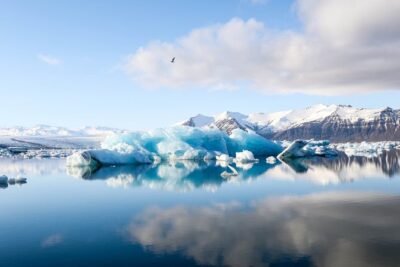
7 Day Iceland with Reykjavik Blue Lagoon Snæfellsnes | Golden Circle | South….
Read our review →Browse the lists this tour appears in