
Reviewed · VOLCANO & LAVA TOURS
Lava Centre Interactive Volcano Exhibition
Volcanoes become easier to understand here. The Lava Centre turns Iceland’s restless geology into a hands-on, family-friendly visit, with earthquake effects, eruption films, interactive displays, and a rooftop view toward the country’s famous volcanoes. I like the clear walk-through design, and I like that you can set your own pace instead of being tied to a guided group. The main drawback is size: some people may find the exhibition smaller than expected, especially if they have already visited Reykjavík’s Perlan museum.
I also like the practical location near Iceland’s South Coast route. It makes sense as a one-hour stop while driving between Reykjavík, waterfalls, and the sights around the Katla Geopark. If the center is busy, you may need to wait at popular interactive stations, so an early visit will give you more room to explore.
In This Review
- Key points to know before you go
- Why the Lava Centre makes sense on the South Coast
- Entering a high-tech explanation of Iceland
- The earthquake simulator gives the science some force
- The eruption film adds moving images to the story
- The rooftop observatory puts the volcanoes in context
- A good stop for children, with enough for adults
- How it compares with other Iceland science stops
- Timing, meeting point, and practical planning
- What the hour and a half is really worth
- Who should book the Lava Centre?
- Should you book this experience?
- FAQ
- Where is the Lava Centre located?
- How long does the visit take?
- How much does admission cost?
- Is the experience offered in English?
- Can I cancel my booking?
- Is the Lava Centre suitable for families?
Key points to know before you go
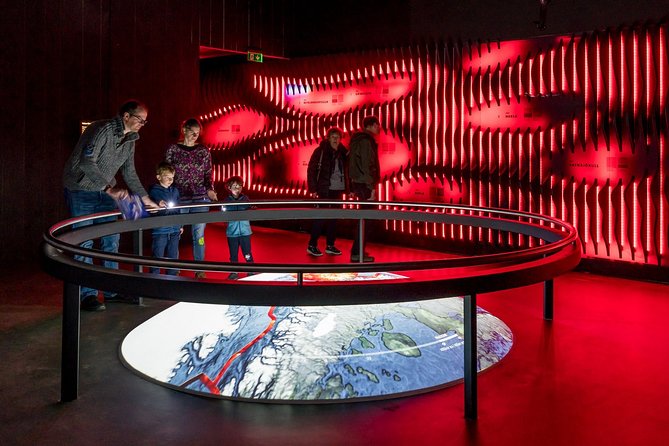
- Feel an earthquake through interactive effects: Vibrating plates and a simulator give the science a physical edge, especially for children.
- See how Iceland formed: Displays explain the country’s volcanic activity, different volcano types, and the magma plume beneath Iceland.
- Allow 60 to 90 minutes: A film, walk-through exhibits, and rooftop observatory make this more than a quick roadside photo stop.
- Finish with wide volcanic views: The observation deck uses a simple map to help you identify the volcanoes around you.
- Useful for families: Children as young as four can engage with the self-paced displays, while older children and adults get more geological detail.
- Plan around the crowds: The interactive format works best when you are not waiting behind a line at every station.
Why the Lava Centre makes sense on the South Coast
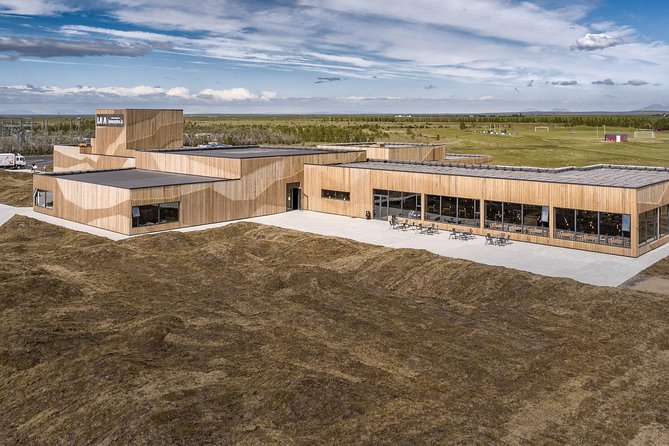
Iceland’s volcanoes are not just distant mountains. They help explain the country’s coastline, black sand, hot springs, earthquakes, and changing ground. The Lava Centre gives you that larger picture before or after you see the natural sights outdoors.
The center sits in the Hvolsvöllur area, at the main road heading east from Reykjavík. It is described as a gateway to Iceland’s South Coast and the Katla Geopark, so the location fits neatly into a driving day that includes waterfalls and volcanic scenery.
That setting matters. A museum in Reykjavík can introduce Iceland’s geology, but here you are closer to the active volcanic areas you are learning about. After seeing the displays, the names of nearby volcanoes and the shape of the surrounding terrain should make more sense.
I would treat the Lava Centre as an educational stop rather than a full-day attraction. The usual visit takes about one hour to one hour and 30 minutes. That is long enough to learn something useful without consuming half your sightseeing day.
The advertised price is $43.55 per person. That is not a small admission fee, particularly for a family, so the value depends on how much you enjoy interactive science. If you take your time with the exhibits, watch the film, use the earthquake effects, and go to the rooftop, the cost is easier to justify. If you rush through in 30 minutes, it will feel expensive.
More Volcano and Lava Tours:
- Lava Show Vik Admission Ticket
★ 5.0 · 1,177 reviews - Ice Cave by Katla Volcano Super Jeep Tour from Vik
★ 4.5 · 1,100 reviews - Vik: LAVA SHOW – Immersive Experience Entry Ticket
★ 4.7 · 974 reviews
Entering a high-tech explanation of Iceland
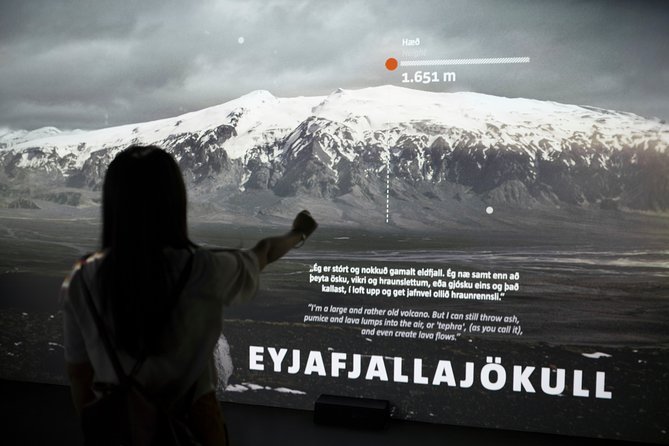
The exhibition begins with the basic question: why is Iceland so active? Instead of presenting a wall of technical text, it uses large displays, physical effects, and simple explanations to show how volcanic forces shape the island.
You can learn about several types of volcanoes and how they behave differently. That is useful because Icelandic eruptions do not all look alike. Some produce thick smoke, some send out flowing lava, and some create a more violent show of fire and ash.
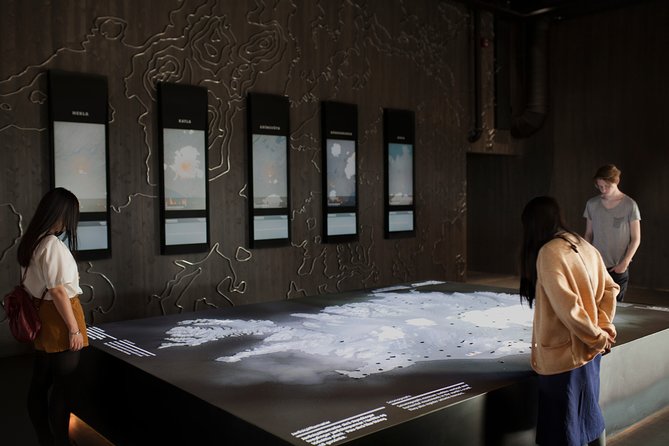
A large replica of the hot spot beneath Iceland, described as a magma plume, helps make an underground process visible. You cannot see that force from the road, of course, but the model gives you a way to picture the heat rising below the island.
I like this approach because it connects abstract science to places you may already have on your itinerary. When you later see a broad lava field or a dark volcanic ridge, you have more than a scenic impression. You have a basic idea of what caused it.
The exhibits are designed as a walk-through experience. You move from one display to the next, building the story of Iceland’s formation and its continuing volcanic activity. The self-paced format lets you pause at the parts that interest you and move faster through material your children may find too technical.
The earthquake simulator gives the science some force
The earthquake section is one of the most memorable parts for families. The center uses vibrating plates and an earthquake simulator to show what seismic movement feels like.
That physical effect makes the subject easier to grasp. A paragraph about shifting ground is one thing. Feeling the floor move under you is another, even if the demonstration lasts only a short time.
Parents will find this useful for explaining why Iceland monitors earthquakes so closely. Children often connect with the sensation first, then ask questions about what caused it. The displays can turn that curiosity into a better understanding of fault movement and volcanic activity.
You should not expect an amusement-park ride. The simulator serves the exhibit, not the other way around. Its value comes from making a scientific point memorable, not from delivering a long thrill.
The center also uses other hands-on stations, including a large wheel that guides you through the formation of Iceland. Those controls give children something to do while adults read the supporting information.
If you visit during a busy period, the hands-on design has one weakness. Each person may want time at the same station, and queues can form. Going early is a sensible choice if you want to examine each display without feeling hurried.
The eruption film adds moving images to the story
A film about Iceland’s most recent eruptions rounds out the exhibition. One part of the program lasts about 20 minutes, giving you a compact visual tour of different volcanic events.
The film is especially helpful for younger children. The changing appearance of eruptions, from smoky explosions to bright lava flows, is easier to remember than a series of still photographs. It also helps explain that volcanic activity can take several forms.
I would place the film either near the start or near the end of your visit, depending on the show schedule. At the start, it gives you a quick introduction before you enter the displays. At the end, it works as a recap after you have learned the basic terms.
Show availability is not checked until a booking is made, and the center cannot confirm a particular show time without checking availability. That detail matters if you are planning a tightly timed South Coast drive. Leave some flexibility rather than scheduling a waterfall visit immediately after a specific screening.
The film is also one reason the visit can stretch toward 90 minutes. If you watch it, stop at the interactive displays, and spend time on the roof, the center offers a proper educational break rather than a quick photo opportunity.
More Museum Visits:
- Ancient Historical Site Tour at the Caves of Hella
★ 4.5 · 191 reviews - Reykjavik: Perlan Museum Wonders of Iceland Entrance Ticket
★ 4.7 · 2,575 reviews - Reykjavík: Hop-On Hop-Off Bus and Perlan Museum Entry Ticket
★ 4.3 · 719 reviews - Reykjavik: Whales of Iceland Museum Entrance Ticket
★ 4.4 · 493 reviews
The rooftop observatory puts the volcanoes in context
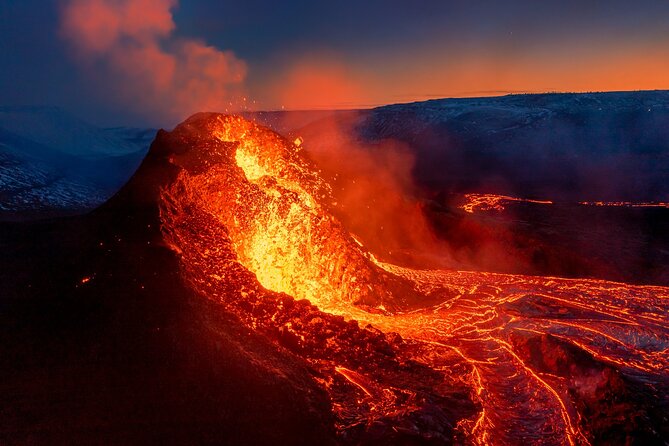
The rooftop observatory is a strong finish. From above, you can look toward the surrounding volcanoes and use a simple map to work out what you are seeing.
I like this feature because it joins the indoor material to the real world. You have just learned about Iceland’s volcanic systems, then you step outside and see the broad setting that makes the subject feel immediate.
The view will depend on weather and visibility. Iceland can change quickly, so do not judge the visit only by the promise of a clear panorama. Even on a gray day, the map and the position of the center can help you understand the region.
The roof is not just an extra viewpoint. It gives the exhibition a useful sense of place. Instead of leaving with a collection of facts about magma and earthquakes, you can connect those ideas with actual mountains and volcanic zones.
Allow enough time for this final stop. It is easy to rush toward the next South Coast sight, but the observatory may be the part that helps the whole visit fall into place.
A good stop for children, with enough for adults
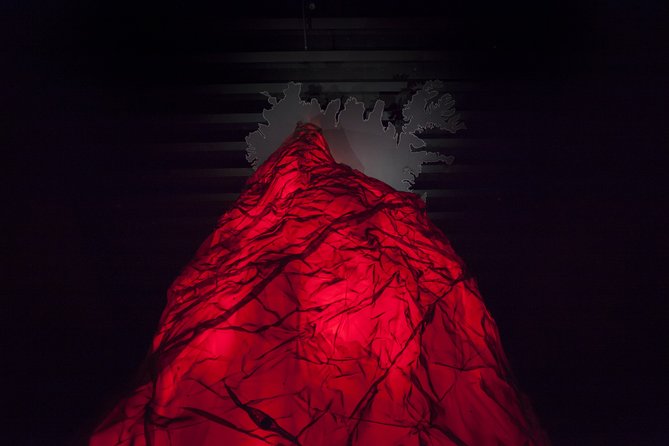
The Lava Centre works well across several age groups. Children aged four, six, and 11 have been able to engage with the displays, largely because the visit is self-paced and includes movement, sound, film, and physical effects.
For younger children, the earthquake simulator and interactive controls are likely to be the main draw. They may not follow every explanation about volcano types, but they can still grasp the basic idea that Iceland is shaped by powerful forces beneath the ground.
Older children can get more from the geological details. The exhibition explains the formation of Iceland, volcanic activity, earthquake movement, and recent eruptions without requiring a university-level background.
Adults should not assume it is only a children’s attraction. The information about the magma plume, volcanic types, and the country’s active zones gives the visit substance. The simple presentation is useful when you want to learn quickly during a road trip.
The one family concern is the price. At $43.55 per person, a group of four will spend a noticeable amount. The visit makes the best financial sense when everyone participates, rather than when one adult watches the children move through the displays.
How it compares with other Iceland science stops
The Lava Centre has some overlap with Perlan in Reykjavík. Both help explain Iceland’s natural forces and use modern displays to make science more approachable.
That does not make the Lava Centre unnecessary. Its South Coast location gives it a different role. You can stop here while already heading toward waterfalls, volcanic areas, or the Katla Geopark, rather than adding another museum visit in the capital.
If you have already spent a long time at Perlan, some themes may feel familiar. The Lava Centre may seem smaller than expected, and you might not need both attractions if your main goal is a broad introduction to Icelandic geology.
Still, the Lava Centre has a clear focus. It concentrates on volcanoes, earthquakes, Iceland’s formation, and recent eruptions. That sharper subject makes it easy to fit into a driving day.
I would choose this center over a second general museum if you want to understand the volcanic character of the South Coast. I would choose Perlan instead if you want a larger all-purpose science attraction in Reykjavík and do not plan to drive east.
Timing, meeting point, and practical planning
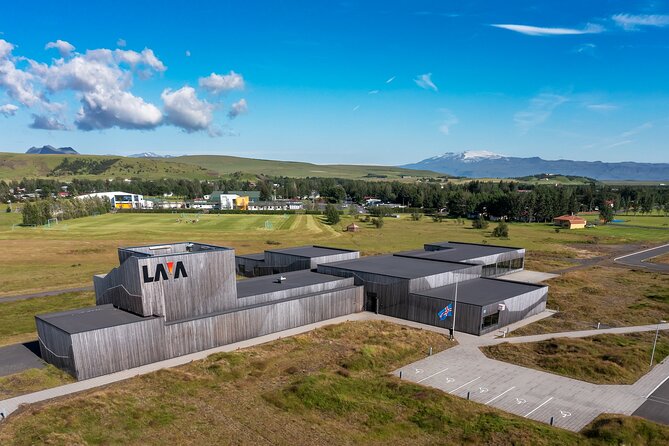
The stated starting point is 860 Hvolsvöllur, Iceland, and the activity ends back at that meeting point. The center is near public transportation, though the supplied information does not give a detailed route or timetable.
You receive a mobile ticket, and the experience is offered in English. Confirmation is provided at booking. The advertised skip-the-line feature can save time, but you should still visit early if you want the interactive stations at their quietest.
The center can accept a maximum of 100 people for the activity. That capacity is large enough for the exhibition to become crowded, especially when several groups arrive at once. A flexible visit time is better than trying to squeeze in at the busiest part of the day.
Service animals are allowed, and most people can take part. The information does not list every accessibility feature, so if you need a specific accommodation, confirm it before booking.
The experience is commonly booked about 38 days in advance. That does not mean you must book that far ahead, but it signals that you should not leave it until the last minute during a popular Iceland season.
You can cancel for a full refund if you do so at least 24 hours before the start time. Changes or cancellations inside that 24-hour window are not accepted for a refund, and the cut-off follows local Icelandic time.
What the hour and a half is really worth
For $43.55, I would expect a well-organized visit with several layers, and the Lava Centre provides that. You get a structured exhibition, physical demonstrations, a film, and a rooftop viewpoint.
The value is strongest when the weather is poor. A rainy or windy South Coast day can make outdoor sightseeing tiring. The center gives you a dry place to learn about the same forces you are trying to see outside.
Its value also rises for families. Interactive displays reduce the need for children to stand quietly and read long panels. The self-paced format lets you move together while still giving each person freedom to stop at different points.
Solo adults and couples should consider their interests. If volcanoes, earthquakes, and Iceland’s natural forces are high on your list, the visit offers a useful, concentrated introduction. If you prefer only outdoor sights, the admission may feel less worthwhile.
The smaller scale is both a benefit and a limit. You can cover the center without exhausting yourself, but you should not expect a giant museum with hours of separate galleries. Plan for 60 to 90 minutes, then use the rest of your day for the South Coast.
Who should book the Lava Centre?
I would recommend it most strongly to families, first-time visitors to Iceland, and anyone driving the South Coast who wants more context for the scenery. It is also a smart backup when rain, wind, or poor visibility makes outdoor plans less appealing.
It is a good fit for children who learn by pressing buttons, turning wheels, watching films, and feeling demonstrations. Adults who enjoy clear explanations will also find enough substance in the volcanic and earthquake displays.
I would think twice if you have already visited Perlan and are trying to cut costs. The themes overlap, and the Lava Centre is smaller than some people expect. You should also avoid booking it too tightly against another timed activity, since the film schedule and crowd levels can affect how long you need.
Should you book this experience?
Book the Lava Centre if you want a focused, interactive explanation of Iceland’s volcanoes and earthquakes during a South Coast road trip. The earthquake effects, eruption film, hands-on displays, and rooftop observatory create a well-rounded 60 to 90-minute stop.
For families, the self-paced format is the strongest reason to go. For adults, the main reward is seeing how the indoor science connects with the volcanoes outside. At $43.55 per person, it is not a bargain attraction, but it can earn its price if you take your time and use it as part of a full day in the region.
Go early when possible, leave room around the film schedule, and save time for the roof. If that plan suits your route and interests, the Lava Centre is a worthwhile stop.
FAQ
Where is the Lava Centre located?
The meeting point is listed as 860 Hvolsvöllur, Iceland. The center is on the main road east from Reykjavík and serves as a gateway to the South Coast and Katla Geopark.
How long does the visit take?
The expected duration is about one hour to one hour and 30 minutes. This includes the interactive exhibition, film, earthquake effects, and rooftop observatory.
How much does admission cost?
The listed price is $43.55 per person.
Is the experience offered in English?
Yes. The experience is offered in English, and you receive a mobile ticket.
Can I cancel my booking?
Yes. You can cancel at least 24 hours before the scheduled start time for a full refund. Cancellations or changes made less than 24 hours before the start time are not accepted for a refund.
Is the Lava Centre suitable for families?
Yes. Most people can participate, and the center uses hands-on displays, an earthquake simulator, film, and self-paced exhibits. Service animals are allowed.
Fresh around Vík
- Easy Hike on Sólheimajökull Glacier★ 5.0 · 3 reviews
- Highland Snowmobiling Tour in Southern Iceland★ 5.0 · 3 reviews
- Exclusive Ice Climbing Experience on Sólheimajökull★ 5.0 · 3 reviews
- Private Ice Climbing on Sólheimajökull★ 5.0 · 3 reviews
- South Coast Including Vatnajökull National Park and Jökulsárlón Glacier Lagoon★ 4.0 · 4 reviews
- Þórsmörk Buggy Adventure Tour in Southern Iceland★ 5.0 · 4 reviews
- Private Glacier Hike on Sólheimajökull★ 5.0 · 4 reviews
- Hvolsvöllur: Private Thorsmork Guided Day Hike by Super Jeep★ 5.0 · 4 reviews
Volcano & Lava Tours, compared.
Golden Circle Full-Day Tour with Kerid Crater
Read our review →
Small-Group Golden Circle, Blue Lagoon with Ticket & Kerid Crater
Read our review →
Golden Circle, Kerid Crater, & Blue Lagoon Tour
Read our review →
LAVA SHOW – Immersive Experience Entry Ticket
Read our review →
Lava Show Reykjavik Admission Ticket – Optional Premium Upgrade
Read our review →
Golden Circle with Kerid Volcanic Crater Day Tour from Reykjavik
Read our review →
Browse the lists this tour appears in