
Reviewed · HIKING & TREKKING
Skaftafell National Park: Falljokull Ice Climb and Hike
Ice turns hiking into a real adventure. This four-hour outing takes you onto Falljökull, an outlet glacier of Vatnajökull, with a small group of no more than six people. I like the hands-on ice climbing and the chance to see crevasses, moulins, and blue ice up close. I also like that certified guides provide boots, crampons, helmets, harnesses, ropes, and ice axes. The main catch is that it is a serious outdoor activity, not a gentle walk, and you must bring your own gloves and rain gear.
You spend about three hours on the glacier, including a climb up an ice wall or a rappel into a crevasse followed by a climb out. That makes the $259 price easier to justify than a basic glacier walk, though it still requires reasonable fitness, warm clothing, and comfort with heights. The route and climbing area can change because the glacier is always shifting.
In This Review
- Key points at a glance
- Why Falljökull makes a strong climbing venue
- Meeting at Tröll Expeditions Skaftafell
- The 30-minute ride toward Vatnajökull
- Safety training before your first crampon step
- Three hours on the ice
- What the ice climb actually involves
- A guide-led route that can change
- What the price includes, and what it does not
- Fitness, age, and the feel of the day
- Weather and seasonal expectations
- Booking flexibility and practical timing
- Should you book the Falljökull ice climb?
- FAQ
- Where does the Falljökull ice climb begin?
- How long does the activity last?
- How large is the group?
- What language does the guide speak?
- Is glacier equipment provided?
- Do I need to bring gloves and rain gear?
- Can children join the activity?
- What happens during the ice-climbing section?
Key points at a glance
- Falljökull is an outlet glacier of Vatnajökull: You walk on part of Europe’s largest glacier, beneath ice-covered peaks rising above 2,000 meters.
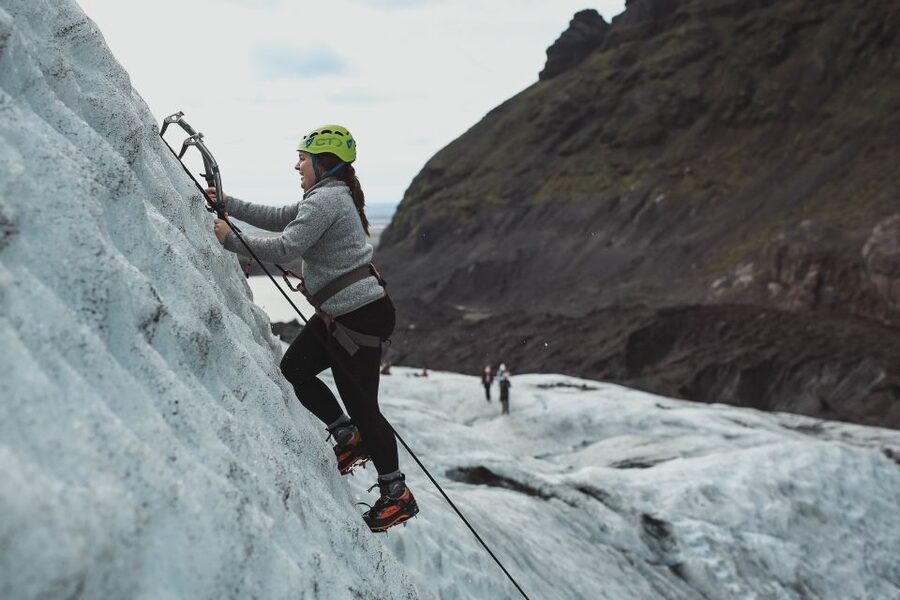
- The climbing is real but guided: Your guide sets an ice screw and safety line before you climb or rappel, so beginners can take part under close supervision.
- You get nearly three hours on the ice: The short bus ride and approach walk leave most of the outing for glacier time.
- Groups are limited to six people: This gives you more personal instruction and less waiting at the climbing section.
- Bring gloves and rain gear: Boots and technical glacier equipment are supplied, but these two useful items are not.
- The minimum age is 12: This is better suited to active teenagers and adults than to young children or anyone seeking an easy stroll.
Why Falljökull makes a strong climbing venue
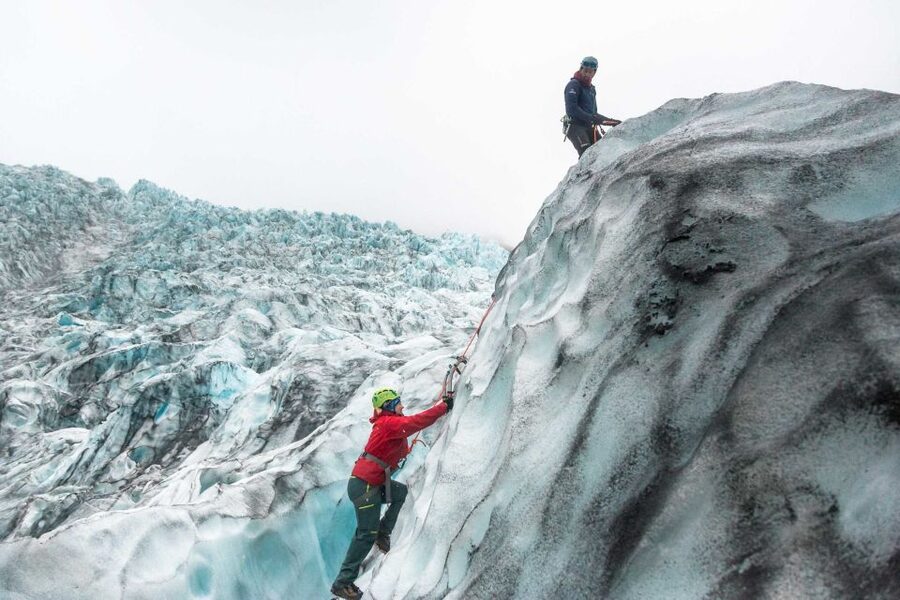
Falljökull is one of Vatnajökull’s outlet glaciers, a tongue of moving ice reaching out from the larger ice cap. You do not simply look at the glacier from a roadside viewpoint. You walk onto it, learn how to move across its uneven surface, and use climbing tools to gain height on a wall of ice.
The setting does much of the work. Ice-covered peaks rise more than 2,000 meters above you, and the glacier offers a constantly changing mix of ridges, cracks, tunnels, and blue ice. The area has also appeared in films and television productions including James Bond, Interstellar, and Game of Thrones. The Jon Snow connection is fun, but the glacier itself is the real reason to come.
I especially like the mix of scenery and effort here. A standard glacier walk gives you a close look at ice. This trip asks you to use your feet, hands, crampons, and ice axe, which makes the visit more memorable. You are not required to arrive as an ice climber. Several people who had never climbed before found the route manageable, though the climbing section can still feel demanding.
A few more trips people compare before booking
- South Coast Including Vatnajökull National Park and Jökulsárlón Glacier Lagoon
★ 4.0 · 4 reviews - Skaftafell National Park: Falljokull Glacier Easy Hike
★ 4.7 · 1,370 reviews - Skaftafell National Park: Falljokull Glacier Advanced Hike
★ 4.8 · 1,083 reviews
Meeting at Tröll Expeditions Skaftafell
You meet at Tröll Expeditions Skaftafell in Hof. The starting point matters because you need to arrive ready for a tightly timed outdoor activity. Allow time to find the base, check your equipment, and listen carefully before the group leaves.
The group size is capped at six participants. That is a useful limit on a technical excursion. Your guide can watch how you place each foot, correct your body position, and give more than a quick general briefing. Small groups also help at the climbing section, where space and safety lines naturally limit how many people can work at once.
The English-speaking guide leads the outing. Past guides named in the supplied feedback include Jan, Lily, Benat, Diego, Adam, and Vincenzo. Individual guide assignments can change, so do not book around one particular name. The consistent point is that the guide has an important role here, not just as a narrator but as the person choosing a safe route and setting up the climb.
The 30-minute ride toward Vatnajökull
After receiving the required gear, you board the troll bus for roughly ten minutes to the glacier parking area. The timetable also includes bus time within the broader four-hour schedule, so expect transport and transitions to take part of the morning or afternoon.
This ride is short, but it saves energy for the glacier. You are not spending the first hour on a long approach road or carrying technical equipment from the base. Once the bus stops, you walk about fifteen minutes to the edge of the ice.
That approach walk is worth treating as part of the experience rather than dead time. You begin to see the glacier at closer range, and your guide can explain how the route works before you step onto the ice. The walk is not a substitute for the glacier section, but it gives you a gradual start.
Safety training before your first crampon step
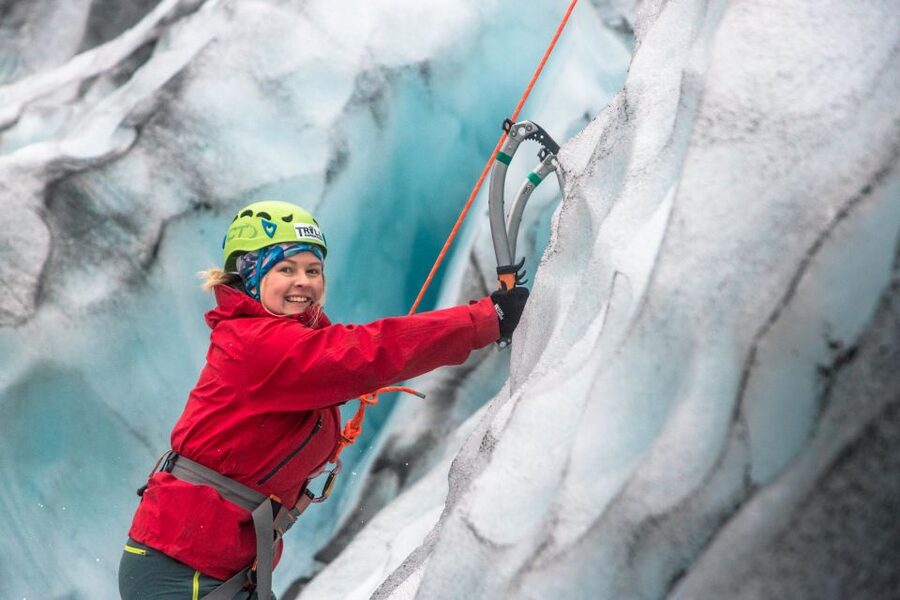
At or near the glacier edge, the guide demonstrates how to put on and use crampons. These metal spikes attach to your boots and give you grip on hard ice. Your guide also explains how to walk properly, since ordinary flat-footed steps are not the best way to move on a glacier.
You receive climbing boots, crampons, an ice axe, helmet, harness, and ropes. The equipment is a major part of the price. Buying or transporting this gear yourself would make a short glacier activity much less practical, and you do not need prior technical equipment.
The glacier is unstable and constantly shifting. Cracks and moulins can change, and the guide may scout for a new climbing spot to avoid unsafe areas or crowded sections. That flexibility is good safety practice, but it means the exact route is not fixed. You should expect the guide to make decisions based on current conditions rather than promise one particular ice wall.
More Hikes and Walks:
- Skaftafell: Ice Cave Tour and Glacier Hike
★ 4.5 · 1,746 reviews - Sólheimajökull: Guided Glacier Hike
★ 4.7 · 1,123 reviews - Sólheimajökull Glacier Hike – Adventure in a Small Group
★ 5.0 · 799 reviews - Solheimajokull Glacier 3-Hour Small-Group Hike
★ 5.0 · 501 reviews
Three hours on the ice
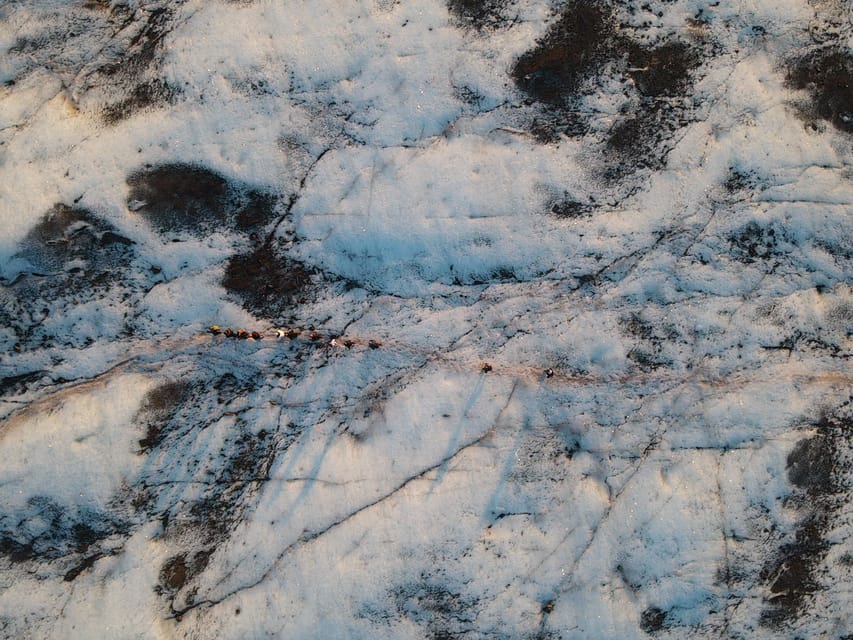
You spend roughly three hours on Falljökull itself. That is the heart of the experience, and it gives you enough time to do more than pose for a photograph before returning to the bus.
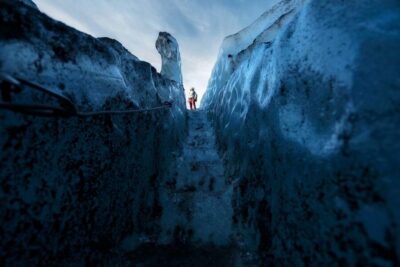
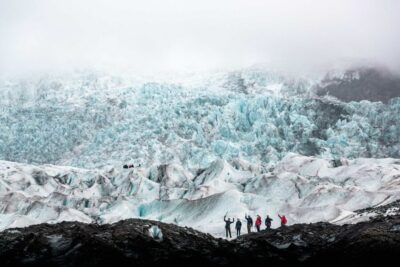
The walking section takes you across uneven glacier ice and past formations that are difficult to understand from a distance. Crevasses are deep fissures in the glacier surface. Moulins are often near-vertical shafts formed when meltwater enters cracks and works its way downward. Your guide points out these features and explains why you must stay on the selected route.
In winter, you might see the glacier’s striking blue interior by looking into small ice tunnels. The exact amount of blue ice depends on the route and conditions, so treat it as a possibility rather than a guarantee. Even without a tunnel, the contrast between white snow, dark openings, and blue ice can make this section the most visually impressive part of the outing.
You also get time to stop for views and photographs. Several people found the walking route interesting in its own right, with strong views onto and from the glacier. Keep your camera secure and listen when the guide asks the group to move. On moving ice, the photo opportunity never outranks the route instructions.
What the ice climb actually involves
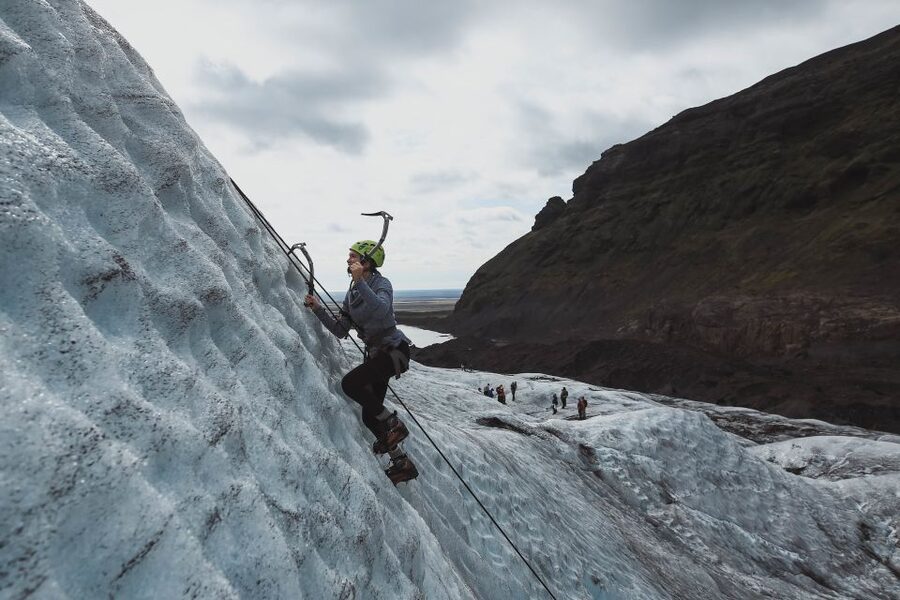
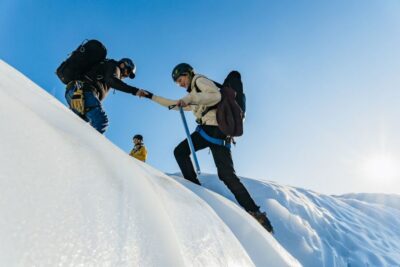
The climbing section is where this activity separates itself from a simple glacier hike. Your guide places a large ice screw and attaches a safety line before you climb an ice wall. Another option may involve rappelling into a crevasse and climbing back out.
The equipment does not make the climb effortless. You still need to kick your crampons into the ice, use the ice axe correctly, and follow the guide’s instructions. First-time climbers described the activity as fun and manageable, while another participant called the hike and climbing rigorous. Both descriptions can be true: the guide helps you stay safe, but you still have to work.
You do not need to arrive with climbing experience. The guide teaches the basic movements and supervises the attempt. If you are nervous about heights, the wall may feel more intimidating than a normal hike. Tell the guide if you need a slower explanation or a moment to reset. The small group makes that conversation easier.
The safety system is a strong reason to choose this version of a glacier outing. The guide does not send you toward an ice wall without preparation. The rope, harness, helmet, ice screw, and close instruction give the climb structure. Still, no glacier activity is risk-free, and you need to accept that the terrain is cold, uneven, and naturally unstable.
A guide-led route that can change
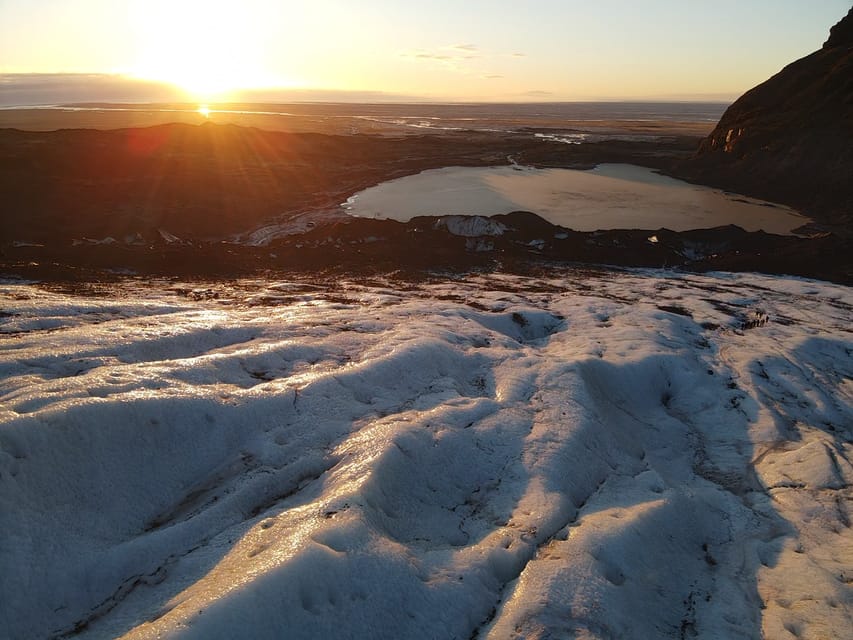
The route is not a marked city trail. Your guide may scout fresh crevasses or moulins and choose a climbing area that avoids unsafe conditions or excess traffic. That can change the plan during the day.
I see this as a benefit, not a flaw. A fixed route would be less useful on a glacier that shifts over time. The trade-off is that you cannot count on a particular tunnel, wall, or viewpoint. Book this for the overall experience of glacier walking and climbing, rather than for one exact photo.
The guide also supplies much of the meaning. People praised Jan’s calm instruction and humor, Lily’s handling of a small group, and Vincenzo’s clear explanations of glacier science and the surrounding scenery. These names come from earlier outings, not a promise about your guide, but they show what good guiding adds: you learn how the ice works while you are standing on it.
What the price includes, and what it does not
At $259 per person, this is not a low-cost walk. The value comes from the amount of technical support packed into four hours: a certified glacier guide, climbing boots, crampons, ice axe, helmet, harness, ropes, transport to the glacier approach, safety instruction, and close supervision in a group of six or fewer.
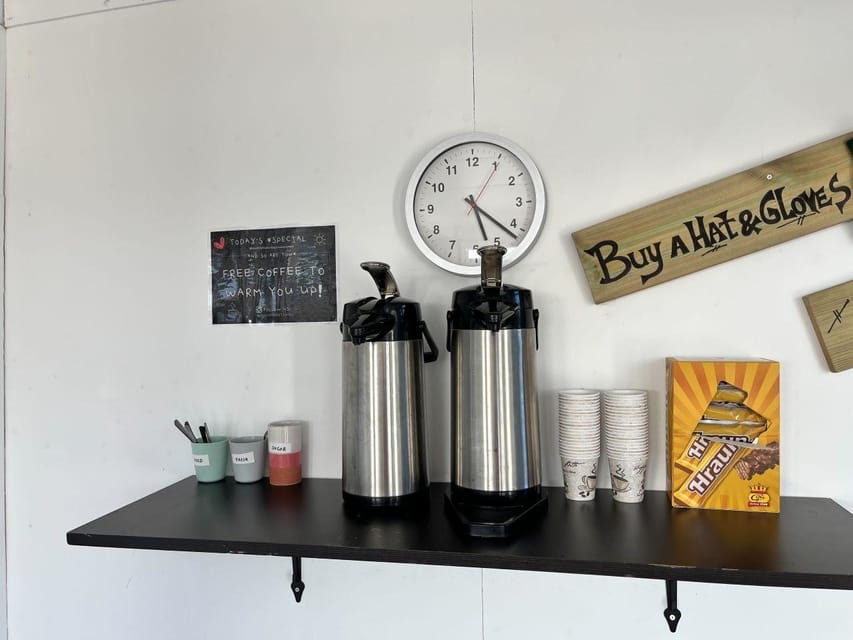
You also receive coffee and chocolates. Those are small touches, but they are welcome after working in cold conditions. They do not change the basic price calculation. The main question is whether you want the climbing element. If you only want to stand on a glacier for photographs, a less technical walk could make more sense. If you want to learn glacier movement and climb an ice wall, the extra cost is easier to defend.
Rain gear and gloves are not supplied. Bring both, along with warm clothing and a hat. Even if the forecast looks friendly, Icelandic weather can make wet hands and damp layers a real problem. The provided climbing boots are useful, but they do not replace proper clothing for the rest of your body.
Fitness, age, and the feel of the day
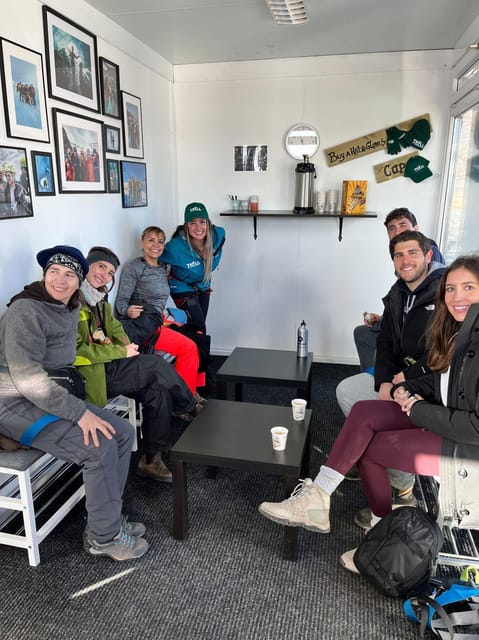
Children under 12 cannot join. For anyone older, the supplied information does not set a particular fitness grade, but the activity includes a fifteen-minute approach, about three hours of glacier walking, uneven ice, and a climbing session. You should be comfortable with sustained outdoor movement and be ready to follow instructions closely.
The activity suits you best if you want an active highlight rather than a passive sightseeing stop. It works particularly well for first-time climbers who like a challenge but want a guide and safety system. It is less suitable if you dislike cold weather, heights, crampons, or changing plans.
The outing can also be tiring. One participant described it as very rigorous, while others found the route doable without previous climbing experience. That difference likely reflects personal fitness, weather, and how challenging the chosen route feels on the day. Plan to give yourself time afterward rather than scheduling another demanding activity immediately.
Weather and seasonal expectations
The experience operates in changing Icelandic conditions. In winter, small tunnels may reveal blue ice, while clear weather can open views toward the high peaks. In other seasons, you may get a different mix of ice texture, light, and route conditions.
You should not treat a sunny forecast as a guarantee of an easy outing. The glacier remains uneven and active, and the guide may adjust the route. Good weather can improve visibility, but the equipment and clothing still matter.
The feedback includes positive outings in February, March, April, July, August, and September. That suggests the activity can be rewarding across much of the year, but it does not guarantee identical conditions in every month. Pack for cold, wind, and rain, and let the guide set the pace.
Booking flexibility and practical timing
The activity lasts four hours, with starting times depending on availability. You can cancel up to 24 hours in advance for a full refund, and the reserve-now-pay-later option lets you hold a place without paying immediately. These policies are useful in Iceland, where weather can affect a day’s plans.
Do not rely on a last-minute notification if you will be without internet. One person nearly missed the activity after the meeting point appeared to change and the update arrived later. Confirm the current meeting details before your travel day and arrive at Tröll Expeditions Skaftafell in Hof with enough time to spare.
The broader schedule includes transport, a safety briefing, hiking, a class, glacier walking, and the return bus. The exact timing may be adjusted by the guide, especially if the glacier route needs to change. The important figure is the generous glacier portion, roughly three hours of the four-hour experience.
Should you book the Falljökull ice climb?
I would book this if you want more than a scenic walk and like the idea of using crampons and an ice axe on real glacier ice. The small group, full equipment package, safety line, and long glacier section make it a strong choice for a first ice-climbing experience.
I would skip it if you want a relaxed viewpoint visit, have limited tolerance for cold or strenuous activity, or do not want to bring extra rain gear and gloves. The $259 price is fair for a guided climb with technical equipment, but it is harder to justify if you plan to avoid the climbing part.
For an active visitor to Skaftafell, this is one of the more memorable ways to meet Vatnajökull. You get big views, practical instruction, unusual ice formations, and a genuine physical challenge. Just arrive prepared to work, listen carefully, and let the glacier decide the route.
FAQ
Where does the Falljökull ice climb begin?
You meet at Tröll Expeditions Skaftafell in Hof, Iceland.
How long does the activity last?
The experience lasts four hours. You spend roughly three hours on the glacier itself.
How large is the group?
The group is limited to six participants.
What language does the guide speak?
The live tour is conducted in English.
Is glacier equipment provided?
Yes. The activity includes climbing boots, crampons, an ice axe, helmet, harness, and ropes.
Do I need to bring gloves and rain gear?
Yes. Gloves and rain gear are not included, so you should bring both along with warm clothing and a hat.
Can children join the activity?
No. The experience is not suitable for children under 12.
What happens during the ice-climbing section?
Your guide secures a safety line with a large ice screw before you climb an ice wall. You may also rappel into a crevasse and climb out again, depending on the conditions and route selected.
Fresh around Vík
- Easy Hike on Sólheimajökull Glacier★ 5.0 · 3 reviews
- Highland Snowmobiling Tour in Southern Iceland★ 5.0 · 3 reviews
- Exclusive Ice Climbing Experience on Sólheimajökull★ 5.0 · 3 reviews
- Private Ice Climbing on Sólheimajökull★ 5.0 · 3 reviews
- South Coast Including Vatnajökull National Park and Jökulsárlón Glacier Lagoon★ 4.0 · 4 reviews
- Þórsmörk Buggy Adventure Tour in Southern Iceland★ 5.0 · 4 reviews
- Private Glacier Hike on Sólheimajökull★ 5.0 · 4 reviews
- Hvolsvöllur: Private Thorsmork Guided Day Hike by Super Jeep★ 5.0 · 4 reviews
Hiking & Trekking, compared.
Skaftafell National Park: Falljokull Glacier Easy Hike
Read our review →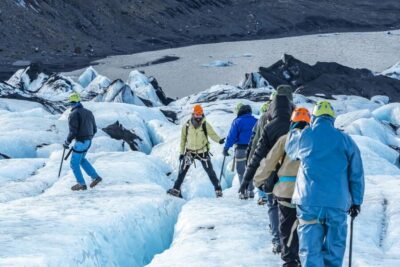
Glacier Hike, Waterfalls and Black Sand Beach
Read our review →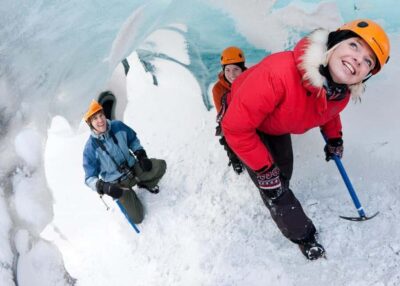
Skaftafell National Park: Falljokull Glacier Advanced Hike
Read our review →
Volcano Eruption Site and Reykjanes Hiking Tour
Read our review →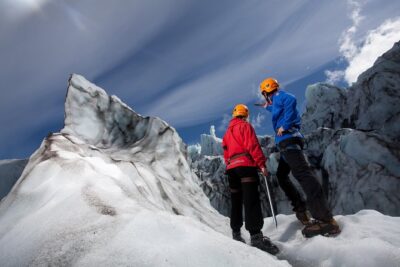
Guided Afternoon Hiking Tour to New Volcano Site
Read our review →Browse the lists this tour appears in