
Reviewed · GLACIER HIKES
Skaftafell: Small-Group Vatnajökull Glacier Hike (Moderate)
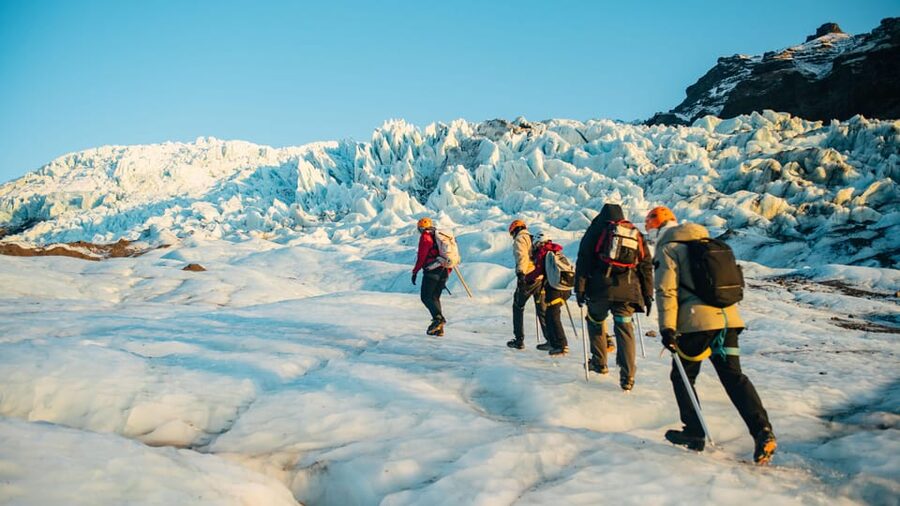
The ice here is anything but still. This five-hour glacier hike takes you beyond a short walk on the lower ice, toward Falljökull’s jagged icefall with a certified guide leading the way. I like the small-group format, and I like that the tour treats the glacier as both an adventure and a living natural system. The main catch is stamina: this is a long outing on uneven ground, and the actual day can run closer to six or seven hours once transport and gear fitting are included.
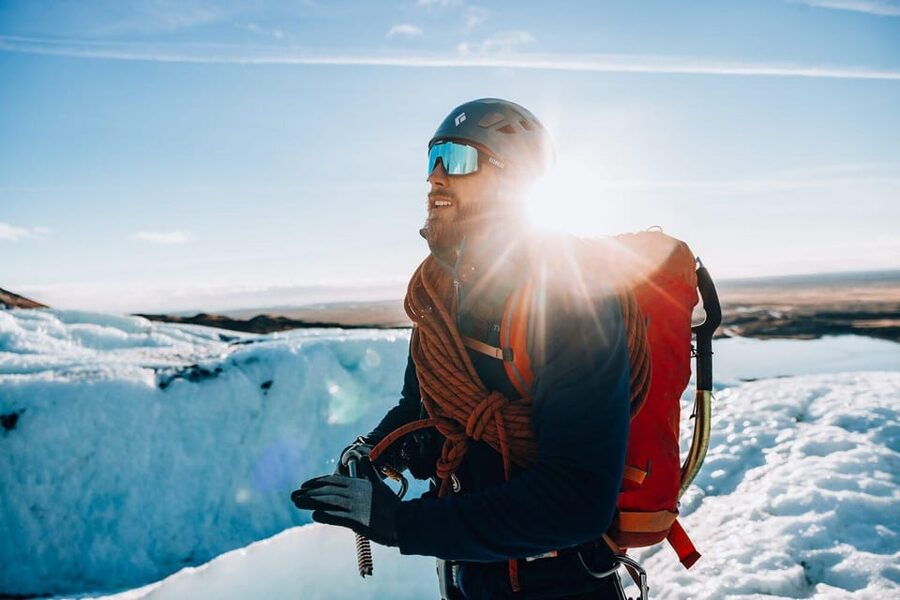
I also like the balance between safety and adventure. You get a helmet, harness, ice axe, and crampons, while guides such as Lucy, Sara, Kristian, Josh, and Ola have been praised for explaining glacier science, setting a steady pace, and finding memorable photo stops. You need sturdy ankle-support hiking boots, and the hike is not suitable for children under 14.
In This Review
- Key points to know before booking
- Why this glacier hike is different from an easy outing
- Starting at Skaftafell Base Camp
- The 20-minute ride to Falljökull
- Finding your rhythm on the glacier
- Reaching Falljökull’s broken icefall
- What your guide adds to the day
- How hard is the moderate route?
- Is $170 good value?
- Practical advice for a better glacier day
- Who should book the Falljökull hike?
- Should you book it?
- FAQ
- Where does the glacier hike meet?
- How long does the activity last?
- What equipment is provided?
- Do I need special hiking boots?
- Is the tour suitable for children?
- What happens if I need to cancel?
Key points to know before booking
- Falljökull is the main prize: You walk toward a dramatic icefall filled with broken ice, crevasses, streams, and sculpted formations.
- The advertised five hours may feel longer: The formal schedule includes 20-minute bus rides each way, but equipment fitting, safety checks, and returning gear can push the full outing to six or seven hours.
- Moderate means genuinely active: Expect several miles of walking over uneven ice and rocky ground, with frequent uphill and downhill sections.
- The guides make the difference: Guides including Kristian, Lucy, Sara, Josh, Ola, and Gaby have been praised for safety, humor, glacier knowledge, and personal attention.
- Bring food and water: Nothing to eat or drink is included, and the long time outside makes small snacks useful.
- Boots matter: Ankle-support hiking boots are mandatory, and crampons fit EU shoe sizes 35 through 50 only.
Why this glacier hike is different from an easy outing
Many first-time glacier excursions keep close to the lower, flatter section of the ice. This moderate trip is designed to go farther and higher, giving you more time among the features that make a glacier fascinating: crevasses, meltwater channels, ice walls, moraines, and blue-white folds in the ice.
I like this approach because the glacier becomes more than a place to take a quick photograph. You get time to learn how ice moves, how volcanic material becomes trapped in it, and how meltwater cuts paths through the frozen surface. One guide discussed Milankovitch cycles, while others explained past glacier movement and the changing shape of the ice.
That extra distance comes with a clear tradeoff. You need to be comfortable walking for hours on rough terrain. The hike is not described as technical ice climbing, but several people enjoyed steeper sections, rope-assisted routes, small ice caves, and more adventurous passages. Your guide decides what is safe on the day, since the glacier changes constantly.
The small-group setting helps here. A guide can watch how everyone is handling the crampons, adjust the pace, and give more individual help. Group size can vary, but one outing had only eight people. The one lower rating praised the experience but wished the group could have moved faster, which is a fair reminder that the pace must suit the least confident hiker.
More Glacier Hikes:
- Reykjavik: Glacier Hike, Waterfalls and Black Sand Beach
★ 4.8 · 1,285 reviews - From Reykjavik: Glacier Hike, South Coast and Waterfalls Day Trip
★ 5.0 · 915 reviews - Glacier Hike and South Coast Small-Group Tour from Reykjavik
★ 5.0 · 827 reviews
Starting at Skaftafell Base Camp
You meet at the Arctic Adventures booking hut in Skaftafell National Park. Allow time before the official hiking portion begins. Staff fit your equipment, inspect your boots, and explain how the day will work.
The supplied gear includes glacier crampons, a helmet, a walking ice axe, and a harness. You do not need to bring those items yourself. You do need proper boots, and the company can rent suitable hiking boots if your own pair lacks a stiff sole or ankle support.
This boot check is not a fussy formality. Crampons must grip securely, and ordinary soft-soled walking shoes are not suitable. The available crampons fit EU sizes 35 to 50, so check your shoe size before paying for the tour. Anyone outside that range cannot take part.
You should arrive dressed for changing conditions. Waterproof trousers, a waterproof jacket, warm layers, gloves, and a hat make sense. One person reported getting warm after starting to walk and appreciated having a bag for extra layers. Food and drinks are not included, so pack water and compact snacks that you can reach without a great deal of fuss.
The 20-minute ride to Falljökull
After preparation, a 4×4 bus carries the group from the base area toward the foot of the glacier. The ride takes about 20 minutes each way.
This short transfer saves you from beginning the day with a long road walk and places you near the glacier’s access point. It also creates a useful pause between the busy preparation area and the quieter ice. Tour timing can change with the season and conditions, so do not schedule a tight commitment immediately afterward.
From the drop-off point, the approach continues on foot. The walk across the rough ground is part of the experience, not just a way to kill time. You see terrain shaped by ice and volcanic forces, and your guide can point out moraines and signs of former glacier movement before the group reaches the ice itself.
Some descriptions put the full walking distance at roughly five or six miles. That figure depends on the route and conditions, but it is a helpful way to picture the effort. This is not a short stroll from a vehicle to a viewpoint.
Finding your rhythm on the glacier
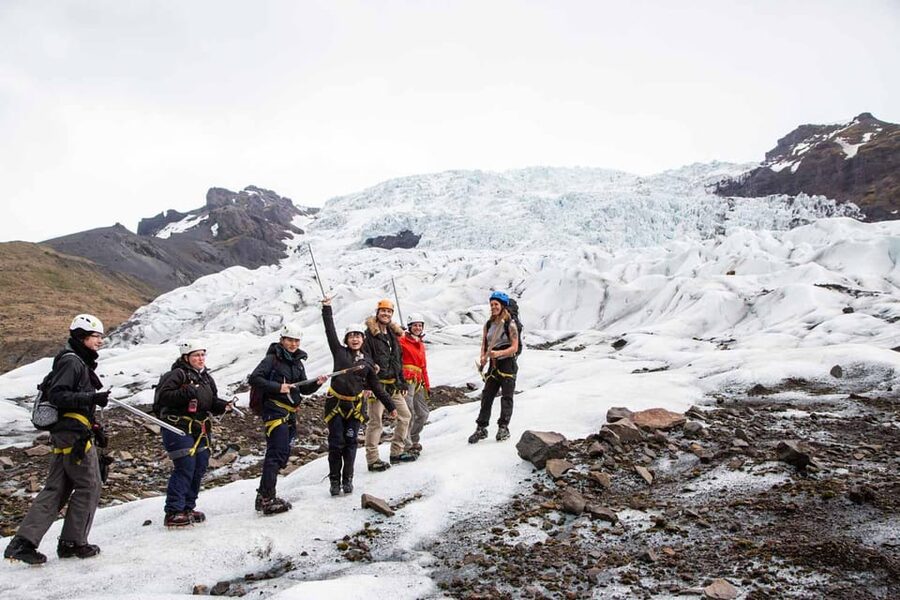
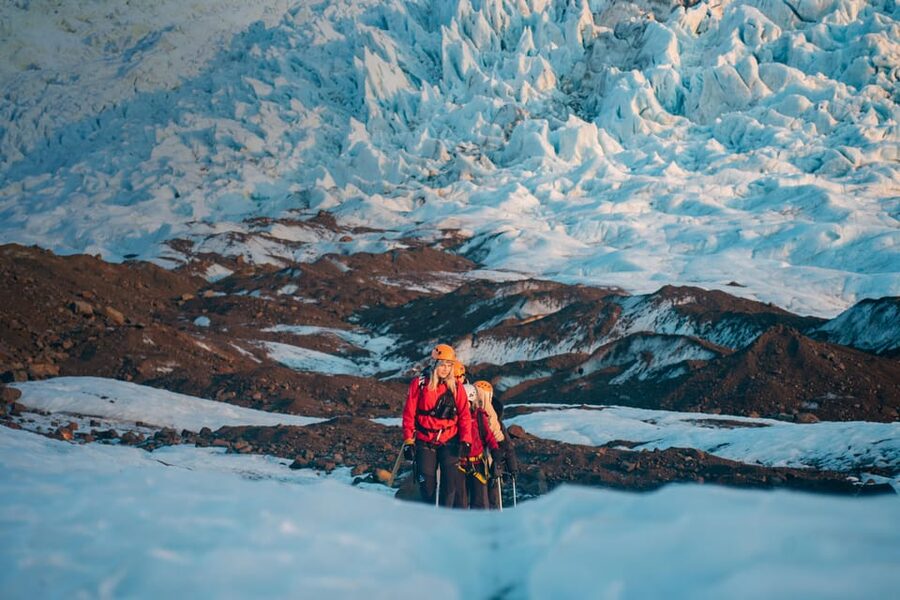
At the glacier tongue, the group puts on crampons and reviews basic movement. Your guide shows you how to place your feet, how to handle changes in surface texture, and how to use the ice axe. Crampons can feel awkward for the first few minutes, but several people found them easy to learn.
The key is patience. You are not walking normally on pavement. Short, deliberate steps give the metal points time to grip. Uphill and downhill movement require different foot positions, and the guide will demonstrate the safest method.
The surface changes as you go. You may cross firm blue ice, rough gray sections covered with volcanic grit, narrow channels, and uneven ridges. Meltwater can form streams and falls across the route. Guides sometimes cut steps or prepare safe passages, especially when rain has created new water channels.
One particularly revealing account described guides building bridges over newly formed rivers after heavy rainfall. That detail shows why a glacier tour cannot run like a fixed museum route. The path is checked and adapted by the guide team, and the route you take depends on current conditions.
More Hikes and Walks:
- Reykjavík: Volcano Eruption Site and Reykjanes Hiking Tour
★ 4.6 · 1,066 reviews - Reykjavík: Guided Afternoon Hiking Tour to New Volcano Site
★ 4.4 · 934 reviews - From Reykjavík: Fagradalsfjall Volcano Hike with Geologist
★ 4.8 · 780 reviews - From Reykjavík: Landmannalaugar Day Hike
★ 4.7 · 662 reviews
Reaching Falljökull’s broken icefall
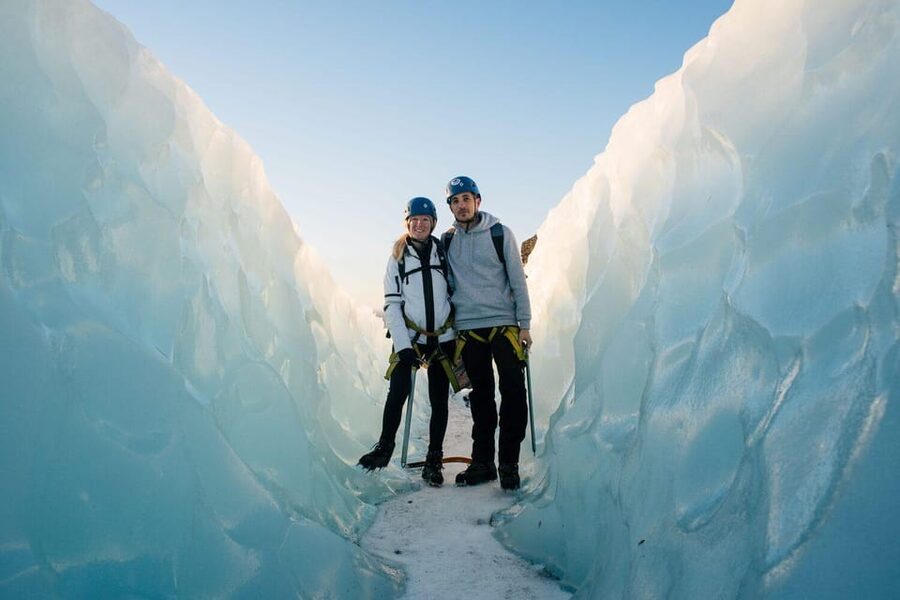
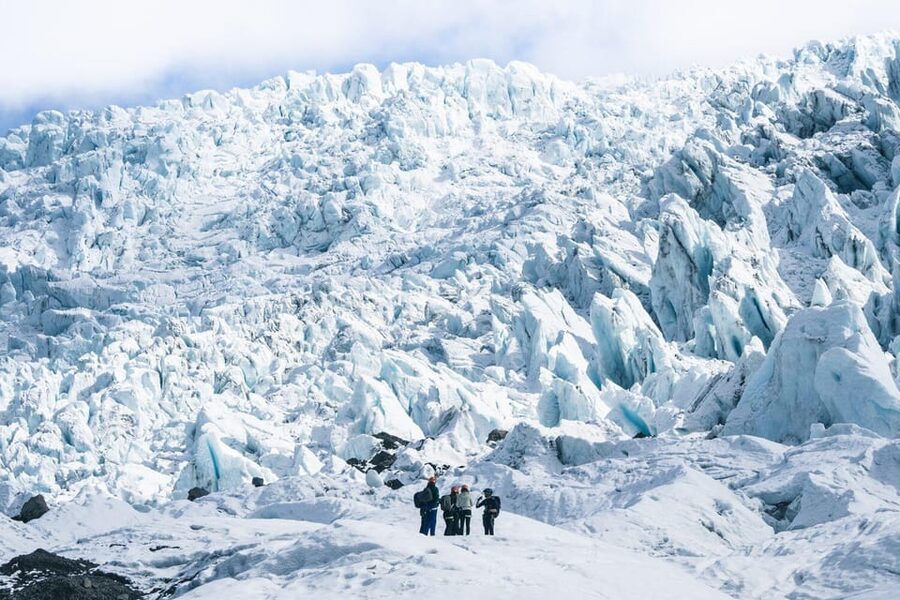
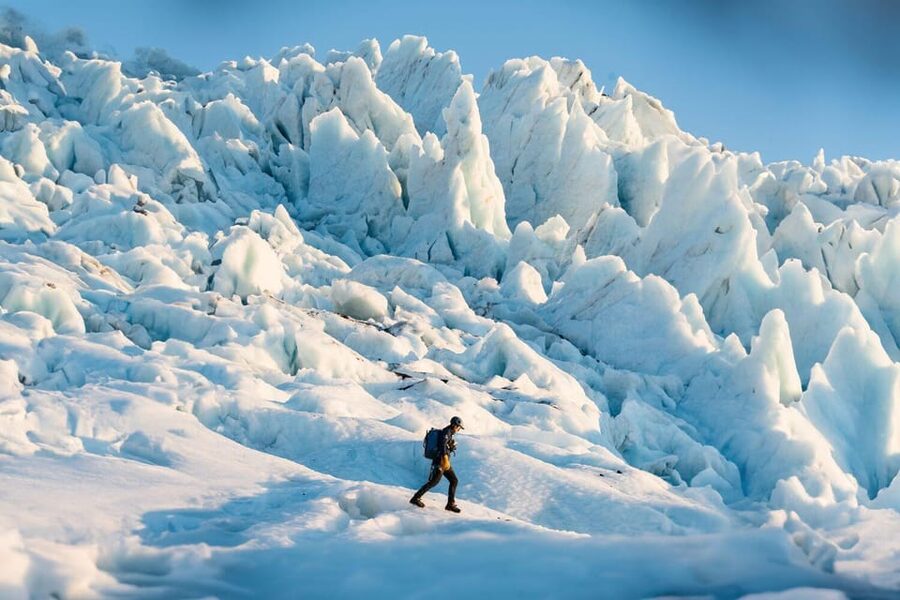
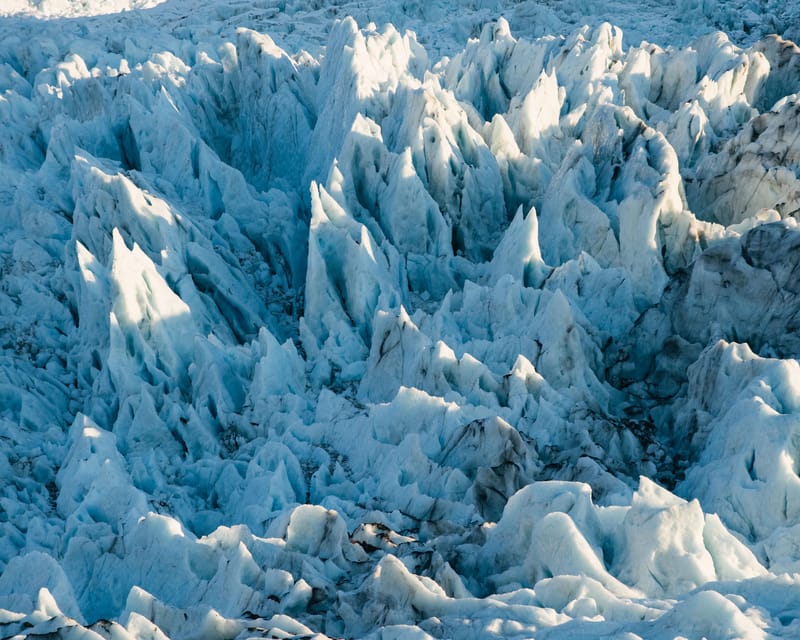
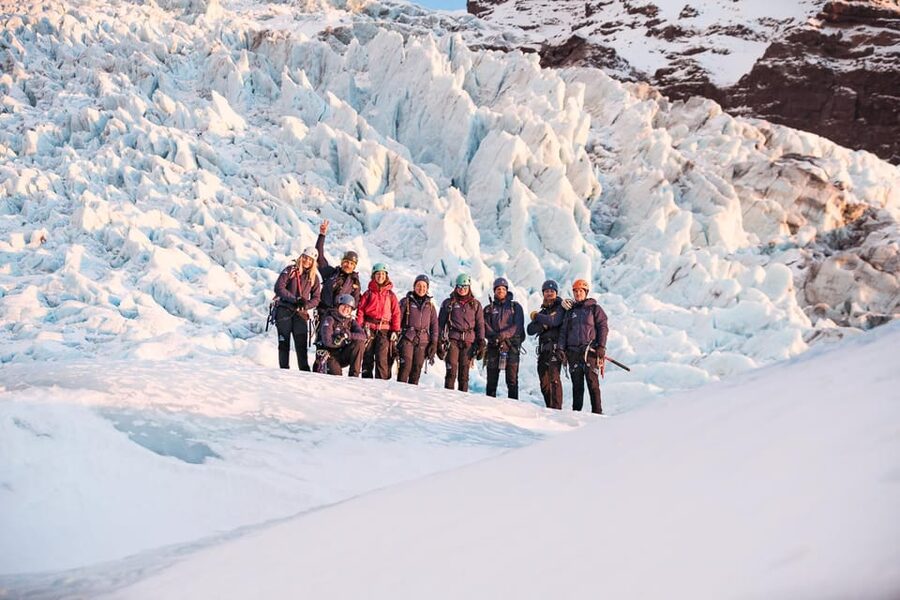
Falljökull’s icefall gives this trip its character. Instead of seeing a smooth slab of ice, you encounter a fractured mass shaped by pressure and movement. Jagged formations rise around the route, and light plays across the ice in shades that can shift from white to blue and gray.
The icefall is also where the moderate option earns its higher price and longer duration. You spend more time exploring the upper parts of the glacier rather than turning around soon after reaching the lower section. A few outings included rope-assisted routes, small caves, steep steps, and paths that wound up and down through the ice.
Do not read that as a promise of a specific climbing challenge. This is a guided hike, not a dedicated ice-climbing course, and the guide chooses the route. The conditions may limit access to some features. Still, you should expect a more active day than the easiest glacier option.
Photo opportunities come naturally, but you will want to protect your phone from cold, wet conditions. Guides often stop at striking viewpoints and can take photographs of you, as Lucy and Josh did for several groups. You should not spend the whole day looking through a screen, though. The most memorable details are close at hand: rippled ice, dirty layers showing the glacier’s movement, meltwater cuts, and the hollow shapes where ice has begun to wear away.
What your guide adds to the day
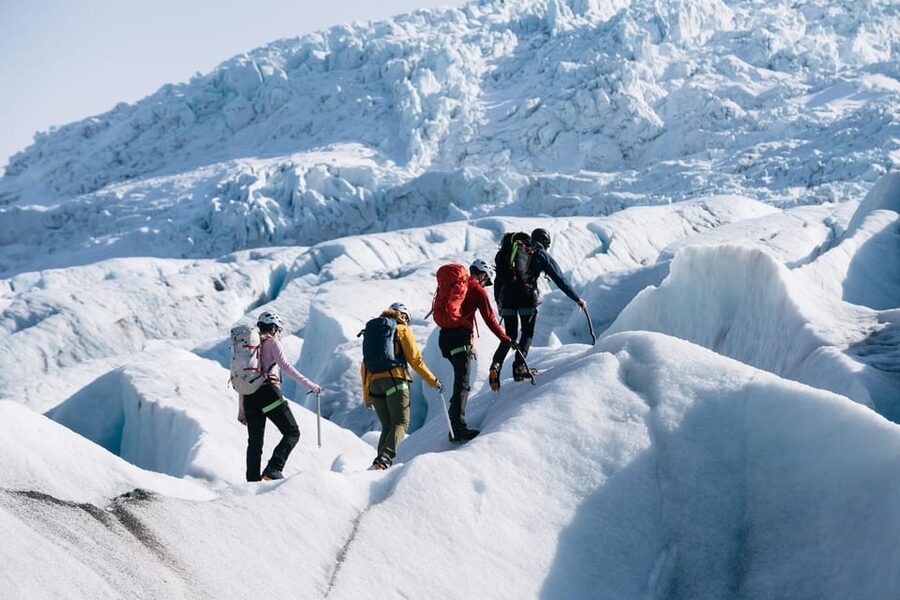
The strongest part of this experience is the guide’s role. Safety comes first, but the best guides turn the walk into a lesson without making it feel like school.
Kristian was praised for being funny, careful, and reassuring during a new and slightly intimidating activity. Lucy received high marks for helping with equipment, teaching movement techniques, explaining natural processes, and taking time to know the group. Sara was described as attentive and deeply interested in the natural world.
Josh was praised for showing more than expected, while Ola helped people feel comfortable during rope-assisted sections. Gaby was noted for cutting safe steps and pointing out features across the ice. These examples matter because a glacier guide is not simply leading from the front. The guide tests the route, watches your footing, controls the pace, and decides when a feature is safe to approach.
The educational side is strong too. You may hear about glacier formation, moraines, ice movement, geology, weather, and the forces that keep reshaping the surface. That context adds value to the scenery. You begin to understand that the glacier is changing as you walk across it.
Guide quality can vary from one departure to another, of course. The repeated praise for many different guides is encouraging, but you should still expect the route and tone to depend partly on who leads your group.
How hard is the moderate route?
The word moderate deserves attention. You do not need previous glacier experience, and the necessary equipment and instruction are provided. You do need a reasonable level of fitness and confidence on uneven ground.
The physical challenge comes from duration and footing rather than one single dramatic obstacle. You may walk uphill and downhill, cross rough surfaces, and use crampons for much of the glacier section. One person who regularly hikes found the route fairly easy, while another described it as a six-mile round trip and advised being in decent shape.
I would choose this trip if you enjoy a full day outdoors and do not mind moving at a steady, careful pace. I would think twice if you dislike uneven terrain, have difficulty walking for several hours, or want a relaxed sightseeing stop.
The route includes pauses for photographs, instruction, and safety. That makes the day more manageable, but you can still get cold during longer stops. Wear enough insulation, and keep a snack handy. You may warm up while walking, then cool quickly when the group pauses.
The minimum age is 14. That age rule, plus the boot requirement, makes the trip better suited to teenagers and adults who can follow instructions and manage a long active outing.
Is $170 good value?
At $170 per person, this is not a casual add-on. I think the price is reasonable if you value time on the glacier rather than simply seeing it from below.
Your fee covers a certified guide, transport by 4×4 bus, crampons, helmet, harness, and walking ice axe. You are also paying for route judgment and safety work on terrain that changes with water, weather, and ice movement. The longer route gives you more than a basic introduction and reaches the striking Falljökull icefall.
The value is weaker if you mainly want a quick photo on ice or are unsure about the physical effort. A shorter, easier option may suit you better. Also budget for boot rental if needed, plus food and drinks, since those are not included.
The full day may run much longer than five hours. Several outings took roughly six to seven and a half hours from arrival at the meeting area to return, including parking, gear fitting, the bus ride, walking to the ice, the glacier route, and equipment return. I see that as good value for time, but it matters for planning. Do not place this between two fixed appointments.
Free cancellation up to 24 hours before departure and the option to reserve now and pay later provide useful flexibility, especially when your Iceland itinerary depends on weather and road conditions.
Practical advice for a better glacier day
A few simple choices can make the outing more comfortable:
- Wear real hiking boots: They need ankle support and a stiff enough sole for crampons. Check that your size falls between EU 35 and 50.
- Pack water and snacks: You may be outside for most of the day, and no food or drinks are supplied.
- Use layers: You can heat up while walking and cool down during photo or safety stops.
- Carry a small pack: It gives you somewhere to put spare layers and food.
- Keep your camera secure: Ice and meltwater are beautiful but not kind to loose electronics.
- Leave extra time afterward: The advertised duration does not always include the full preparation and return process.
- Listen closely to the guide: The route changes, and safe movement on crampons is more important than speed.
Alcohol, drugs, and littering are not permitted. That is especially sensible on a guided glacier route, where clear judgment and care for the environment matter.
Who should book the Falljökull hike?
I would choose this tour if you want a serious introduction to glacier walking without signing up for an extreme mountaineering outing. It suits active visitors aged 14 and older who want more time on the ice, better access to formations, and a guide who can explain what they are seeing.
It is a strong pick for photographers, hikers, geology fans, and anyone who wants one of Iceland’s major natural sights to feel like an experience rather than a roadside stop. The small group and guide attention also help if you are nervous about crampons or your first glacier walk.
I would not book it for young children, anyone without suitable boots, or anyone seeking a short and easy activity. You also should not count on a fixed route, exact finish time, or particular ice cave or climbing section. Those details depend on conditions.
Should you book it?
Yes, if you are fit enough for several hours on uneven terrain and want to explore farther than a basic glacier walk. The mix of Falljökull’s icefall, hands-on crampon instruction, strong safety support, and guide-led explanations makes $170 feel justified.
Choose a shorter outing if your priority is comfort or a quick introduction. But if you have room for a full day near Skaftafell, this moderate hike offers the best chance to see how complex and changeable Vatnajökull really is. Pack snacks, bring the right boots, and leave your schedule open. That is the smart way to enjoy it.
FAQ
Where does the glacier hike meet?
You meet at the Arctic Adventures booking hut in Skaftafell National Park, at Skaftafell Base Camp.
How long does the activity last?
The stated duration is five hours, including about 20 minutes of bus transport each way. Actual outings can take six to seven and a half hours when equipment fitting, safety preparation, walking, and returning gear are included.
What equipment is provided?
The tour provides a certified glacier guide, helmet, walking ice axe, harness, and glacier crampons. Transport by 4×4 bus from Skaftafell to the glacier is also included.
Do I need special hiking boots?
Yes. Sturdy hiking boots with ankle support are mandatory. Boots may be available to rent, and the crampons fit EU shoe sizes 35 through 50.
Is the tour suitable for children?
The minimum age is 14, so children under 14 cannot join this activity.
What happens if I need to cancel?
You can cancel up to 24 hours before the activity for a full refund. You can also reserve your place and pay later.
Fresh around Reykjavík
- Tipsy in Reykjavik: Drink with a Viking (Food, Beer, Music)★ 5.0 · 3 reviews
- Exclusive Snaefellsnes Peninsula Private Day Tour★ 4.0 · 3 reviews
- Sólheimajökull Glacier Hiking Tour★ 3.7 · 3 reviews
- Northern Lights 3 Hours Private tour★ 4.5 · 3 reviews
- Northern Lights Private Tour from Reykjavik★ 5.0 · 3 reviews
- From Reykjavik: Private South Coast Tour in Iceland★ 4.3 · 3 reviews
- Private Superjeep Tour To Landmannalaugar and Hekla Volcano★ 5.0 · 3 reviews
- Iceland’s south coast G spots★ 5.0 · 3 reviews
Glacier Hikes, compared.
Glacier Hike, Waterfalls and Black Sand Beach
Read our review →
Glacier Hike and South Coast Small-Group Tour from Reykjavik
Read our review →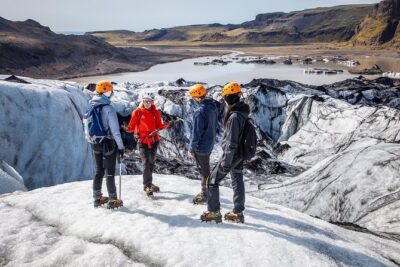
Sólheimajökull Glacier Hike – Adventure in a Small Group
Read our review →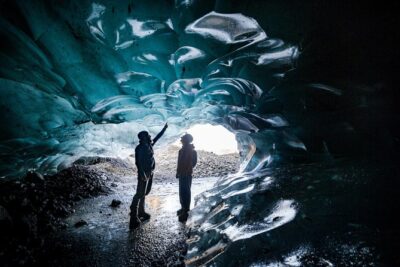
Browse the lists this tour appears in