
Reviewed · MUSEUMS
Reykjavik: Saga Museum Entry Ticket
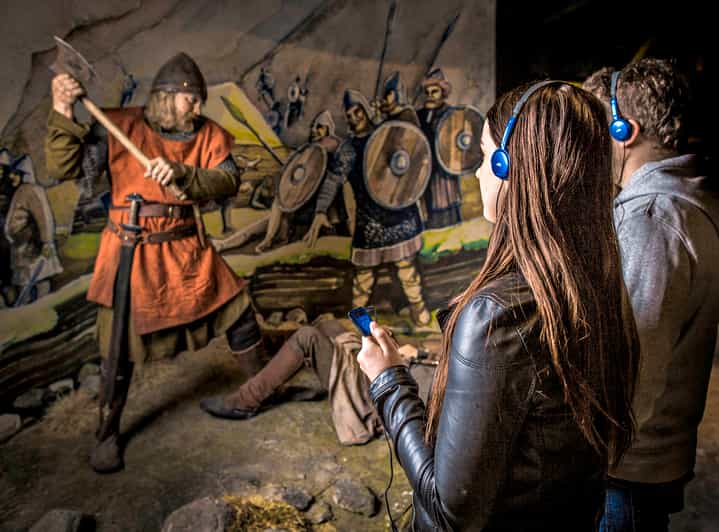
Vikings come alive in central Reykjavik. I like the life-like wax figures and the way the 35-minute audio tour turns key Icelandic stories into a clear sequence. I also like the chance to handle the experience more playfully at the end, with Viking clothing and weapons for dress-up photos.
The main drawback is scale. The museum is fairly small, and one visitor found the audio pacing caused too much waiting between sections. At $33 per person, I think the ticket works best for history fans, families with older children, and anyone wanting a short indoor stop rather than a full half-day attraction.
In This Review
- Key points to know before you go
- What the Saga Museum does well in 35 minutes
- Finding the museum at Grandagarður 2
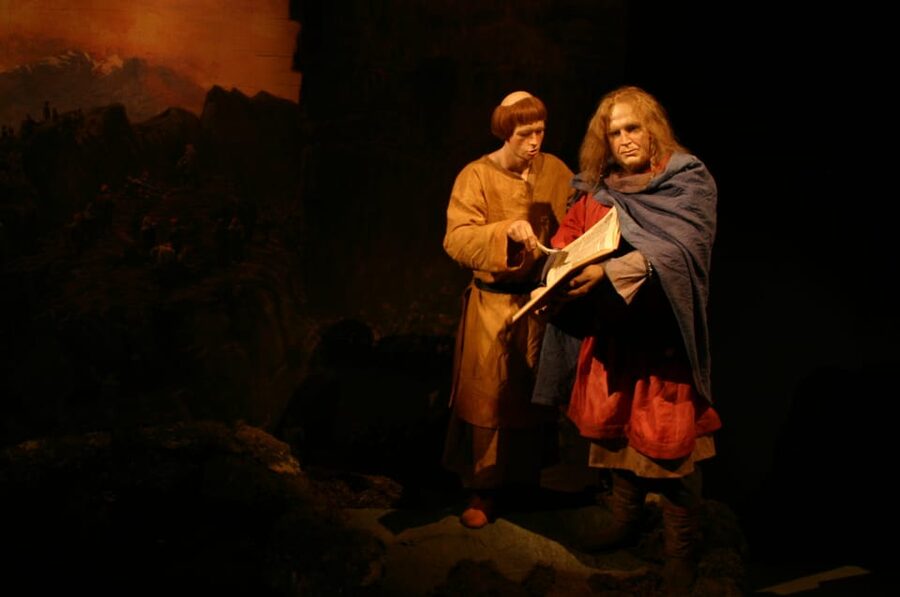
- The Papar and Iceland’s first settlers
- Leif the Lucky and the discovery of America
- The founding of Iceland’s Parliament
- The Saga Age and Iceland’s civil war
- The Reformation and Iceland’s last Catholic bishop
- The Viking costume area
- Audio languages and the pace of the visit
- Is $33 a fair price?
- Who will enjoy the Saga Museum most?
- Should you book the Saga Museum?
- FAQ
- Where is the Saga Museum located?
- How long does the museum tour take?
- What languages are available for the audio guide?
- Is the Saga Museum suitable for children?
- Is the museum wheelchair accessible?
- Are parking and lockers available?
- Can I cancel the ticket?
Key points to know before you go
- Twenty scenes cover major saga moments, from the Papar and Iceland’s first Viking settlers to the Reformation.
- The audio tour lasts about 35 minutes and is available in seven languages.
- A Viking costume area adds a hands-on finish, with clothing and weapons for dress-up.
- The museum sits at Grandagarður 2, beside the restaurant Matur og Drykkur, with a Viking-on-horse statue outside.
- Parking, lockers, and wheelchair access are included, making this a simple stop in Reykjavik’s harbor area.
- The content can be intense for young children, and children under four are not admitted.
What the Saga Museum does well in 35 minutes
The Saga Museum gives you a fast, visual introduction to Iceland’s past. Instead of asking you to read long panels or sort through dates, it places you beside wax figures arranged in scenes from the country’s sagas and major historical episodes.
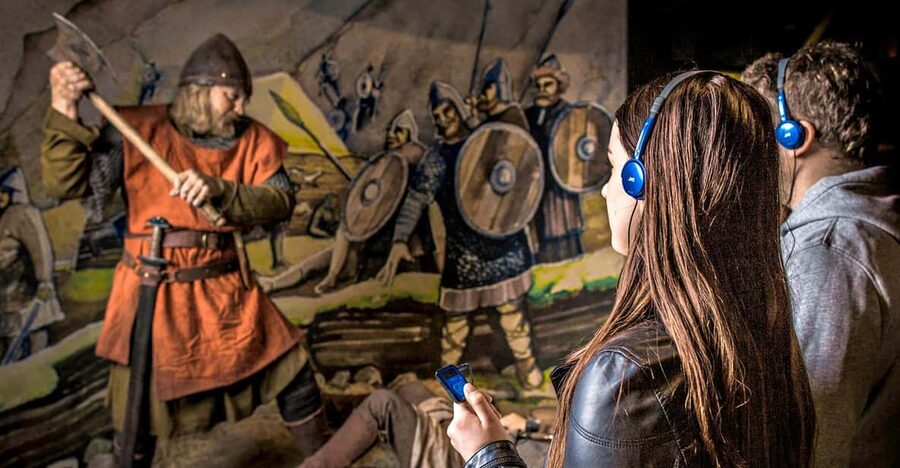
The presentation is compact. You move through 20 exhibits with a headset and audio guide, listening as each scene explains its place in Icelandic history. I like this format because it gives you enough background to understand the stories without turning a holiday stop into a classroom lesson.
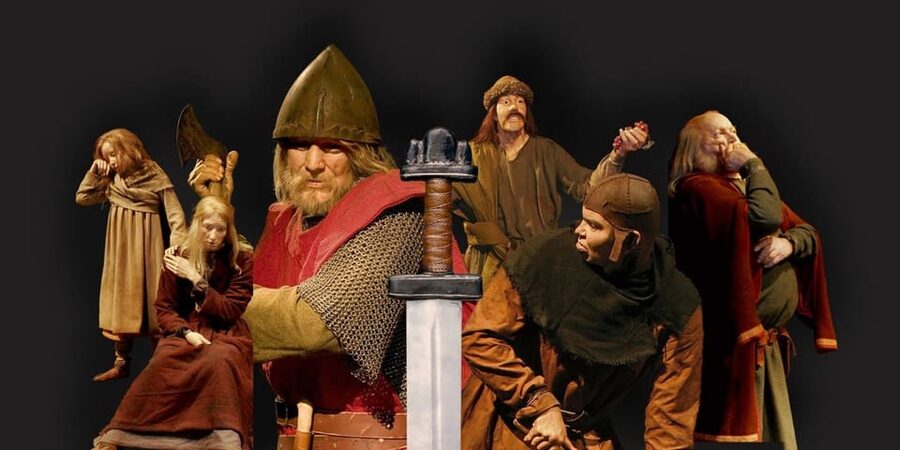
The figures are the museum’s main strength. They are designed to look remarkably lifelike, which makes the scenes easier to picture. You see people rather than only names and dates, and that helps the early settlement period feel less remote.
The museum also appeals to different kinds of interest. You can focus on the political story, the daily life of the Vikings, the old sagas, or simply the craftsmanship of the displays. The experience does not require prior knowledge, though knowing a little about Iceland’s settlement and medieval literature will give you more to connect with.
The audio tour lasts around 35 minutes, but you should allow extra time for the costume area and for moving between sections. One practical caution: the audio presentation follows a set sequence, and the next section may not be ready immediately. If you dislike waiting between timed parts, this could feel less fluid than expected.
More Museum Visits in Reykjavík
- Reykjavik: Perlan Museum Wonders of Iceland Entrance Ticket
★ 4.7 · 2,575 reviews - Reykjavík: Hop-On Hop-Off Bus and Perlan Museum Entry Ticket
★ 4.3 · 719 reviews - Reykjavik: Whales of Iceland Museum Entrance Ticket
★ 4.4 · 493 reviews
Finding the museum at Grandagarður 2
The museum is at Grandagarður 2 in Reykjavik’s Capital Region. Look for the statue of a Viking on horseback in front of a white building. That is the clearest landmark.
The entrance shares a door with the restaurant Matur og Drykkur, so do not assume you have arrived at the wrong place when you see the restaurant name. The shared entrance is useful to know in advance, especially if you are walking through the harbor area and expect a large museum sign.
Parking is included, which can matter in Reykjavik. Lockers are also provided, so you can store bags while you listen to the audio guide and move through the scenes. Wheelchair access is available.
There is no pickup or drop-off service. You make your own way to the museum, and the ticket remains valid for one day after first activation. That gives you some freedom to fit it around other plans, rather than building an entire day around a 35-minute presentation.
The Papar and Iceland’s first settlers
The tour begins with the earliest settlers, including the Papar. These were Irish or Scottish Christian monks traditionally connected with Iceland before the arrival of the Norse settlers.
The story then shifts to the first Vikings who settled on the island. This opening section provides useful context for Reykjavik itself, since the settlement story explains how the city got its name. For someone new to Icelandic history, this is a sensible starting point: first understand who arrived, then learn how a community took shape.
The wax scenes make this section more approachable than a simple written account. You can see how the museum imagines the people involved, their clothing, and the setting in which settlement took place. The displays are not a substitute for a full history course, but they give you a working framework for the rest of the tour.
I would pay attention to the audio here rather than rushing toward the more famous Viking stories. The first section explains why Iceland developed as a distinct community and sets up the later discussion of law, government, and conflict.
Leif the Lucky and the discovery of America
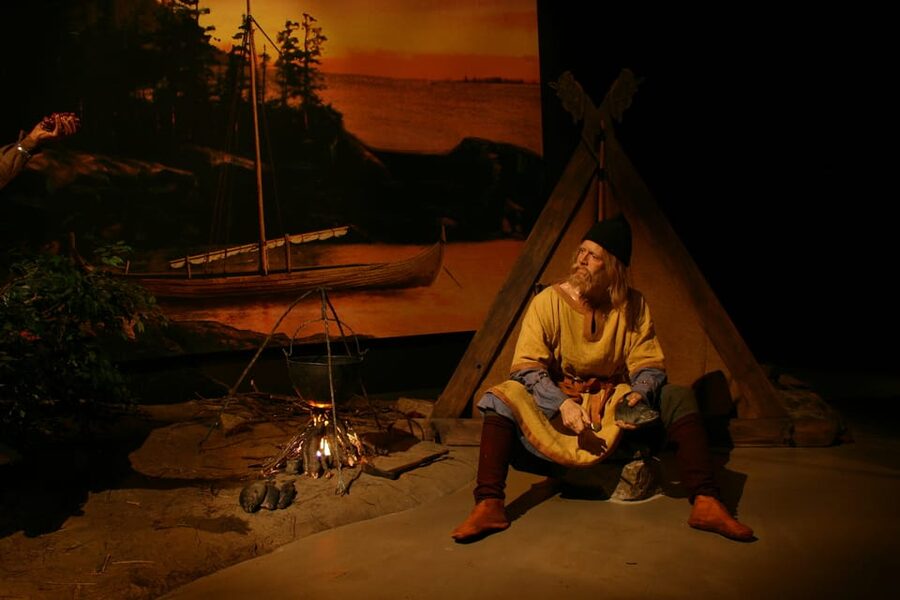
Next, the tour brings in Leif the Lucky, the Icelandic explorer associated with the Norse discovery of America. This is one of the best-known episodes in the Icelandic saga tradition, and it gives the museum a strong sense of narrative movement.
The scene works because it connects Iceland to a much wider North Atlantic world. Iceland was not an isolated endpoint. Its people traveled, traded, explored, and maintained links across the sea.
The museum presents this story as part of the larger saga sequence rather than as a separate heroic display. That approach helps you see Leif’s voyage alongside the settlement of Iceland and the political structures that developed afterward.
Keep your expectations sensible. This is a short wax museum, not a full reconstruction of a Viking ship or an outdoor archaeological site. You are receiving a focused story with visual scenes and audio explanation. If you want long historical interpretation, you may find the stop too brief. If you want a clear introduction to the topic, the format is effective.
More Tickets in Reykjavík
- Small-Group Golden Circle, Blue Lagoon with Ticket & Kerid Crater
★ 5.0 · 5,631 reviews - Reykjavik: FlyOver Iceland Entry Ticket
★ 4.7 · 3,499 reviews - Reykjavik: LAVA SHOW – Immersive Experience Entry Ticket
★ 4.8 · 3,360 reviews - Lava Show Reykjavik Admission Ticket – Optional Premium Upgrade
★ 5.0 · 3,278 reviews
The founding of Iceland’s Parliament
One of the most important stops explains the founding of Iceland’s Parliament. The country’s early political system is central to understanding its identity, and the museum places it among the major developments of the settlement period.
This part gives the tour more depth than a simple account of warriors and voyages. You see that Icelandic history also involves lawmaking, public decisions, and the attempt to govern a scattered island community.
For me, this is where the audio guide earns its place. The scenes provide the visual setting, while the narration supplies the meaning. Without the explanation, some figures and arrangements might be hard to interpret. With it, you can follow the shift from settlement to organized society.
The museum does not ask you to memorize every date. Instead, it shows how the country moved from a group of settlers toward a community with political institutions. That makes the visit useful for first-time visitors who want context before exploring more of Iceland.
The Saga Age and Iceland’s civil war
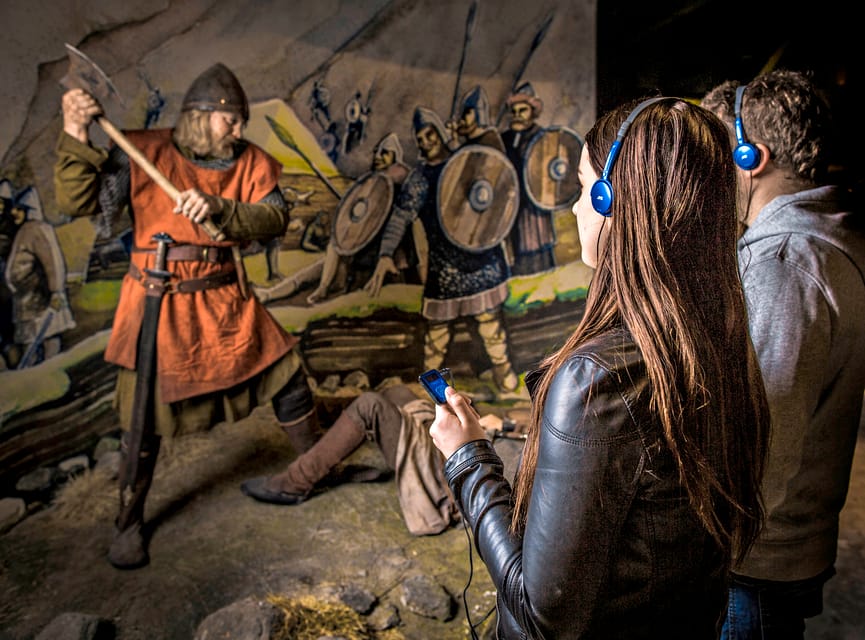
The middle part of the tour reaches the Saga age, when many of the stories were written down. This is the section most likely to interest readers who know Iceland through its famous medieval texts.
The sagas are not presented as simple fairy tales. They record family ties, rivalries, violence, loyalty, and disputes, often with a dry and matter-of-fact tone. The museum’s figures help you connect those stories to people and social tensions rather than treating them as distant literature.
The tour also covers the civil war in Iceland. This gives the story a darker turn. Earlier sections describe settlement and political development, but this portion shows how rival groups and competing interests could pull the community apart.
Parents should take note here. The experience may not suit sensitive children, and the museum specifically excludes children under four. The scenes deal with conflict and difficult events, so use your judgment for younger children even if they are old enough to enter.
For adults and older children, the serious tone adds value. The museum does not present Viking life as a string of cheerful costumes and heroic adventures. It includes power struggles and the human cost of conflict, which makes the historical picture more believable.
The Reformation and Iceland’s last Catholic bishop
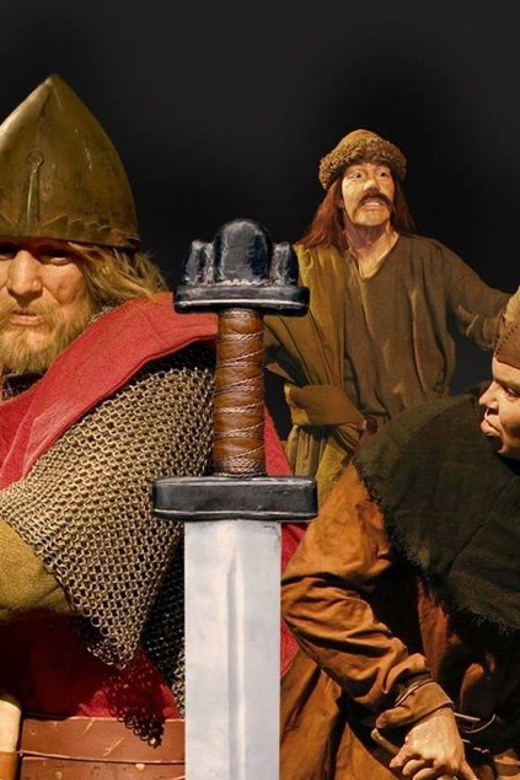
The final historical sections move forward to the Reformation and the last Catholic Bishop in Iceland. This gives the tour a later endpoint and shows that Iceland’s story did not stop with the Viking age.
That shift is important. Many Viking-themed attractions end once the helmets and ships have had their moment. Here, the museum follows the island into a major religious and political change.
The bishop’s story adds a personal focus to the Reformation. Rather than treating the period only as an abstract change in church policy, the exhibit connects it with an individual figure and the consequences of the new order.
This final section also helps you place the sagas in time. The Saga age is only one chapter in Iceland’s past. By continuing into the Reformation, the museum reminds you that the country’s culture developed across many centuries.
The overall sequence is one of the experience’s strongest features. You begin with settlement, move through exploration and government, reach the written sagas and civil war, then finish with religious change. It is a compact but sensible path through Icelandic history.
The Viking costume area
After the historical displays, you can switch from listening to playing dress-up. The costume area lets you put on Viking clothing and pose with authentic weapons.
This is not a minor extra if you are visiting with children or want a lighter ending after the more serious scenes. It gives you something physical to do and makes the museum feel less formal. You can release your inner Viking without needing a long reenactment program.
The costume area also helps explain why the museum works for mixed groups. A history-minded adult can follow the audio closely, while a younger family member may remember the chance to wear the clothing and hold the props.
The word authentic should be taken in the context provided by the experience: the area offers authentic clothes and weapons for the activity. It is still a museum costume setup, not permission to handle historical artifacts. Follow the staff’s instructions and treat the equipment as part of the display experience.
Plan on spending a little extra time here. The audio portion itself is about 35 minutes, but trying on clothing, taking photos, and waiting for access to the area can lengthen the visit.
Audio languages and the pace of the visit
The audio guide is available in English, German, French, Spanish, Russian, Swedish, and Icelandic. Text guides are also available in Polish and Italian.
That range makes the museum practical for international visitors. You do not need to rely on English wall text or guess at the meaning of each scene. Select the language that lets you follow names and events comfortably.
The audio guide uses headsets, and the story is arranged around the 20 exhibits. This keeps the presentation focused, but it also means you may be expected to move through the museum in order.
One visitor found there was a lot of waiting for the next step. I would keep that possibility in mind, especially if you are visiting during a busy period. The pause may be part of managing the sequence, but it can make a short tour feel longer.
The best approach is to treat the museum as a guided presentation rather than a free-flowing gallery. Listen to each section, look closely at the figures, and allow the next part to begin. If you prefer to set your own pace, you may find the structure restrictive.
Is $33 a fair price?
At $33 per person, the Saga Museum is not a bargain by ordinary European museum standards. Iceland is expensive, and the price can feel high for an attraction that takes roughly 35 minutes to tour.
The value depends on what you want. I think the ticket is reasonable if you care about Icelandic history, want a clear introduction to the sagas, or need an indoor activity in Reykjavik. The multilingual audio guide, 20 scenes, lockers, parking, wheelchair access, and costume area all add practical value.
The case is weaker if you only want a large museum with many rooms and hours of exhibits. One visitor found the museum small and not especially interesting, and that criticism is fair for someone expecting a major national museum.
I would compare the ticket with the rest of your day. If you are already spending time near Grandagarður, the museum can fill a short gap without requiring transport or a major time commitment. If you are crossing the city only for this one stop, the price may feel harder to justify.
Free cancellation up to 24 hours before the activity and reserve-now, pay-later booking make it easier to fit into a changing schedule. Those policies do not lower the ticket price, but they reduce the risk of committing too early.
Who will enjoy the Saga Museum most?
I would recommend this experience to:
- Adults who want a simple introduction to Icelandic settlement and saga history.
- Families with children old enough to handle scenes involving conflict.
- Visitors who enjoy wax figures and short audio-guided museums.
- Anyone looking for an indoor activity in Reykjavik.
- People who appreciate multilingual support and an accessible venue.
- History fans who want to connect famous names with visual scenes.
I would be more cautious if you need a large museum, free movement between exhibits, or several hours of content. The museum is compact, and the audio sequence may include pauses.
The experience is also a better match for older children than toddlers. Children under four are not suitable for the activity, and sensitive children may find some scenes unsettling. The Viking costume area can add fun, but it does not remove the serious material in the historical sections.
Should you book the Saga Museum?
Book it if you want a short, visual, and organized introduction to Icelandic history. The realistic figures, clear historical sequence, wide choice of audio languages, and Viking dress-up area give the museum more variety than a basic wax display.
Skip it if $33 feels too steep for a small attraction or if you want a self-guided museum where you can wander at your own speed. I would especially check your schedule before booking if you dislike waiting between audio sections.
For most people, I would treat the Saga Museum as a useful 35-minute cultural stop, not a main Reykjavik attraction. It works best when paired with other plans in the harbor area. If you arrive with realistic expectations, the museum offers a friendly and accessible way to meet Iceland’s settlers, explorers, lawmakers, saga figures, and religious leaders in one compact visit.
FAQ
Where is the Saga Museum located?
The Saga Museum is at Grandagarður 2 in Reykjavik’s Capital Region. A statue of a Viking on horseback is in front of the white building, and the entrance is shared with the restaurant Matur og Drykkur.
How long does the museum tour take?
The audio-guided tour lasts about 35 minutes. You may need additional time for the Viking costume area and any waiting between sections.
What languages are available for the audio guide?
Audio guides are available in English, German, French, Spanish, Russian, Swedish, and Icelandic. Text guides are available in Polish and Italian.
Is the Saga Museum suitable for children?
The museum is not suitable for children under four. It may also be unsuitable for sensitive children because some scenes cover conflict and other difficult parts of Icelandic history.
Is the museum wheelchair accessible?
Yes. Wheelchair access is included among the museum’s facilities.
Are parking and lockers available?
Yes. Parking and lockers are included with the experience.
Can I cancel the ticket?
You can cancel up to 24 hours in advance for a full refund. The ticket is valid for one day from first activation.
Fresh around Reykjavík
- Tipsy in Reykjavik: Drink with a Viking (Food, Beer, Music)★ 5.0 · 3 reviews
- Exclusive Snaefellsnes Peninsula Private Day Tour★ 4.0 · 3 reviews
- Sólheimajökull Glacier Hiking Tour★ 3.7 · 3 reviews
- Northern Lights 3 Hours Private tour★ 4.5 · 3 reviews
- Northern Lights Private Tour from Reykjavik★ 5.0 · 3 reviews
- Private Superjeep Tour To Landmannalaugar and Hekla Volcano★ 5.0 · 3 reviews
- From Reykjavik: Private South Coast Tour in Iceland★ 4.3 · 3 reviews
- Iceland’s south coast G spots★ 5.0 · 3 reviews
Museums, compared.
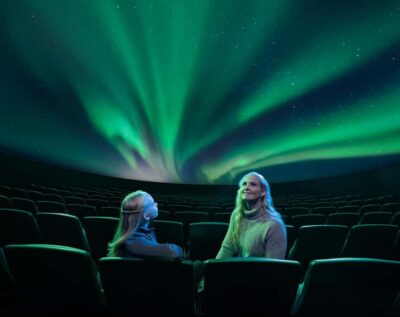
Perlan Museum Wonders of Iceland Entrance Ticket
Read our review →
Hop-On Hop-Off Bus and Perlan Museum Entry Ticket
Read our review →


Aurora Reykjavík, The Northern Lights Center Museum Visit
Read our review →
Ancient Historical Site Tour at the Caves of Hella
Read our review →
Browse the lists this tour appears in